


What are you searching for?

Weight Loss & Metabolism
Athletic recovery, tissue repair, muscle research

Longevity & Aging
The science of aging: energy, vitality, and well-being

Energy & Metabolism
Metabolic optimization, mitochondrial function

Focus & Cognition
Neuroprotection, cognitive enhancement studies

Skin & Regeneration
Collagen, elastin, dermal research
Learn more about Peptides
All compounds are intended exclusively for laboratory research.
- All
- Weight Loss & Metabolism
- Longevity & Aging
- Energy & Metabolism
- Focus & Cognition
- Skin & Regeneration
Tirzepatide
Research areas: weight loss, glycemic control, reduction of insulin resistance.
Retatuide
Research areas: weight loss, appetite regulation, and energy metabolism.
GHK-cu
Research areas: skin regeneration, collagen production, tissue repair.l.

BPC 157
Research areas: tissue healing, muscle recovery, gastrointestinal protection.
TB-500
Research areas: muscle regeneration, cell mobility, injury recovery
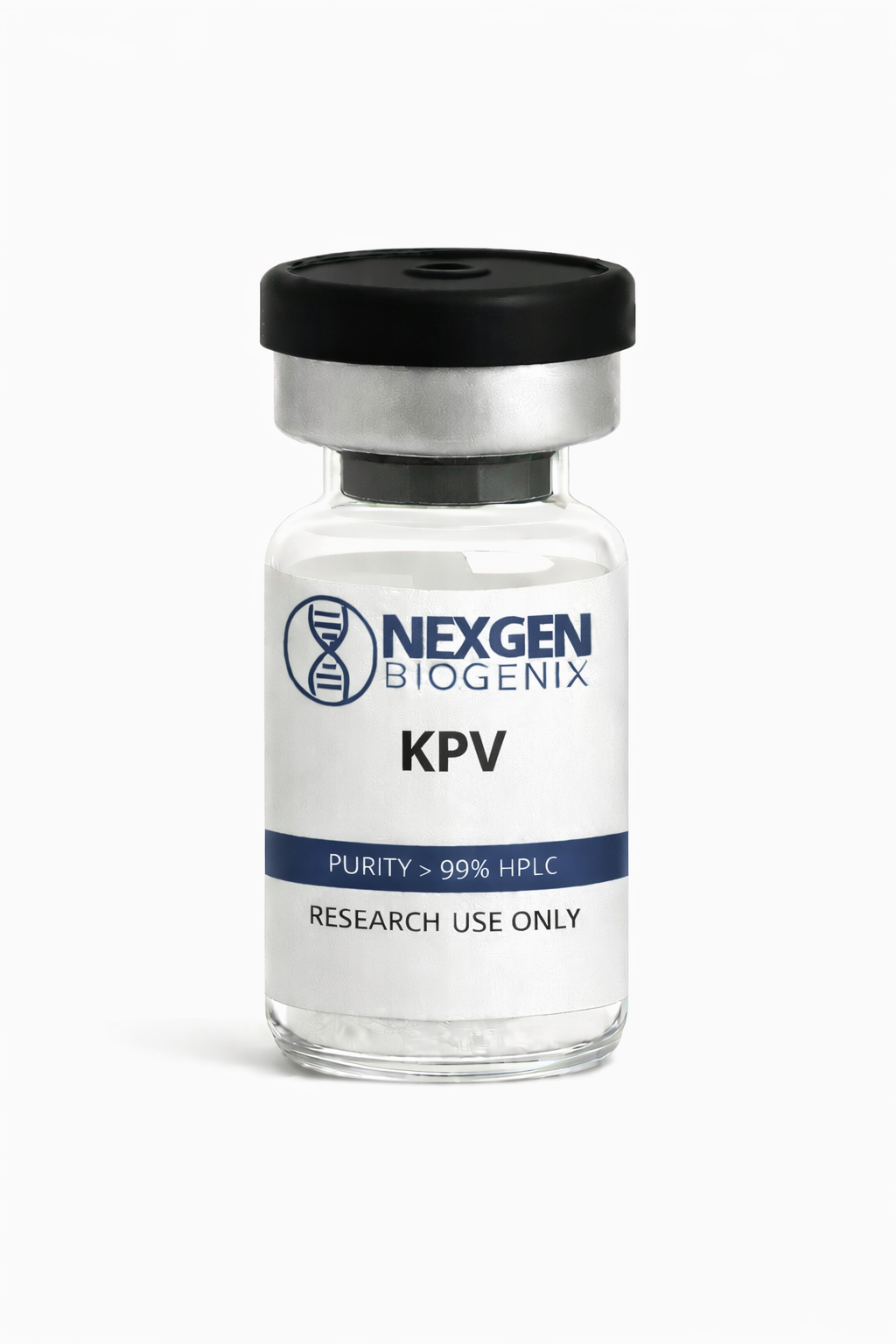
KPV
Research areas: inflammatory modulation, gut health, immune response.

Selank
Research areas: anxiety, stress modulation, cognitive function.

Semax
Research topics include: mental focus, memory, and neuroprotection.
FAQ
Peptides are short chains of amino acids — the same building blocks that make up proteins. Your body naturally produces thousands of peptides every day; they act as biological messengers that help cells communicate and regulate essential functions. The compounds studied in peptide research are modeled after these naturally occurring molecules.
In scientific research, peptides are used as experimental tools to study receptors, enzymes, inflammation, tissue signaling, and metabolic pathways. Their use is confined to controlled laboratory protocols — such as in vitro testing and experimental models — conducted in accordance with applicable scientific and regulatory standards. All compounds at NexGen Biogenix are intended for research use only.
Many peptides act as biological signals: they bind to specific receptors on cells and trigger or inhibit certain responses. This allows researchers to observe what happens when a particular biological pathway is activated or blocked — generating insights into how the body functions at a molecular level. The human body naturally produces peptides as part of normal physiology; research compounds are tools for studying those same mechanisms.
Peptides are generally grouped by their area of research focus — such as metabolic signaling, immune modulation, neuroactive activity, or structural/dermal research. In a laboratory context, selection is based on the experimental objective, the biological pathway being studied, and the existing body of published research supporting that compound’s use in that context. NexGen’s catalog is organized by research category to help researchers navigate efficiently.
For research purposes, safety means following good laboratory practices: using proper PPE, handling compounds in controlled environments, storing them correctly (typically refrigerated and away from light), and disposing of them appropriately.
In the research literature, certain peptides are studied for their potential role in collagen synthesis, skin structure, and dermal regeneration — compounds like GHK-Cu are among the most cited in this area. These are studied in laboratory and experimental settings for their effects on skin-related biological pathways.
Compounds like Tirzepatide and Retatrutide have been among the most actively studied in metabolic and glycemic research in recent years, with significant published literature exploring their mechanisms of action. At NexGen Biogenix, these compounds are available for laboratory research purposes only. For clinical or health-related questions, always consult a licensed healthcare provider.
Check out our blog and learning more about Peptides
Stay up-to-date on content about peptides based on research, analysis, and references. Frequent updates with studies, applications, and industry news.
