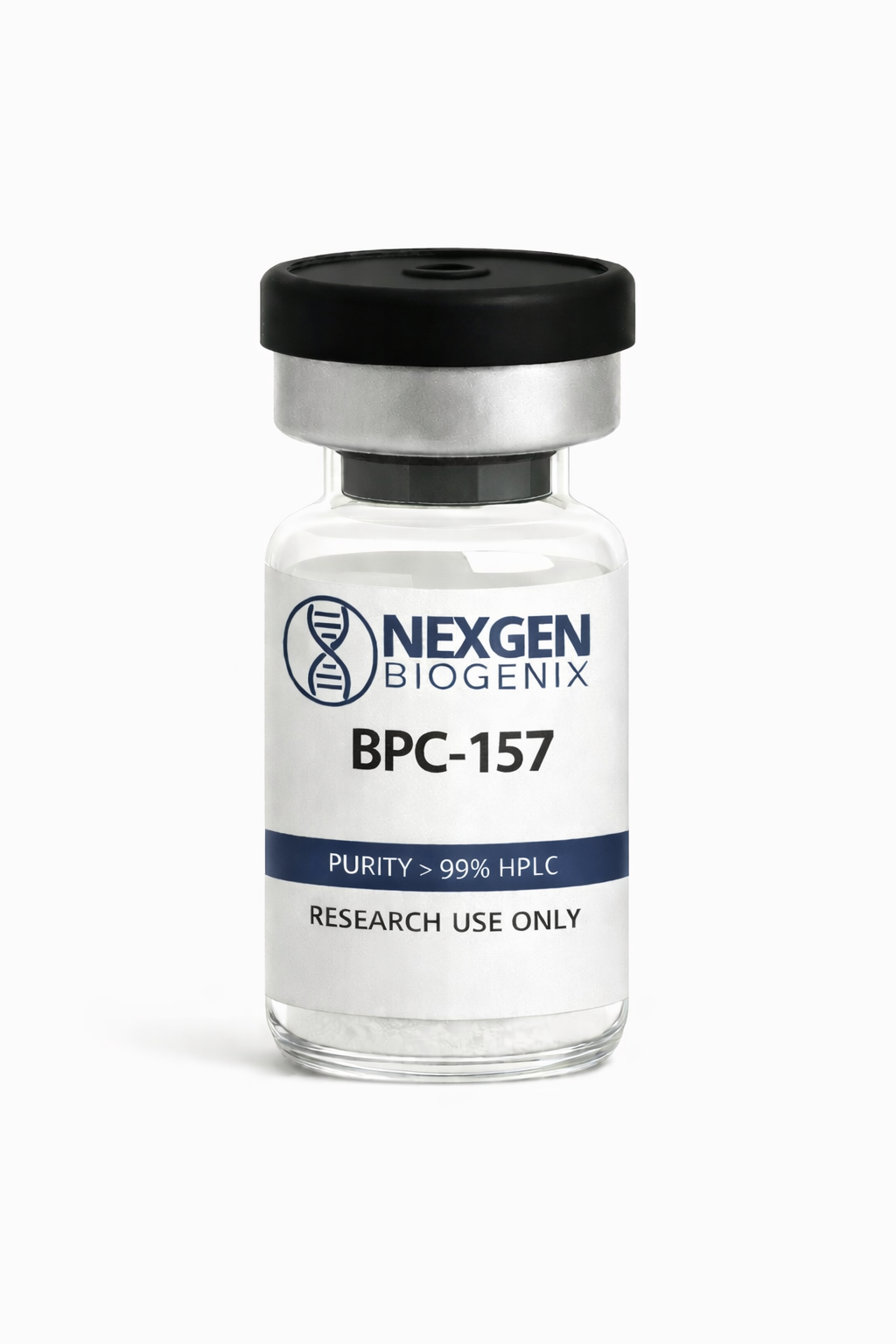
⚠️ Research Use Only (RUO). Not for human or veterinary use. All content on this page is provided for educational and scientific reference purposes only.
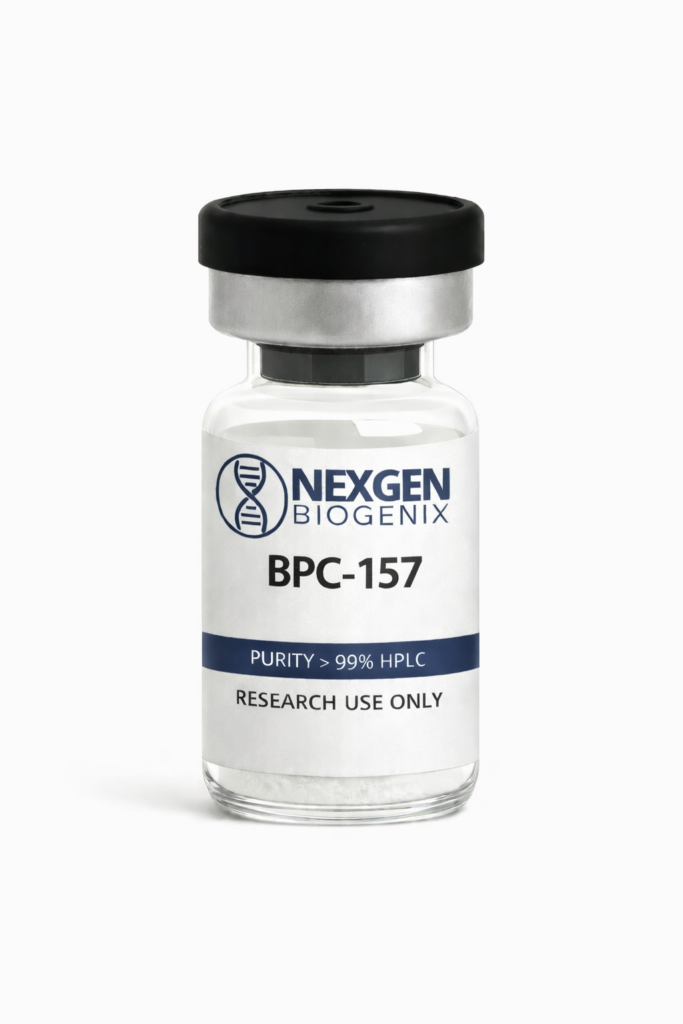
BPC-157 — Research Overview (RUO)
Quick Facts
- Full name: Body Protection Compound-157
- Common name / abbreviation: BPC-157
- Synonyms / related names: PL-10; pentadecapeptide BPC-157
- Peptide class: Synthetic pentadecapeptide (15 amino acids); gastric-derived sequence
- Molecular weight: 1,419.53 Da
- CAS number: 137525-51-0
- Primary research themes: Tissue and wound-healing models; gastrointestinal mucosal biology; tendon/ligament and musculoskeletal research; neurobiological signaling studies
- Evidence level: Primarily preclinical (in vitro and animal models); limited early-phase human data; no large-scale randomized controlled trials published as of 2025
- Regulatory status: Research Use Only (RUO) — not FDA-approved as a drug, not a dietary supplement; previously listed under FDA 503A Category 1 (bulk substance for compounding) — see Section 9 for current status
What Is BPC-157?
BPC-157 is a synthetic pentadecapeptide — a chain of fifteen amino acids — derived from a partial sequence of a protein originally isolated from human gastric juice. The compound was first described in the scientific literature in the early 1990s by researchers studying the cytoprotective properties of gastric secretions. Because it does not correspond to a naturally occurring complete protein in the body, BPC-157 is considered a research-grade synthetic analog rather than a direct endogenous peptide.
The human body naturally produces many peptides — small protein-like molecules that act as biological messengers — and it is this broader class of signaling compounds that has made peptide research one of the most active areas in biochemistry and preclinical science. BPC-157 is of interest to investigators precisely because its amino acid sequence appears to interact with several pathways associated with tissue homeostasis and cellular repair, based on studies conducted in laboratory and animal settings.
In research contexts, BPC-157 is catalogued under the synonyms PL-10 and pentadecapeptide BPC-157. It is stable under acidic conditions, a property that has made it a practical tool in gastric biology research. All current scientific knowledge about its effects comes from preclinical models; its behavior in humans has not been characterized through large controlled trials.
Why Do Researchers Study It?
Researchers are interested in BPC-157 because preclinical studies have described a range of biological activities that, if translatable, could be relevant to several fields of biomedical science. The compound has attracted sustained academic attention since the mid-1990s, generating a body of in vitro and rodent-model literature across multiple organ systems.
- Gastrointestinal mucosal research: Studies in rodent models have suggested cytoprotective effects on gastric and intestinal mucosa, making BPC-157 a tool in GI biology investigations.
- Tendon and ligament models: Multiple animal studies have reported accelerated organization of collagen fibers and improved biomechanical outcomes in tendon and ligament injury models.
- Wound-healing and angiogenesis assays: Researchers have observed upregulation of growth factor expression (e.g., VEGFR2 pathways) in cell culture and animal wound models associated with BPC-157 administration.
- Neurobiological signaling: Rodent studies have described modulation of dopaminergic and serotonergic systems, prompting investigation into the compound’s effects on stress-response models.
- Musculoskeletal injury models: Animal studies have examined the compound’s effects in models of muscle crush injury, bone healing, and joint damage.
- Nitric oxide pathway research: Some literature proposes that BPC-157 may interact with nitric oxide synthase pathways, a finding of potential relevance in vascular biology research.
Proposed Mechanism (Research Framing)
All mechanistic descriptions in this section are drawn from the peer-reviewed literature and reflect findings in preclinical systems. The exact mechanism of action of BPC-157 in humans has not been fully established, and no mechanism described here constitutes a medical claim.
Based on findings in cell culture and rodent models, researchers have proposed that BPC-157 may exert its observed effects partly through interaction with the vascular endothelial growth factor receptor 2 (VEGFR2 / KDR) signaling axis. Studies suggest that upregulation of this pathway could account for some of the pro-angiogenic and tissue-remodeling effects observed in wound and tendon injury models. These are preclinical observations and have not been confirmed in controlled human studies.
The literature also describes potential modulation of nitric oxide (NO) production as a contributing mechanism. Researchers have proposed that BPC-157 may stabilize the NO synthase system under oxidative stress conditions, which could help explain cytoprotective effects observed in gastrointestinal mucosa models. Additionally, observed interactions with the FAK-paxillin pathway have been described in the literature as a possible mediator of cell migration and collagen organization in tendon fibroblast cultures.
Key Targets Described in the Literature
- VEGFR2 (KDR): Proposed mediator of angiogenic and tissue-remodeling effects in preclinical wound models
- Nitric oxide synthase (NOS) system: Described in the literature as a target relevant to cytoprotection and vascular tone regulation in animal models
- FAK-paxillin signaling: Observed in fibroblast cell cultures in association with enhanced cell migration and extracellular matrix organization
- Dopaminergic and serotonergic systems: Rodent studies have described modulatory interactions with both systems, the precise significance of which remains under investigation
- Growth hormone receptor (GHR): Some researchers have proposed an interaction with GHR pathways to partially explain systemic effects observed in animal injury models
Research Applications (RUO Context)
In qualified laboratory settings, BPC-157 is used as a reference compound in studies exploring tissue biology, repair signaling, and gastrointestinal physiology. The following represent the types of research contexts described in published literature — not protocols or usage instructions.
- In vitro wound-healing (scratch) assays: Cell migration studies using fibroblast and endothelial cell lines to characterize effects on motility and gap closure rates
- Rodent tendon and ligament transection models: Histological and biomechanical assessment of collagen fiber organization and tensile strength following experimental injury
- Gastric mucosal damage models: Ethanol- and NSAID-induced ulcer models in rodents used to evaluate cytoprotective activity of the compound
- Angiogenesis assays (tube formation): Human umbilical vein endothelial cell (HUVEC) tube formation assays used to characterize pro-angiogenic activity
- Behavioral neuroscience models: Rodent stress, locomotion, and anxiety-related paradigms used to probe interactions with dopaminergic and serotonergic circuits
- Oxidative stress and cytoprotection assays: Cell viability assays under oxidative challenge conditions to characterize potential protective activity
Evidence Snapshot
► Preclinical Evidence (In Vitro / Animal Models)
- Multiple rodent studies — primarily from Croatian research groups — have reported significantly improved healing outcomes in tendon transection, muscle crush, and bone defect models treated with BPC-157 compared to controls; these findings are in animal subjects and require independent replication.
- In vitro studies suggest BPC-157 upregulates VEGFR2 expression in endothelial cells and accelerates tube formation in HUVEC assays, consistent with a pro-angiogenic profile in cell culture conditions.
- Animal models of colitis, gastric ulceration, and bowel anastomosis have described protective and healing-promoting effects, supporting continued investigation into GI applications.
- Rodent behavioral models have yielded observations suggesting interactions with dopaminergic and serotonergic pathways, though the translational relevance to human neurophysiology remains entirely speculative.
► Human / Clinical Evidence
- As of 2025, large-scale randomized controlled trials in humans evaluating BPC-157 for any indication have not been published in peer-reviewed literature.
- A small number of case reports and preliminary human observations appear in the literature, but these do not constitute controlled evidence and cannot be used to draw conclusions about safety or efficacy in humans.
- No Phase II or Phase III clinical trial results for BPC-157 are registered as completed with published outcomes on ClinicalTrials.gov as of the date of this article.
Limitations & Open Questions
The existing body of research on BPC-157, while substantial in volume, carries several important methodological limitations that qualified researchers should weigh carefully when interpreting the literature.
- Translation gap: The majority of published studies are in rodent models; whether findings translate to human biology is unknown and cannot be assumed.
- Research concentration: A disproportionate share of the published animal literature originates from a limited number of research groups; independent replication across diverse laboratories is needed.
- Study size and design: Many published rodent studies involve small sample sizes and are not always blinded or pre-registered, limiting confidence in reported effect sizes.
- Purity and standardization: Variability in the purity and synthesis quality of BPC-157 used across different studies makes cross-study comparisons difficult; COA-verified material is essential for reproducible research.
- Mechanism not fully characterized: While several molecular targets have been proposed, a unified mechanistic model explaining the compound’s broad preclinical activity profile has not been established.
- Regulatory uncertainty: BPC-157’s regulatory status has evolved significantly since 2020, introducing uncertainty around its availability as a compounding ingredient; researchers must monitor current FDA guidance (see Section 9).
Quality & Sourcing
In peptide research, the reproducibility and reliability of experimental results depend critically on the purity and documentation of the compounds used. Researchers working with BPC-157 should prioritize suppliers who provide transparent, lot-specific quality documentation.
- Lot Traceability: Each batch of BPC-157 should be individually identifiable by lot number, enabling researchers to trace any compound used in an experiment back to its specific manufacturing and analytical records.
- Certificate of Analysis (COA): A COA should accompany every lot, documenting purity (typically assessed by HPLC), identity confirmation (mass spectrometry), and any relevant safety or sterility testing. Researchers should request and retain COAs as part of their laboratory records.
- Storage & Labeling: BPC-157 for research use should be clearly labeled “Research Use Only — Not for Human Use,” stored under conditions specified in the product documentation (typically lyophilized powder at −20 °C), and handled in accordance with institutional safety protocols.
📄 Questions about documentation or purity verification? Contact our support team or request a COA from our library.
US Regulatory Snapshot (Updated 2025)
- Research Use Only — not a drug or supplement: BPC-157 is sold exclusively as a research chemical for in vitro and laboratory use by qualified investigators. It is not classified as a dietary supplement under DSHEA, and it is not an FDA-approved drug product for any indication.
- 503A Compounding and Category 1 — what this means (and what it does not): Under Section 503A of the Federal Food, Drug, and Cosmetic Act, licensed pharmacists may compound certain bulk drug substances for individual patient prescriptions. The FDA previously maintained interim “Category” lists (Categories 1–3) to organize bulk substances under evaluation. Placement on a Category 1 list indicated that a substance had been nominated and was under review — it did not constitute FDA approval, endorsement of safety or efficacy, or authorization for general commercial sale. BPC-157 was listed as a 503A Category 1 bulk substance, meaning it was nominated and under review, not that it had been approved for compounding or any other use.
- FDA January 7, 2025 guidance update: In guidance issued on January 7, 2025, the FDA stated that it does not intend to place new nominations into the interim Categories 1–3 while it continues to evaluate its approach to the 503A bulk substance program. This reflects an evolving regulatory framework; the interim category structure is under ongoing review by the agency.
- BPC-157 current status (as of 2025): BPC-157 was removed from the FDA’s 503A Category 1 bulk substances list following agency review. The FDA’s evaluation determined concerns regarding its use in compounding. As a result, BPC-157 is not currently on the FDA’s list of bulk drug substances that may be used in compounding under 503A. Its status as an RUO research compound for laboratory use is separate from compounding regulations, but researchers and institutions should consult current FDA guidance and qualified regulatory counsel before any procurement or use decisions.
- Stay current: Regulatory status for research compounds can change. Monitor FDA.gov — 503A Bulk Substances for the most current listings, and consult a qualified regulatory attorney or compliance professional for institution-specific guidance.
Frequently Asked Questions
Does the body naturally produce peptides like BPC-157?
The human body naturally produces many peptides — small protein-like molecules that act as biological messengers throughout virtually every organ system. Well-known examples include insulin (which regulates blood glucose), oxytocin (involved in social bonding), and endorphins (the body’s natural pain-modulating compounds). BPC-157 itself is a synthetic analog derived from a partial sequence found in human gastric juice; it does not correspond to a complete, naturally occurring peptide produced in the body. This distinction is important: the existence of endogenous peptides does not imply that synthetic analogs are safe or effective for use in humans.
Is BPC-157 FDA-approved?
No. BPC-157 is not approved by the U.S. Food and Drug Administration for any indication in humans or animals. It was previously nominated as a 503A Category 1 bulk substance for compounding pharmacy review, but placement on that interim list was not approval — it was only an indication that the substance had been submitted for evaluation. Following FDA review, BPC-157 was not retained on the list of bulk substances that may be used in 503A compounding. It remains classified as a Research Use Only compound intended exclusively for qualified laboratory research.
Is anything on this page medical advice?
No. Nothing on this page constitutes medical advice, a treatment recommendation, a dosage protocol, or guidance for human or veterinary use of any kind. This page is an educational reference for researchers and scientifically curious individuals. If you have questions about a medical condition or treatment, please consult a licensed healthcare professional. If you have questions about the regulatory status of a specific compound, consult a qualified regulatory attorney or compliance professional.
References (Starting Points)
- Sikiric P, Seiwerth S, Rucman R, et al. “Stable gastric pentadecapeptide BPC 157: novel therapy in gastrointestinal tract.” Current Pharmaceutical Design. 2011;17(16):1612–1632. PMID: 21548867. View on PubMed
- Chang CH, Tsai WC, Lin MS, Hsu YH, Pang JH. “The promoting effect of pentadecapeptide BPC 157 on tendon healing involves tendon outgrowth, cell survival, and cell migration.” Journal of Applied Physiology. 2011;110(3):774–780. PMID: 21148341. View on PubMed
- Huang T, Zhang K, Sun L, et al. “Body protective compound-157 enhances alkali-burn wound healing in vivo and promotes proliferation, migration, and angiogenesis in vitro.” Drug Design, Development and Therapy. 2015;9:2485–2499. PMID: 25999693. View on PubMed
- Sikiric P, Seiwerth S, Rucman R, et al. “Brain-gut Axis and Pentadecapeptide BPC 157: Theoretical and Practical Implications.” Current Neuropharmacology. 2016;14(8):857–865. PMID: 27075537. View on PubMed
- Vukovic J, Siroglavic M, Kasnik K, et al. “Rat inferior caval vein (ICV) ligature and particular new insights with the stable gastric pentadecapeptide BPC 157.” Vascular Pharmacology. 2018;106:54–66. PMID: 29550559. View on PubMed
- U.S. Food and Drug Administration. “Bulk Drug Substances Nominated for Use in Compounding Under Section 503A of the Federal Food, Drug, and Cosmetic Act.” FDA.gov. Updated 2025. View on FDA.gov
- U.S. Food and Drug Administration. “Guidance for Industry: Evaluation of Bulk Drug Substances Nominated for Use in Compounding Under Section 503A of the FD&C Act.” FDA.gov. January 2025. View on FDA.gov
- Tkalcevic VI, Cuzic S, Brajsa K, et al. “Enhancement by PL 14736 of granulation and collagen organization in healing wounds and the potential role of egr-1 expression.” European Journal of Pharmacology. 2007;570(1–3):212–221. PMID: 17628525. View on PubMed
RESEARCH USE ONLY — REGULATORY NOTICE
All products and information presented on this website are intended exclusively for in-vitro laboratory research and scientific investigation by qualified researchers. These products are not intended for human consumption, veterinary use, cosmetic application, or therapeutic purposes of any kind. Nothing on this page has been evaluated by the U.S. Food and Drug Administration (FDA). These products are not intended to diagnose, treat, cure, or prevent any disease or medical condition. Researchers are responsible for ensuring compliance with all applicable local, state, and federal regulations before ordering or using any research compound. For questions about regulatory status, consult a qualified regulatory attorney or compliance professional.