⚠️ Research Use Only (RUO). Not for human or veterinary use. All content on this page is provided for educational and scientific reference purposes only.
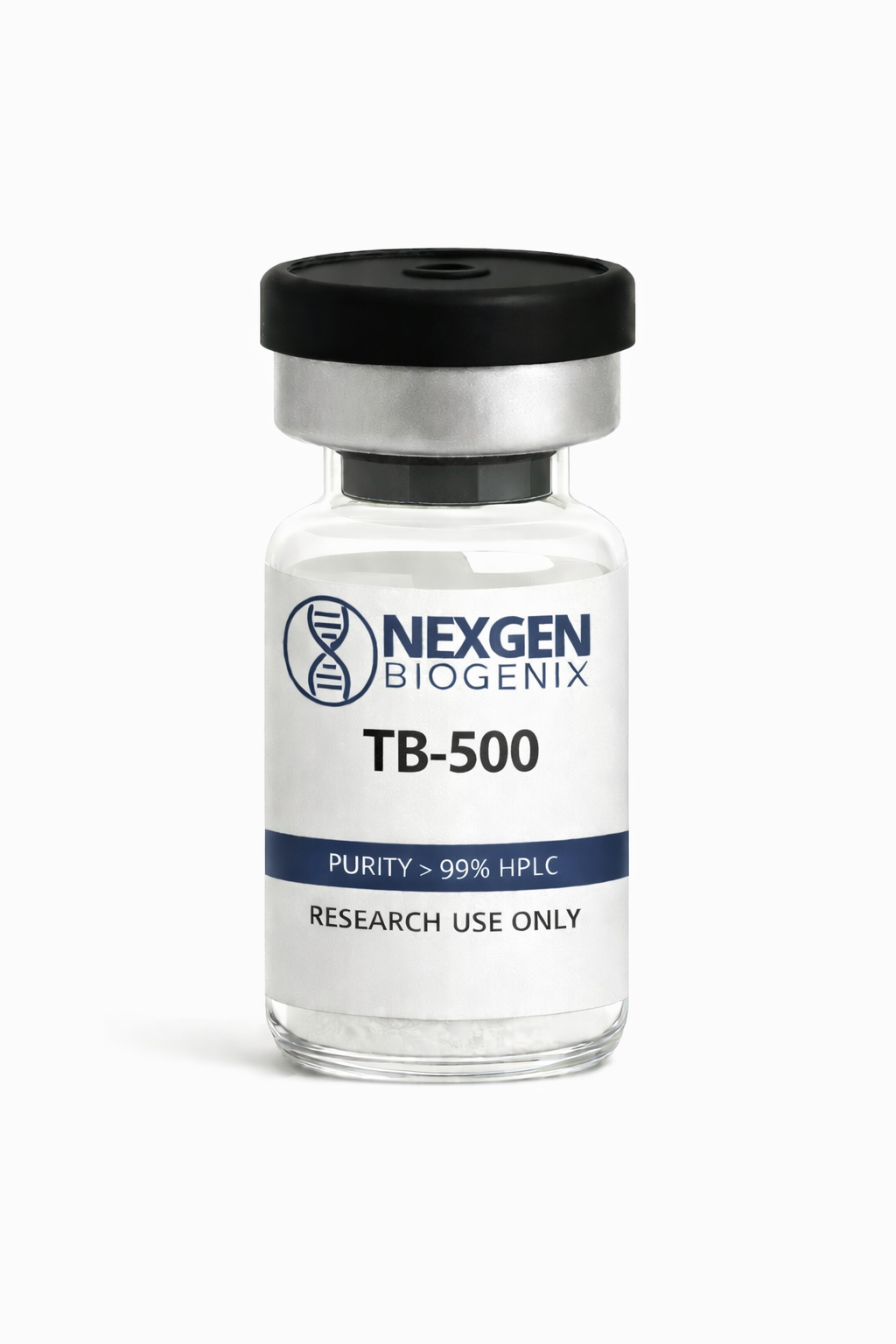
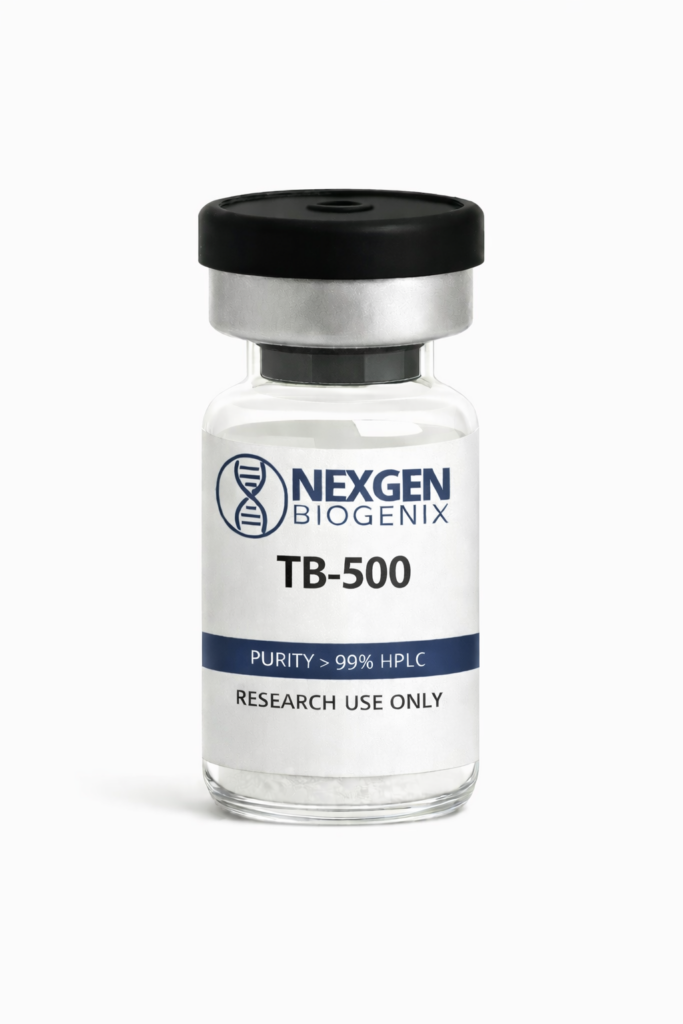
TB-500 (Thymosin Beta-4 Fragment) — Research Overview (RUO)
Quick Facts
- Full name: TB-500 (synthetic peptide fragment corresponding to the actin-binding domain of Thymosin Beta-4)
- Common name / abbreviation: TB-500; Tβ4 fragment; LKKTETQ
- Parent protein / synonyms: Thymosin Beta-4 (Tβ4); Timbetasin; TMSB4X gene product; Ac-SDKPDMAEKFDKSKLKKTETQEKNPLPSKETIEQEKQAGES-NH₂ (full 43-aa sequence)
- Peptide class: Synthetic actin-sequestering peptide fragment; β-thymosin family
- TB-500 fragment (LKKTETQ): Molecular formula: C38H68N10O14; Molecular weight: ~889 Da; PubChem CID: 62707662
- Full Thymosin Beta-4 (43 aa): Molecular formula: C212H350N56O78S; Molecular weight: ~4,963 Da; CAS: 77591-33-4; PubChem CID: 45382195
- Primary research themes: Skin and dermal wound healing models; tissue regeneration and cytoskeletal biology; cardiac repair and vascularization research; anti-aging and longevity biology; inflammation modulation; hair follicle biology
- Evidence level: Predominantly preclinical (in vitro / animal models); limited early-phase human clinical trial data for the full Tβ4 protein (not TB-500 fragment specifically)
- Regulatory status: Not FDA-approved for any indication; not on the FDA 503A or 503B Bulk Drug Substances lists; classified RUO when sold for laboratory research; prohibited by WADA under the S2 (Peptide Hormones and Growth Factors) category
What Is TB-500?
TB-500 is a synthetic peptide fragment derived from the actin-binding domain of Thymosin Beta-4 (Tβ4), a naturally occurring 43-amino-acid protein first isolated from bovine thymus tissue in the 1960s and later found to be one of the most abundant G-actin-sequestering molecules in mammalian cells. The human body naturally produces many peptides — small protein-like molecules that act as biological messengers throughout virtually every tissue — and Thymosin Beta-4 is among the most ubiquitous, present in high concentrations in platelets, macrophages, epithelial cells, and a wide range of other tissues. The TMSB4X gene that encodes Tβ4 is expressed in nearly all nucleated human cells, with particularly elevated levels in the thymus, spleen, kidney, myocardium, and brain.
In laboratory research, the term “TB-500” most commonly refers to either the short active heptapeptide fragment LKKTETQ — the core actin-binding motif of Tβ4 — or is used more loosely to describe synthetic analogs of the full-length 43-amino-acid Thymosin Beta-4 sequence. This distinction matters scientifically: the shorter LKKTETQ fragment retains approximately 60% of the biological activity associated with the full-length protein in some assay systems, while lacking the additional domains responsible for nuclear translocation, integrin binding, and other downstream signaling described in the broader Tβ4 literature. Researchers interpreting published data should confirm which molecule was used in each study, as the terms “TB-500” and “Thymosin Beta-4” are sometimes used interchangeably in secondary literature even though they represent structurally distinct compounds.
Scientific interest in TB-500 and Tβ4 spans more than five decades and has generated over 800 publications indexed on PubMed. The primary research focus has been the peptide’s role in regulating actin dynamics and cytoskeletal organization — a fundamental cellular process that underlies cell migration, wound healing, angiogenesis, and tissue remodeling. More recently, researchers have extended these investigations into the areas of cardiac regeneration, skin biology, aging, and neurological models, making TB-500 one of the more extensively studied regenerative peptides in the preclinical literature.
Why Do Researchers Study It?
Researchers are interested in TB-500 and Thymosin Beta-4 because their core mechanism — regulation of G-actin sequestration and cytoskeletal dynamics — sits at the intersection of a remarkably wide range of biological processes. This breadth makes Tβ4 an unusually versatile tool compound for studying how cells respond to injury, stress, and aging at the molecular level.
- Wound healing and skin regeneration: Studies in rodent models have described Tβ4 as accelerating dermal wound closure, increasing collagen fiber density, and reducing scar formation. Researchers have proposed it as a model compound for studying extracellular matrix remodeling and epithelial cell migration in skin biology.
- Cardiac regeneration and cardioprotection: A well-characterized body of preclinical literature describes Tβ4 as capable of reducing infarct size, stimulating angiogenesis, activating endogenous epicardial progenitor cells, and improving post-ischemic cardiac function in animal models. Researchers have proposed it as a tool for studying how embryonic developmental programs might be reactivated in adult organ tissue.
- Aging and longevity biology: Published reviews have proposed that Tβ4 may represent a class of developmentally essential secreted peptides that could be used to “remind” aging organs of their embryonic state — a hypothesis being explored in preclinical models using the heart and other organs as test systems.
- Inflammation and immune modulation: Researchers have described Tβ4 as downregulating pro-inflammatory cytokines (including NF-κB, TNF-α, and IL-8) in cell-based assays and animal models, positioning it as a research tool for studying acute and chronic inflammatory signaling pathways.
- Actin biology and cytoskeletal research: Because Tβ4 is the primary regulator of the intracellular G-actin pool, it is widely used as a mechanistic probe in cell biology experiments examining cytoskeletal remodeling, cell motility, organelle trafficking, and cellular response to mechanical stress.
- Hair follicle and dermal appendage biology: Studies in mouse models have described Tβ4 as a stimulator of hair follicle stem cell activation and hair growth, generating interest in its use as a research tool in dermal appendage biology.
Proposed Mechanism (Research Framing)
The following mechanistic descriptions are drawn entirely from published preclinical studies and review articles. They represent current scientific hypotheses and observations in laboratory models — not established clinical mechanisms. The exact mechanisms of action in humans have not been fully established, and all claims should be understood within that context.
The primary and best-characterized mechanism attributed to Thymosin Beta-4 in the published literature is G-actin sequestration. Each Tβ4 molecule binds a single G-actin monomer through the LKKTET motif — the core sequence also found in TB-500 — with a binding constant of approximately 0.5 µM. By maintaining a large intracellular pool of unpolymerized actin, Tβ4 is described in the literature as enabling cells to rapidly reorganize their cytoskeleton in response to signals from the extracellular environment. This “on-demand” actin availability is considered fundamental to a cell’s ability to migrate, change shape, form new protrusions, or close a wound. Downstream of actin sequestration, researchers have described a cascade involving the myocardin-related transcription factor (MRTF) and serum response factor (SRF) pathway, which regulates expression of cytoskeletal and extracellular matrix genes. Reduced free G-actin — as occurs in resting cells — allows MRTF to translocate to the nucleus and activate SRF-dependent gene expression, a mechanism proposed to link Tβ4 levels to changes in cell state and tissue architecture.
Beyond actin binding, studies suggest Tβ4 interacts with multiple additional cellular targets. Researchers have described anti-apoptotic effects mediated through activation of the ILK/PINCH/parvin complex, which in turn is proposed to activate the PI3K/Akt and FAK signaling pathways — intracellular routes associated with cell survival and migration. In cardiac models specifically, preclinical data have described Tβ4 as activating protein kinase C (PKC), which researchers have proposed as the initiating signal for reactivating the embryonic coronary developmental program in adult epicardial tissue. Anti-inflammatory properties have been observed in preclinical models, with studies describing downregulation of NF-κB activity, reduction of NLRP3 inflammasome signaling, and decreased production of pro-inflammatory cytokines including TNF-α, IL-1β, and IL-8 following Tβ4 treatment in cell lines and rodent injury models. The exact mechanism in humans, and the relative contribution of each pathway to any observed biological effect, has not been fully established and remains an area of active investigation.
An important note for researchers using TB-500: because the synthetic fragment LKKTETQ lacks the N-terminal Ac-SDKP tetrapeptide region (which has its own proposed anti-inflammatory and anti-fibrotic properties, and is released by angiotensin-converting enzyme), results obtained with the shorter fragment may not fully recapitulate findings from studies using full-length Tβ4. Mechanistic interpretations should account for which molecular form was used in each experimental system.
Key Targets Described in the Literature
- G-actin (LKKTET binding motif): Primary interaction; described as the core mechanism underlying cell migration, cytoskeletal remodeling, and wound-healing responses in cell-based assays
- ILK/PINCH/parvin complex → PI3K/Akt pathway: Described in preclinical models as mediating anti-apoptotic and cell survival effects, particularly in ischemic tissue models
- MRTF-SRF transcriptional axis: Proposed mechanism linking intracellular G-actin levels to gene expression changes associated with cell state, tissue remodeling, and smooth muscle cell phenotype
- Protein kinase C (PKC) — cardiac context: Described as the initiating signal for epicardial progenitor activation and reactivation of embryonic cardiac developmental programs in mouse models
- NF-κB / NLRP3 inflammasome: Observed in preclinical inflammatory models to be downregulated following Tβ4 treatment, with associated reduction in pro-inflammatory cytokine production
Research Applications (RUO Context)
In laboratory settings, TB-500 and Thymosin Beta-4 are used as tool compounds to study a broad range of biological phenomena related to cytoskeletal dynamics, tissue repair, and regenerative biology. The following applications reflect how qualified researchers have used these peptides in controlled, non-clinical experimental contexts. No protocols, dosing instructions, reconstitution guidance, or information for human use is provided or implied.
- In vitro wound-healing (scratch) assays: Applied in keratinocyte, fibroblast, and endothelial cell cultures to study the role of actin dynamics and cell migration speed in wound closure models; used to quantify effects on gap closure rate, cytoskeletal organization, and actin polymerization state
- Rodent dermal wound models: Used in excisional and incisional wound models in rats and mice to study collagen fiber formation, scar tissue reduction, re-epithelialization rate, and angiogenic responses in the dermal wound bed
- Cardiac ischemia and infarction models: Applied in rodent coronary artery ligation models to study infarct size, post-ischemic ventricular function, epicardial progenitor cell activation, and neovascularization; used as a reference compound in studies of cardiac regenerative biology
- Angiogenesis assays: Used in matrigel tube-formation assays and chorioallantoic membrane (CAM) assays to study endothelial cell behavior, capillary network formation, and VEGF-independent angiogenic signaling
- Aging and senescence research: Applied in aged animal models to study whether exogenous Tβ4 can alter gene expression profiles associated with cellular aging, epicardial morphology, and organ-level regenerative capacity
- Neurological and CNS models: Studied in experimental autoimmune encephalomyelitis (EAE) mouse models — a preclinical model for multiple sclerosis research — to examine effects on inflammatory infiltration, oligodendrocyte progenitor populations, and neurological function readouts
Evidence Snapshot
► Preclinical Evidence (In Vitro / Animal Models)
- A seminal study by Bock-Marquette et al. (2004, Nature) described full-length Tβ4 as promoting survival and migration of cardiomyocytes and endothelial cells in cardiac models, and demonstrated improved post-ischemic cardiac function following systemic peptide administration in adult mice — findings described in the literature as the foundational preclinical basis for cardiac regeneration research with this peptide.
- Multiple rodent wound-healing studies have described accelerated wound closure, thicker collagen fiber bundles, reduced wound width, and diminished scarring in animals treated with Tβ4 or the TB-500 fragment, compared to saline controls. These findings have been reproduced across multiple laboratory groups using different wound model configurations.
- A 2023 review by Bock-Marquette et al. (International Immunopharmacology) presented evidence from mouse embryo and adult cardiac models, describing Tβ4 as capable of activating epicardial progenitor cells, altering gene expression profiles toward an embryonic state, and increasing coronary vessel numbers — even in non-injured adult hearts — which researchers have proposed as relevant to aging biology.
- Studies in experimental autoimmune encephalomyelitis (EAE) mouse models have observed reduced inflammatory infiltration in the brain, preservation of oligodendrocyte progenitor cells, and improved neurological function scores in groups treated with Tβ4 compared to controls — though these findings are early-stage preclinical data requiring substantial further investigation.
- A 2015 PLoS ONE study described Tβ4 as inducing hair growth in mouse models, with proposed mechanisms involving activation of hair follicle stem cells; this finding has been reproduced in subsequent laboratory studies examining dermal appendage biology.
► Human / Clinical Evidence
- A Phase 2 clinical trial (NCT00832091) evaluated full-length recombinant Thymosin Beta-4 (not the TB-500 fragment) in patients with venous stasis ulcers. Published results described the compound as generally well tolerated, with some signals of improved wound healing in treated participants compared to placebo. This is early-phase data for the full-length protein in a single wound indication and should not be generalized to other uses or to the shorter TB-500 fragment.
- Additional early-phase human trials have evaluated Tβ4 for corneal wound healing and dry eye — conditions in which the peptide’s described anti-inflammatory and epithelial migration properties have been studied. These trials were designed and conducted by RegeneRx Biopharmaceuticals. No Tβ4-based drug has completed the full FDA approval process for any indication as of early 2026.
- As of early 2026, no large-scale, Phase 3 randomized controlled trials of TB-500 (the synthetic fragment) specifically have been published. The bulk of the human data relates to the full-length recombinant Tβ4 protein studied by RegeneRx, not to the synthetic LKKTETQ fragment sold as TB-500 in research markets. The translation of preclinical rodent findings to human therapeutic outcomes has not been established.
Limitations & Open Questions
Despite a rich body of preclinical literature and decades of research, TB-500 and Thymosin Beta-4 carry significant scientific and regulatory uncertainties that researchers and anyone reviewing this literature should carefully consider.
- TB-500 fragment vs. full-length Tβ4: Most published mechanistic studies — especially cardiac, CNS, and aging research — used the full-length 43-amino-acid Tβ4 protein, not the short LKKTETQ fragment sold as “TB-500.” Results from full-length Tβ4 studies cannot be automatically extrapolated to the fragment. Researchers must verify which molecule was used in each cited study before drawing conclusions.
- Translation gap from rodents to humans: The overwhelming majority of evidence is from mouse and rat models. Human physiology, immune responses, wound healing kinetics, and cardiac regenerative capacity differ substantially from rodents. Preclinical findings — even robust and reproducible ones — do not reliably predict human outcomes.
- Cancer biology concern: Published data indicate that Thymosin Beta-4 is upregulated in multiple metastatic cancers and may facilitate tumor cell migration to distant sites. This theoretical risk has been noted in peer-reviewed safety literature and is an open question that researchers should factor into experimental design, particularly in models involving cancer-relevant cell lines or tumor-bearing animals.
- No Phase 3 human data for TB-500 fragment: As of early 2026, no Phase 3 randomized controlled trials for the synthetic TB-500 fragment have been published. Large-scale human safety and efficacy data do not exist for this specific compound.
- Purity and standardization variability: Research-grade TB-500 sourced from commercial suppliers varies in purity, sequence fidelity, and contaminant profile. Without rigorous COA documentation and lot-level verification, experimental results may reflect impurity effects rather than peptide-specific biology. Independent analytical verification is essential for reproducible research.
- Regulatory uncertainty: TB-500 is not FDA-approved, not on the 503A or 503B Bulk Drug Substances compounding lists, and is prohibited by WADA. The regulatory environment for research peptides has been evolving rapidly since 2023; researchers must monitor FDA.gov and consult regulatory counsel for current guidance.
Quality & Sourcing
For in vitro laboratory research, the scientific reliability of any experimental finding depends directly on the characterization and purity of the research compound. When evaluating any RUO-grade TB-500 supply, researchers and procurement teams should require the following documentation standards at minimum.
- Lot Traceability: Each batch must carry a unique lot number traceable to the manufacturer’s production and synthesis records. Lot-specific documentation allows researchers to assess batch-to-batch consistency and ensures that findings in any publication or internal report can be attributed to a precisely defined material. Lack of lot traceability is a disqualifying quality deficiency for any serious research application.
- Certificate of Analysis (COA): A complete, lot-specific COA should include: identity confirmation via high-performance liquid chromatography (HPLC) and mass spectrometry (MS), confirming both sequence integrity and molecular weight; purity percentage (≥98% is the accepted standard for high-quality research peptides); residual solvent testing; endotoxin / LAL testing for any compound to be used in cell-based or animal assays; and counterion content where relevant. Researchers should request and critically review COA documentation — not simply accept supplier claims.
- Storage & Labeling: Lyophilized TB-500 is typically stored at or below −20°C in a dry, light-protected environment. Products must be clearly labeled as Research Use Only, with no therapeutic claims, no dosing instructions, no administration guidance, and no language implying human or veterinary use on any label or accompanying documentation. Proper labeling is both a scientific and a regulatory requirement.
📄 Questions about documentation or purity verification? Contact our support team or request a COA from our library.
US Regulatory Snapshot (Updated 2025)
- RUO classification: TB-500, when sold for laboratory use, is classified as a Research Use Only (RUO) compound. It is not a drug product, not a dietary supplement, not a cosmetic, and not a medical device. RUO products are not subject to FDA drug approval requirements, but they may not legally be sold, labeled, promoted, or marketed for human therapeutic or clinical use. The FDA has a history of taking enforcement action against sellers of research peptides when evidence — including dosing instructions, clinical language, syringes, or testimonials — suggests the product was intended or marketed for human use.
- Category 1 / 503A — what it means (and does not mean): Under the FDA’s compounding framework, Section 503A of the FD&C Act governs traditional compounding pharmacies. The “503A Bulk Drug Substances List” identifies substances that may be used as starting materials in compounding. “Category 1” refers to substances nominated for inclusion that are under active evaluation and for which FDA has not identified a significant safety risk — meaning the agency does not intend to take enforcement action against pharmacies compounding those specific substances while evaluation is pending. Category 1 is not FDA approval. It is not a finding of safety or efficacy. It is an interim enforcement posture only. TB-500 is not currently on the 503A Bulk Drug Substances list in any category. It was never widely adopted by the licensed compounding pharmacy system and the FDA’s 503A/503B category mechanism has therefore had limited direct applicability to it — though broader FDA enforcement authority against unapproved drug products still applies.
- FDA January 7, 2025 guidance: In its final interim guidance issued January 7, 2025 (Docket No. FDA-2015-D-3517), FDA clarified that it does not intend to place newly nominated bulk drug substances into interim Categories 1, 2, or 3 prior to completing its full evaluation under Section 503A(c). This tightening of the interim policy means that substances newly nominated after January 7, 2025 will not receive a Category 1 interim designation during the review period. This guidance underscores the importance of monitoring FDA.gov directly and consulting qualified regulatory counsel, rather than relying on informal category assignments for compliance decisions.
- TB-500-specific regulatory status (as of March 2026): TB-500 (and the parent molecule Thymosin Beta-4) is not FDA-approved for any human therapeutic indication. The full-length recombinant Tβ4 was investigated in early-phase clinical trials by RegeneRx Biopharmaceuticals, but no NDA or BLA was submitted or approved for any indication. TB-500 is not on the FDA 503A or 503B Bulk Drug Substances lists. It is currently prohibited by the World Anti-Doping Agency (WADA) under the S2 category (Peptide Hormones, Growth Factors, Related Substances and Mimetics), prohibited at all times — in-competition and out-of-competition — for athletes competing under WADA-affiliated authorities. Any RUO product sold online claiming TB-500 is “approved” for human use is making a false or misleading claim.
- Stay current — monitor authoritative sources: The regulatory landscape for research peptides has been evolving rapidly since 2023 and continues to change. Researchers, institutions, and supply-chain professionals should monitor FDA’s Bulk Drug Substances page, FDA.gov, and the WADA Prohibited List for the most current guidance, and consult a qualified regulatory attorney or compliance professional for institution-specific guidance.
Frequently Asked Questions
Does the body naturally produce peptides like Thymosin Beta-4?
Yes — and Thymosin Beta-4 itself is a prime example. The human body naturally produces many peptides — small protein-like molecules that act as biological messengers — and Tβ4 is one of the most abundant, found in nearly every nucleated cell in the body at biologically significant concentrations. Other well-known endogenous peptides include insulin (which regulates blood sugar), oxytocin (involved in social bonding and childbirth), glucagon (which raises blood glucose), endorphins (natural pain modulators), and growth hormone-releasing hormone (GHRH). What makes TB-500 a research subject is that it is a synthetic laboratory compound designed to replicate or study the activity of the actin-binding domain of the body’s own endogenous Tβ4 protein. Scientists use it as a tool to understand what naturally occurs inside cells and tissues — they are not introducing a foreign substance, but rather studying a chemical architecture the body itself uses as part of normal physiology. However, synthetic laboratory compounds are never equivalent to endogenous peptides operating in their native biological context, and conclusions from RUO research cannot be assumed to apply to the human body.
Is TB-500 FDA-approved?
No. TB-500 is not approved by the US Food and Drug Administration for any indication. The full-length recombinant Thymosin Beta-4 protein was studied in early-phase human trials for wound healing and corneal conditions by RegeneRx Biopharmaceuticals, but no drug product based on Tβ4 has completed the FDA approval process — no New Drug Application (NDA) or Biologics License Application (BLA) has been approved. TB-500, the shorter synthetic fragment, has not itself been the subject of a registered Phase 3 clinical trial. It is not on the FDA’s 503A or 503B Bulk Drug Substances compounding lists. It is prohibited by WADA for competitive athletes. Any product sold as TB-500 and claimed to be FDA-approved is making a false statement. Nothing on this page constitutes an endorsement of any clinical or personal use of this compound.
Is any information on this page medical advice?
No. Nothing on this page constitutes medical advice, clinical guidance, therapeutic recommendations, dosing instructions, reconstitution guidance, or administration instructions of any kind. This page is educational and scientific reference material provided for qualified researchers only. All products described on this website are intended exclusively for in vitro laboratory research by qualified scientists in appropriate research settings. If you have questions about your health, skin, wounds, cardiac health, or any medical condition, please consult a licensed healthcare provider. If you are interested in participating in legitimate human research involving Thymosin Beta-4, you may search for actively enrolling clinical trials at ClinicalTrials.gov.
References (Starting Points)
- Kleinman HK, Sosne G. “Thymosin Beta4 Promotes Dermal Healing.” Vitamins and Hormones. 2016;102:251–275. PMID: 26827005. View on PubMed
- Smart N, Risebro CA, Melville AAD, Moses K, Schwartz RJ, Bhatt DL, Riley PR. “Thymosin beta-4 induces adult epicardial progenitor mobilization and neovascularization.” Nature. 2007;445(7124):177–182. PMID: 17108969. View on PubMed
- Bock-Marquette I, Maar K, Maar S, Lippai B, Faskerti G, Gallyas F Jr, Olson EN, Srivastava D. “Thymosin beta-4 denotes new directions towards developing prosperous anti-aging regenerative therapies.” International Immunopharmacology. 2023;116:109741. PMID: 36709593. View on PubMed
- Xing Y, Ye Y, Zuo H, Li Y. “Progress on the Function and Application of Thymosin β4.” Frontiers in Endocrinology. 2021;12:767785. PMID: 35002965. View on PMC
- Goldstein AL, Hannappel E, Sosne G, Kleinman HK. “Thymosin β4: a multi-functional regenerative peptide. Basic properties and clinical applications.” Expert Opinion on Biological Therapy. 2012;12(1):37–51. PMID: 22074294. View on PubMed
- Gao X, Liang H, Hou F, Zhang Z, Nuo M, Guo X, Liu D. “Thymosin Beta-4 Induces Mouse Hair Growth.” PLoS ONE. 2015;10(6):e0130040. PMID: 26091360. View on PubMed
- U.S. Food and Drug Administration. “Certain Bulk Drug Substances for Use in Compounding that May Present Significant Safety Risks.” FDA.gov. Updated 2024–2025. View on FDA.gov
- U.S. Food and Drug Administration. “Interim Policy on Compounding Using Bulk Drug Substances Under Section 503A of the Federal Food, Drug, and Cosmetic Act — Guidance for Industry.” Published January 7, 2025. Docket No. FDA-2015-D-3517. View on FDA.gov
RESEARCH USE ONLY — REGULATORY NOTICE
All products and information presented on this website are intended exclusively for in-vitro laboratory research and scientific investigation by qualified researchers. These products are not intended for human consumption, veterinary use, cosmetic application, or therapeutic purposes of any kind. Nothing on this page has been evaluated by the U.S. Food and Drug Administration (FDA). These products are not intended to diagnose, treat, cure, or prevent any disease or medical condition. Researchers are responsible for ensuring compliance with all applicable local, state, and federal regulations before ordering or using any research compound. For questions about regulatory status, consult a qualified regulatory attorney or compliance professional.