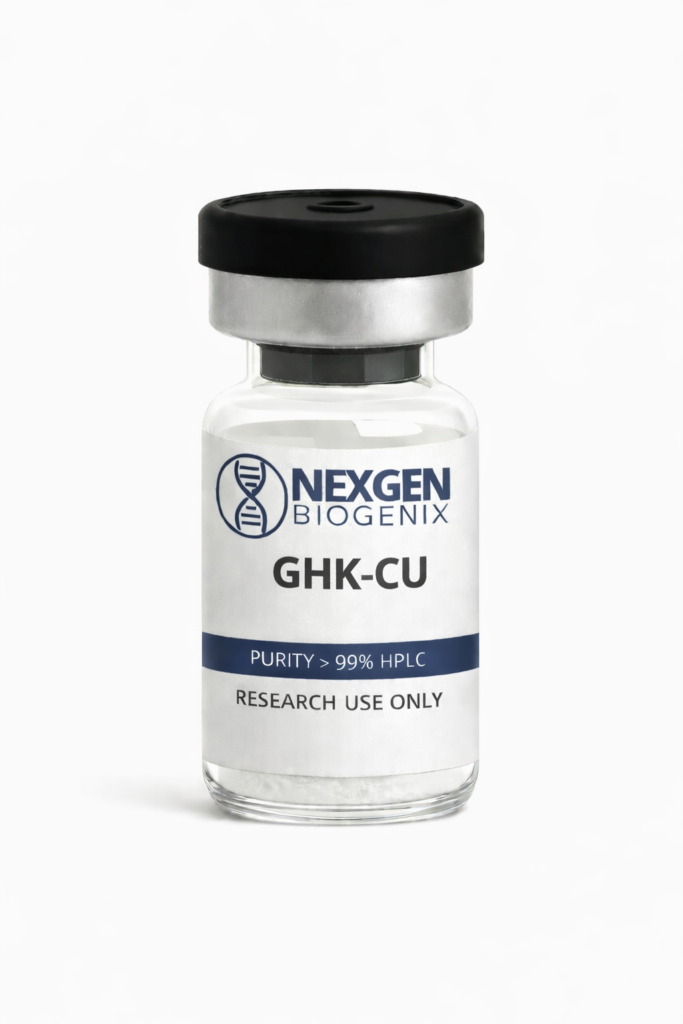
⚠️ Research Use Only (RUO). Not for human or veterinary use. All content on this page is provided for educational and scientific reference purposes only.
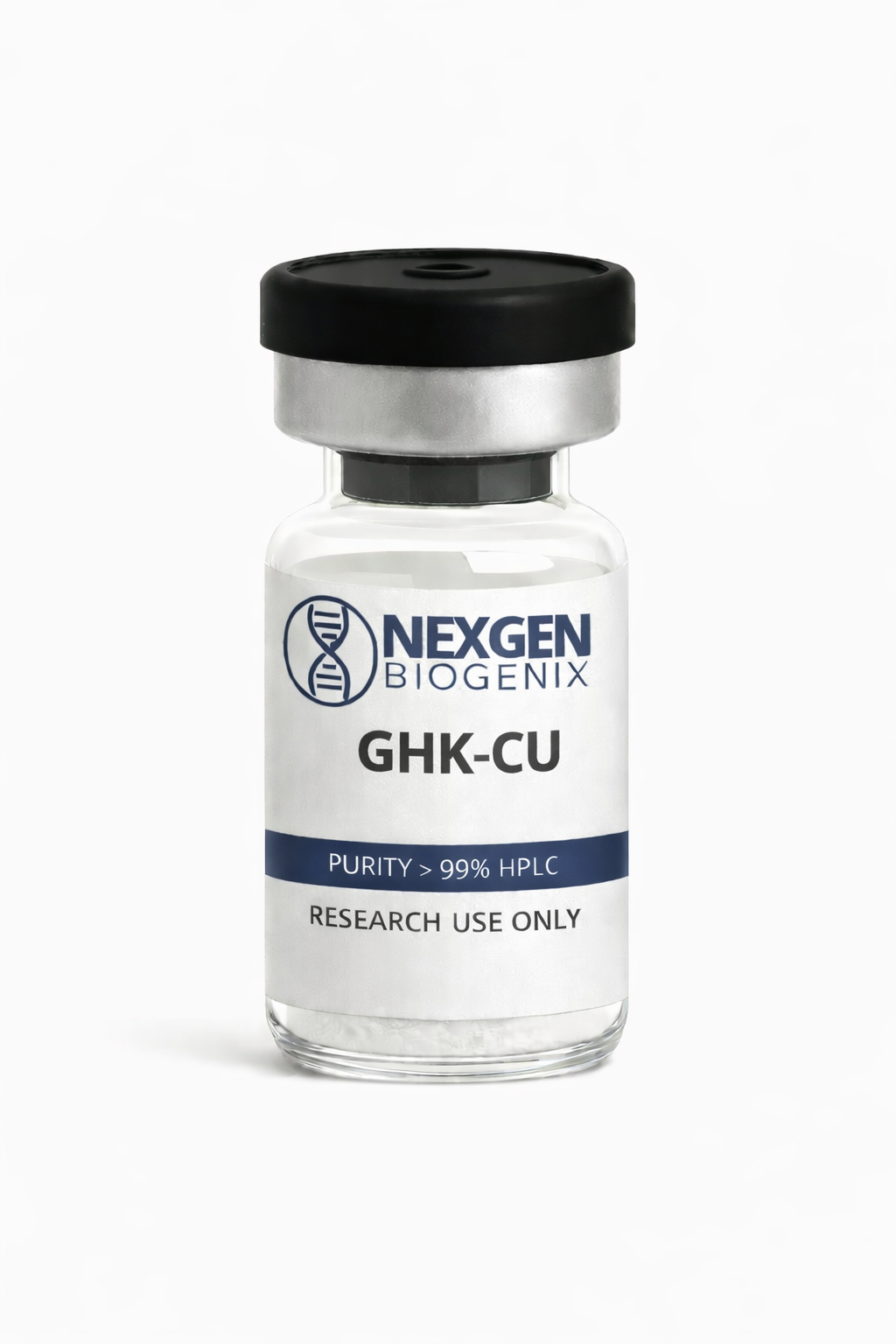
GHK-Cu — Research Overview (RUO)
Quick Facts
- Full name: Glycyl-L-histidyl-L-lysine copper(II) complex
- Common name / abbreviation: GHK-Cu; sometimes referred to informally as the “Beauty Peptide”
- Synonyms / related names: Copper peptide GHK, GHK:Cu, Lamin (cosmetic trade name in older literature)
- Peptide class: Tripeptide–metal ion complex (copper-binding peptide)
- Molecular weight: ~340.38 Da (free peptide); ~403.91 Da (Cu²⁺ complex)
- CAS number: 49557-75-7 (GHK-Cu complex)
- Primary research themes: Skin biology and wound repair models; extracellular matrix remodeling; antioxidant and anti-inflammatory pathways; gene-expression modulation in aging
- Evidence level: Predominantly preclinical (in vitro and animal models); limited small human studies; no large-scale randomized controlled trials (RCTs)
- Regulatory status: Research Use Only (RUO); not FDA-approved as a drug; not a dietary supplement; certain compounded forms have carried Category 1 / 503A status (see Section 9 for current details)
What Is GHK-Cu?
GHK-Cu is a naturally occurring tripeptide — glycine, histidine, and lysine — bound to a copper(II) ion. It was first isolated from human plasma in the early 1970s by biochemist Loren Pickart, who observed that older human plasma lost certain regenerative properties that younger plasma possessed, and eventually traced that activity to this small copper-binding molecule. Since then, GHK-Cu has become one of the more extensively studied peptides in skin biology and aging research.
The human body naturally produces many peptides — small, protein-like molecules that act as biological messengers — and GHK-Cu is one of them. Measurable concentrations of GHK have been detected in human plasma, saliva, and urine, with plasma levels reported to decline significantly with age, a pattern that has sparked considerable scientific curiosity about its potential role in the biology of aging and tissue maintenance.
In laboratory settings, GHK-Cu is studied in the context of wound-healing models, extracellular matrix dynamics, antioxidant activity, and transcriptomic analyses examining how aging cells respond to copper-peptide signaling. Its unusual ability to influence gene expression across a broad range of pathways — described in the literature as affecting hundreds of genes simultaneously — is one reason it continues to attract academic and pharmaceutical interest.
Why Do Researchers Study It?
Researchers are interested in GHK-Cu because preclinical studies have linked it to several biologically significant processes that are relevant to aging, wound healing, and cellular homeostasis. Key areas of investigation include:
- Extracellular matrix (ECM) remodeling: Laboratory studies have described GHK-Cu as stimulating synthesis of collagen, elastin, and glycosaminoglycans while also modulating matrix metalloproteinases (MMPs), suggesting a potential regulatory role in ECM turnover.
- Wound repair models: Preclinical research has examined GHK-Cu in cell migration, angiogenesis, and tissue contraction assays relevant to wound-healing biology.
- Antioxidant and anti-inflammatory signaling: Studies suggest GHK-Cu may modulate oxidative stress pathways — partly through its copper-sequestering activity — and may influence cytokine signaling in inflammatory models.
- Gene expression and aging research: Genomic analyses have proposed that GHK-Cu modulates a large number of genes associated with cell proliferation, apoptosis, and metabolic function, making it a subject of interest in longevity and aging biology.
- Nervous system models: Some preclinical work has explored GHK-Cu in neurotrophic and neuroprotective contexts, though this area remains at an early stage.
- Copper biology: Because GHK chelates copper — an essential trace element involved in numerous enzymatic processes — researchers study it as a tool for understanding copper homeostasis in cell culture systems.
Proposed Mechanism (Research Framing)
The following descriptions are drawn from published scientific literature and reflect hypotheses and observations from preclinical and in vitro research. The exact mechanisms of GHK-Cu in humans have not been fully established, and no causal claims are made here.
Researchers have proposed that GHK-Cu exerts its observed effects through at least two interconnected mechanisms. First, the copper(II) ion component is thought to facilitate entry into cells and participation in copper-dependent enzymatic reactions, including those catalyzed by superoxide dismutase (SOD) and lysyl oxidase — an enzyme involved in collagen and elastin crosslinking. Studies suggest that copper delivered via the GHK chelate may be more bioavailable to certain cell types in vitro than free copper ions, though the relevance of this observation to intact biological systems is still under investigation.
Second, and perhaps more intriguingly, researchers have described GHK-Cu as a broad modulator of gene transcription. Genomic studies — including analyses using the LINCS L1000 platform — have observed that GHK-Cu treatment in cell culture is associated with changes in the expression of genes linked to inflammation, cell cycle regulation, DNA repair, and metabolism. Researchers have proposed that this activity may occur partly through interactions with the Sp1 transcription factor and through effects on histone acetylation, though the precise molecular pathway in humans remains an active area of study.
In wound-healing assays, GHK-Cu has been observed to promote fibroblast migration and proliferation, upregulate collagen synthesis, and stimulate the production of vascular endothelial growth factor (VEGF) — findings reported in preclinical models that have not yet been fully replicated in large human trials.
Key Targets Described in the Literature
- Lysyl oxidase: Copper-dependent enzyme involved in collagen and elastin crosslinking; described in the literature as upregulated in GHK-Cu–treated cell models.
- Matrix metalloproteinases (MMPs) and TIMPs: Studies suggest GHK-Cu may modulate MMP-2 and TIMP-1/2 activity, influencing ECM remodeling balance in vitro.
- Sp1 transcription factor: Researchers have proposed interactions with Sp1-responsive promoters as one mechanism for GHK-Cu’s broad transcriptional effects.
- VEGF and angiogenic signaling: Preclinical models have observed increased VEGF production following GHK-Cu treatment, relevant to wound repair and tissue vascularization research.
- TGF-β pathway: Some literature describes modulation of transforming growth factor-beta signaling, which plays a central role in fibrosis and tissue remodeling research.
Research Applications (RUO Context)
In qualified laboratory settings, GHK-Cu is used as a research tool across a variety of assay types and model systems. The following applications reflect how researchers have described using this peptide in published studies — not protocols or instructions for any use outside a controlled research environment.
- Fibroblast and keratinocyte culture models: Researchers use GHK-Cu to study cell migration (scratch assays), proliferation, and collagen gene expression in human dermal fibroblast cell lines.
- Gene expression profiling: GHK-Cu has been used as a reference compound in transcriptomic studies to understand how copper-peptide complexes alter global gene expression profiles in aging cell models.
- Oxidative stress assays: In antioxidant research, GHK-Cu has been employed in ROS (reactive oxygen species) quantification assays to evaluate its scavenging properties under controlled conditions.
- Animal wound models: Preclinical studies in rodent models have examined topical or subcutaneous application of GHK-Cu in wound contraction and re-epithelialization endpoints.
- Copper chelation and transport studies: GHK-Cu serves as a model compound in studies examining how tripeptide scaffolds influence intracellular copper delivery and bioavailability.
- ECM component assays: Researchers measure hydroxyproline content, glycosaminoglycan deposition, and elastin synthesis in GHK-Cu–treated culture systems as proxies for matrix remodeling activity.
Evidence Snapshot
► Preclinical Evidence (In Vitro / Animal Models)
- Multiple in vitro studies have observed that GHK-Cu stimulates collagen synthesis and fibroblast migration in human cell lines, with effects described as dose-dependent in controlled conditions (Pickart et al.; Gorouhi & Maibach).
- Animal model studies — primarily in rodents — have reported accelerated wound contraction and increased tensile strength in GHK-Cu–treated wounds compared to controls, though study designs and sample sizes vary considerably.
- Transcriptomic analyses (including LINCS-based studies) have observed that GHK-Cu modulates hundreds of gene targets in cell culture, with proposed relevance to aging and inflammation pathways — though causal interpretation remains preliminary.
- Antioxidant activity has been described in cell-free and cell-based assays; researchers have proposed copper sequestration as one mechanism reducing oxidative damage in model systems.
► Human / Clinical Evidence
- A small number of human studies have examined topical formulations containing GHK-Cu for outcomes such as skin density and fine line appearance; these are generally small, short-duration trials without rigorous placebo controls, limiting the conclusions that can be drawn.
- One early clinical observation by Pickart noted changes in wound healing in human subjects given GHK-containing plasma fractions, but this work predates modern RCT methodology and has not been independently replicated at scale.
- As of 2025, large-scale, double-blind, randomized controlled trials evaluating GHK-Cu as an investigational drug in humans have not been published in peer-reviewed literature. The existing human evidence base is limited and cannot be used to establish efficacy or safety for any medical indication.
Limitations & Open Questions
As with most peptides in the preclinical research space, GHK-Cu’s scientific story is genuinely interesting — but significant gaps remain between what has been observed in laboratory settings and what can be concluded about effects in humans. Researchers and reviewers have consistently noted the following limitations:
- Preclinical-to-human translation gap: Most of the mechanistic evidence comes from cell lines and rodent models. Whether these findings translate meaningfully to human physiology has not been established through rigorous clinical trials.
- Small study sizes and methodological variability: Human studies to date have been small, short in duration, and varied in methodology, making cross-study comparison and generalization difficult.
- Topical vs. systemic bioavailability: It remains unclear how much intact GHK-Cu penetrates the skin barrier in topical applications versus being degraded at the surface — a critical open question for translational research.
- Purity and preparation variability: Research findings can be sensitive to the purity and copper-loading ratio of the GHK-Cu used. Studies using inconsistently characterized preparations may not be directly comparable.
- Copper toxicity considerations in model systems: Copper is an essential but potentially toxic element at elevated concentrations; the therapeutic index of GHK-Cu delivery systems requires careful characterization in any research model.
- Regulatory and standardization uncertainty: The peptide’s compounding status has evolved with FDA guidance changes (see Section 9), and researchers should ensure they are using appropriately documented RUO-grade material.
Quality & Sourcing
For researchers working with GHK-Cu in preclinical or in vitro settings, the quality of the compound is a foundational variable. Trace metal contamination, inconsistent copper-loading ratios, or degraded peptide can introduce significant confounds into experimental results. When sourcing GHK-Cu for laboratory use, the following documentation standards are worth prioritizing:
- Lot Traceability: Each batch should be individually manufactured and traceable by lot number, allowing researchers to link their experimental results to a specific production record and to identify any batch-to-batch variability.
- Certificate of Analysis (COA): A third-party or in-house COA should confirm peptide identity (e.g., via HPLC and mass spectrometry), purity (≥98% is a common research-grade benchmark), copper content, and absence of common contaminants such as residual solvents, endotoxins, and heavy metals.
- Storage & Labeling: Research-grade GHK-Cu should be clearly labeled as Research Use Only, stored under recommended conditions (typically lyophilized and protected from light and moisture), and accompanied by a defined expiration or retest date to ensure compound integrity at the time of use.
📄 Questions about documentation or purity verification? Contact our support team or request a COA from our library.
US Regulatory Snapshot (Updated 2025)
- RUO context: GHK-Cu is sold and distributed strictly as a Research Use Only compound. It is not a drug, not a dietary supplement, and not approved for any therapeutic, cosmetic, or veterinary application. Purchasing or possessing it for human self-administration would be outside its labeled and legal use.
- Category 1 / 503A — what it means (and what it does not mean): Under the FDA’s 503A compounding framework, certain bulk drug substances were placed into “Category 1” — a designation indicating they were nominated for potential inclusion on a list that could allow licensed compounding pharmacies to use them. Category 1 status is not FDA approval. It means only that the substance was nominated and placed into an interim review category. It confers no determination of safety, efficacy, or clinical appropriateness by the FDA.
- FDA guidance, January 7, 2025: The FDA released guidance stating that it does not intend to place new bulk drug substance nominations into interim Categories 1, 2, or 3 while its broader evaluation of the 503A bulks nomination process continues. This signals an ongoing regulatory evolution that all researchers and compounders should monitor carefully.
- GHK-Cu–specific status (as of 2025): GHK-Cu (copper peptide) has appeared on FDA nomination lists for 503A compounding consideration and has been referenced in compounding-related regulatory documents. However, it has not received FDA approval as a drug product under any new drug application (NDA) or abbreviated new drug application (ANDA), and its compounding status remains subject to the evolving FDA framework described above. Researchers should verify current status directly at FDA.gov before drawing any regulatory conclusions.
- Stay current: Peptide regulation in the United States is an actively evolving area. Researchers, compounders, and institutions are strongly advised to monitor FDA.gov’s compounding pages for updates, and to consult a qualified regulatory attorney or compliance professional for any institution-specific guidance.
Frequently Asked Questions
Does the body naturally produce peptides like GHK?
Yes. The human body naturally produces many peptides — small, protein-like molecules that act as biological messengers throughout virtually every system in the body. Well-known examples include insulin (which regulates blood sugar), oxytocin (involved in social bonding and childbirth), and endorphins (which modulate pain and mood). GHK itself is a naturally occurring tripeptide detected in human plasma, saliva, and urine. Its plasma concentration has been reported to decline with age, which is one reason it has attracted interest from researchers studying the biology of aging and tissue maintenance.
Is GHK-Cu FDA-approved?
No. GHK-Cu is not FDA-approved as a drug for any indication. It has not been evaluated under a New Drug Application (NDA) and has not received FDA approval for safety or efficacy in humans. While it has appeared in the context of FDA’s 503A bulk drug substance compounding nomination process, nomination and interim categorization are administrative steps — not approval. All GHK-Cu sold on this platform is strictly Research Use Only (RUO) and is not intended or labeled for human use of any kind.
Is anything on this page medical advice?
No. Nothing on this page constitutes medical advice, clinical guidance, or a recommendation for human use of any kind. This page is an educational reference for qualified researchers and is intended solely to summarize what has been described in the scientific literature about GHK-Cu as a research tool. If you have health questions or concerns, please consult a licensed healthcare provider. If you have regulatory questions, consult a qualified regulatory attorney or compliance professional.
References (Starting Points)
- Pickart L, Freedman JH, Loker WJ, et al. “Growth-modulating plasma tripeptide may function by facilitating copper uptake into cells.” Nature. 1980;288(5792):715–717. PMID: 7442819. View on PubMed
- Gorouhi F, Maibach HI. “Role of topical peptides in preventing or treating aged skin.” International Journal of Cosmetic Science. 2009;31(5):327–345. PMID: 19570099. View on PubMed
- Pickart L, Vasquez-Soltero JM, Margolina A. “GHK peptide as a natural modulator of multiple cellular pathways in skin regeneration.” BioMed Research International. 2015;2015:648108. PMID: 26065009. View on PubMed
- Pickart L, Margolina A. “Regenerative and protective actions of the GHK-Cu peptide in the light of the new gene data.” International Journal of Molecular Sciences. 2018;19(7):1987. PMID: 29986520. View on PubMed
- Cangul IT, Gul NY, Topal A, Yilmaz R. “Evaluation of the effects of topical tripeptide-copper complex and zinc oxide on open wound healing in rabbits.” Veterinary Dermatology. 2006;17(6):417–423. PMID: 17083575. View on PubMed
- Abdulghani AA, Sherr S, Shirin S, et al. “Effects of topical creams containing vitamin C, a copper-binding peptide cream and melatonin compared with tretinoin on the ultrastructure of normal skin — a pilot clinical, histologic, and ultrastructural study.” Disease Management & Clinical Outcomes. 1998;1(4):136–141.
- U.S. Food and Drug Administration. “Bulk Drug Substances Nominated for Use in Pharmacy Compounding Under Section 503A of the Federal Food, Drug, and Cosmetic Act.” Updated 2025. View on FDA.gov
- U.S. Food and Drug Administration. “Guidance for Industry: Addressing Nominations of Bulk Drug Substances Under Section 503A.” January 7, 2025. View FDA Guidance Documents
RESEARCH USE ONLY — REGULATORY NOTICE
All products and information presented on this website are intended exclusively for in-vitro laboratory research and scientific investigation by qualified researchers. These products are not intended for human consumption, veterinary use, cosmetic application, or therapeutic purposes of any kind. Nothing on this page has been evaluated by the U.S. Food and Drug Administration (FDA). These products are not intended to diagnose, treat, cure, or prevent any disease or medical condition. Researchers are responsible for ensuring compliance with all applicable local, state, and federal regulations before ordering or using any research compound. For questions about regulatory status, consult a qualified regulatory attorney or compliance professional.