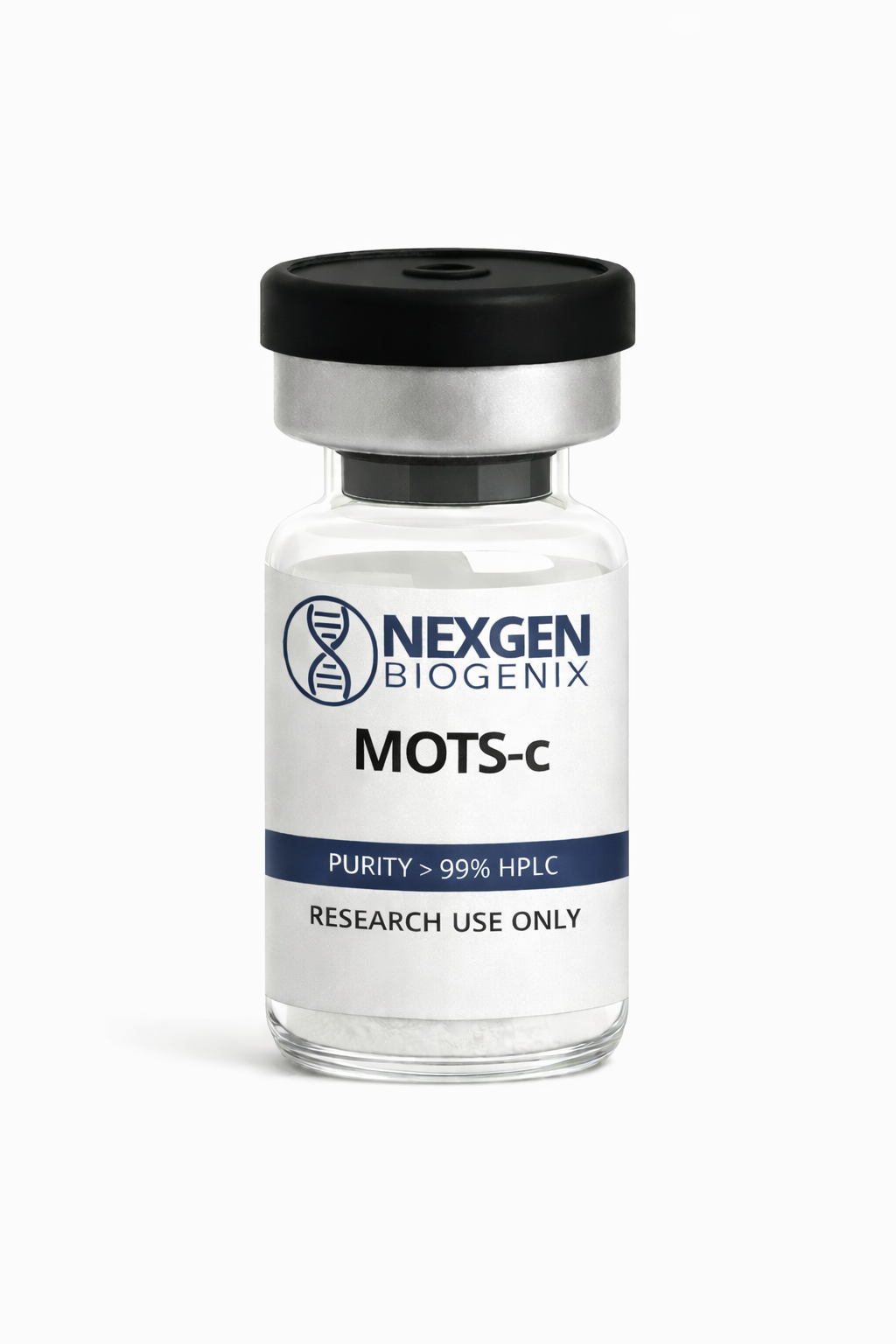
⚠️ Research Use Only (RUO). Not for human or veterinary use. All content on this page is provided for educational and scientific reference purposes only.
MOTS-c — Research Overview (RUO)
Quick Facts
- Full name: Mitochondrial Open Reading Frame of the 12S rRNA Type-C
- Common name / abbreviation: MOTS-c; also referred to in the literature as a mitochondrial-derived peptide (MDP) or mitokine
- Synonyms / related names: MT-RNR1-encoded peptide; 12S rRNA sORF peptide; mitochondrial ORF of the 12S rRNA type-c
- Peptide class: Endogenous mitochondrial-derived peptide (MDP); 16-amino-acid linear peptide encoded by mitochondrial DNA
- Amino acid sequence: Met-Arg-Trp-Gln-Glu-Met-Gly-Tyr-Ile-Phe-Tyr-Pro-Arg-Lys-Leu-Arg (single-letter: MRWQEMGYIFYPRKLR)
- Molecular formula: C₁₀₁H₁₅₂N₂₈O₂₂S₂
- Molecular weight: ~2,174.6 Da
- CAS number: 1627580-64-6
- PubChem CID: 146675088
- Primary research themes: Metabolic homeostasis and insulin sensitivity; exercise physiology and mitokine biology; aging and longevity research; mitochondria-to-nucleus retrograde signaling; inflammatory and senescence pathways; cardiovascular and pancreatic beta-cell research
- Evidence level: Predominantly preclinical (in vitro and animal models); observational human data on circulating MOTS-c levels in aging and metabolic disease; an analog (CB4211) has entered Phase Ia/Ib human trials — but native MOTS-c itself has not been evaluated in large-scale registered clinical trials
- Regulatory status: Research Use Only (RUO) in the United States; not FDA-approved as a drug for any indication; not listed on the FDA’s approved 503A compounding bulks list; native MOTS-c has not been nominated or categorized under the FDA interim 503A framework (see Section 9 for details)
What Is MOTS-c?
MOTS-c — an abbreviation for Mitochondrial Open Reading Frame of the 12S rRNA Type-C — is a naturally occurring 16-amino-acid peptide encoded not by nuclear DNA, as most peptides are, but by the mitochondrial genome itself. Specifically, it is encoded by a short open reading frame (sORF) within the 12S ribosomal RNA gene (MT-RNR1) of mitochondrial DNA — making it one of a small and recently discovered class of bioactive peptides now collectively referred to as mitochondrial-derived peptides (MDPs). MOTS-c was first identified and characterized in 2015 by researchers at the University of Southern California, led by Changhan David Lee and Pinchas Cohen, in a landmark study published in Cell Metabolism.
The human body naturally produces many peptides — small, protein-like molecules that act as biological messengers coordinating communication within and between cells — and MOTS-c is a particularly remarkable example. Unlike most peptides, which are translated in the cytoplasm from nuclear-encoded mRNAs, MOTS-c is transcribed in the mitochondria but translated in the cytoplasm using the standard genetic code, a feature that gives it unusual cross-compartmental properties. Under resting conditions, MOTS-c is primarily co-localized with mitochondria; under metabolic stress, exercise, or aging-related dysfunction, it is observed to translocate to the nucleus, where it is proposed to regulate the expression of nuclear genes involved in stress adaptation and metabolic homeostasis.
What makes MOTS-c especially compelling as a research subject is its behavior as a systemic mitokine — a mitochondrially-derived signaling molecule with endocrine-like effects beyond the cell of origin. Circulating MOTS-c has been detected in human plasma, and its levels have been reported to decline with advancing age. This age-associated decline, combined with its proposed roles in insulin sensitivity, exercise adaptation, and protection against senescence, has established MOTS-c as one of the most actively studied peptides in the fields of metabolic biology and longevity research.
Why Do Researchers Study It?
Researchers are interested in MOTS-c because it occupies a unique and scientifically novel position — as a peptide encoded by mitochondrial DNA, it represents an entirely new class of signaling molecule whose biology challenges longstanding assumptions about the scope of the mitochondrial genome. Beyond this conceptual significance, preclinical studies have linked MOTS-c to a broad range of biologically important processes. Key areas of investigation include:
- Insulin sensitivity and glucose metabolism: Rodent studies have observed that MOTS-c treatment improves insulin sensitivity and glucose uptake in skeletal muscle, with proposed relevance to models of type 2 diabetes and diet-induced obesity. MOTS-c has been described in the literature as an exercise mimetic with respect to these metabolic endpoints.
- Exercise physiology and mitokine biology: Endogenous MOTS-c levels in skeletal muscle have been reported to increase substantially following exercise in animal models. Researchers use MOTS-c to probe the molecular mechanisms by which physical activity improves metabolic function — and to study whether this mitokine mediates some of exercise’s systemic benefits.
- Aging biology and senescence: Circulating MOTS-c levels are reported to decline with age in both animal and human studies, and preclinical work has linked MOTS-c treatment to reductions in cellular senescence markers in aged pancreatic islets and other tissues. This makes it a research tool of interest in the emerging field of senotherapy.
- Mitochondria-to-nucleus retrograde signaling: MOTS-c’s ability to translocate from mitochondria to the nucleus under stress conditions — where it is proposed to bind directly to antioxidant response elements (AREs) and regulate nuclear gene expression — makes it a valuable probe for understanding how mitochondrial status communicates with the nuclear genome.
- Cardiovascular and inflammatory research: Preclinical models have examined MOTS-c in the context of vascular calcification, cardiac function under stress, and inflammatory cytokine suppression, with studies suggesting modulation of AMPK-related pathways as a potential mechanism.
- Pancreatic beta-cell biology: Recent research has explored MOTS-c’s role in preventing pancreatic islet senescence in animal models of both type 1 and type 2 diabetes, where circulating MOTS-c has also been observed to be lower in human type 2 diabetes patients compared to healthy controls — an observational finding that has heightened translational interest.
Proposed Mechanism (Research Framing)
The following descriptions are drawn from published scientific literature and reflect hypotheses and observations from preclinical and in vitro research. The exact mechanisms of MOTS-c in humans have not been fully established, and no causal claims are made here.
The primary mechanism through which researchers have proposed MOTS-c exerts its metabolic effects involves the folate cycle and the AICAR–AMPK signaling axis. Studies suggest that MOTS-c inhibits key enzymatic steps in the folate cycle and the tethered de novo purine biosynthesis pathway, leading to an intracellular accumulation of AICAR (5-aminoimidazole-4-carboxamide ribonucleotide) — a natural activator of AMP-activated protein kinase (AMPK). AMPK is a master regulator of cellular energy homeostasis: its activation is associated with increased glucose uptake, enhanced fatty acid oxidation, suppression of inflammatory signaling, and induction of mitochondrial biogenesis. Researchers have proposed that this Folate–AICAR–AMPK axis is the central metabolic pathway through which MOTS-c influences insulin sensitivity, fat oxidation, and anti-inflammatory responses in skeletal muscle and other metabolic tissues.
A second, equally distinctive proposed mechanism concerns MOTS-c’s nuclear translocation under stress. Studies have observed that when cells experience oxidative stress, exercise-induced metabolic demands, or aging-related mitochondrial dysfunction, MOTS-c translocates from mitochondria — where it resides at rest — into the nucleus, via an AMPK/PGC-1α-dependent pathway. Once in the nucleus, researchers have described MOTS-c as binding directly to antioxidant response elements (AREs) on target genes, thereby upregulating genes involved in oxidative stress defense, metabolic adaptation, and cellular survival. This retrograde signaling from mitochondria to the nuclear genome represents a previously unrecognized communication axis and is one reason MOTS-c has attracted broad scientific interest beyond metabolic research.
A 2024 study published in iScience proposed an additional tissue-specific mechanism: MOTS-c was described as directly binding to CK2α (casein kinase 2 alpha), a protein kinase, with opposing effects in different tissue contexts — activating CK2α in skeletal muscle to support muscle function and repair, while inhibiting it in adipose tissue to reduce fat storage. Researchers have proposed that this context-dependent, tissue-specific activity may help explain MOTS-c’s differential effects across organ systems, though this mechanism requires further independent replication.
Key Targets Described in the Literature
- AMPK (AMP-activated protein kinase): Described in the literature as the central downstream effector of MOTS-c’s metabolic activity, activated indirectly via AICAR accumulation following folate cycle inhibition; AMPK activation is linked to glucose uptake, fatty acid oxidation, and mitochondrial biogenesis in preclinical models.
- Folate cycle and de novo purine biosynthesis: Researchers have proposed that MOTS-c inhibits enzymatic steps in these interconnected pathways, causing AICAR accumulation that drives AMPK activation — the primary proposed mechanism for its insulin-sensitizing effects in skeletal muscle.
- Antioxidant response elements (AREs): Studies have described translocated MOTS-c as binding directly to ARE sequences in the nuclear genome under stress conditions, activating antioxidant and cytoprotective gene expression programs.
- PGC-1α (peroxisome proliferator-activated receptor gamma coactivator 1-alpha): Described as a co-effector in the AMPK/PGC-1α pathway through which MOTS-c’s nuclear translocation under stress is proposed to be mediated.
- CK2α (casein kinase 2 alpha): A recently proposed direct binding target; researchers have described tissue-specific agonist and antagonist interactions that may contribute to MOTS-c’s differential effects in muscle versus adipose tissue models.
- mTOR pathway: Some literature has described interactions between MOTS-c signaling and the mTOR pathway in the context of pancreatic beta-cell senescence and metabolic regulation, though this relationship is less characterized than the AMPK axis.
Research Applications (RUO Context)
In qualified laboratory settings, MOTS-c is employed as a research tool in metabolic biology, aging science, exercise physiology, and mitochondrial research. The following applications reflect how researchers have described using this compound in published studies — not protocols or instructions for any use outside a controlled research environment.
- Skeletal muscle cell culture models: MOTS-c has been used in L6 and C2C12 myotube cell culture systems to study glucose uptake, fatty acid oxidation, and AMPK phosphorylation as endpoints relevant to insulin resistance research.
- Diet-induced obesity and insulin resistance animal models: In rodent studies, MOTS-c has been administered intraperitoneally or subcutaneously to diet-induced obese mice to examine metabolic endpoints including body weight, hepatic fat content, plasma glucose, and insulin tolerance — providing a preclinical model for studying metabolic intervention.
- Cellular senescence assays: MOTS-c has been used in aged cell and tissue preparations — including pancreatic islet cells and mesenchymal stem cells — to evaluate senescence markers (p21, p16, IL-6, CXCL10) and explore its proposed senotherapeutic properties.
- Exercise and physical performance models: Researchers have examined MOTS-c’s effects on muscle function, endurance, and physical decline in aged rodent models, and have measured endogenous MOTS-c levels in response to exercise interventions as a readout of mitokine biology.
- Mitochondria-to-nucleus retrograde signaling studies: MOTS-c is used as a probe compound in fluorescence microscopy and nuclear fractionation studies to characterize the conditions under which mitochondrially-derived peptides translocate to the nucleus and interact with genomic targets.
- Inflammatory and cardiovascular research models: MOTS-c has been applied in models of vascular calcification, cardiac stress, and cytokine-driven inflammation to examine its AMPK-mediated anti-inflammatory properties as research endpoints.
Evidence Snapshot
► Preclinical Evidence (In Vitro / Animal Models)
- The landmark 2015 study by Lee et al. in Cell Metabolism (PMID: 25738459) demonstrated in rodent models that MOTS-c treatment reduced diet-induced obesity and improved insulin sensitivity, proposing the Folate–AICAR–AMPK axis as the central mechanism. This study established the foundational preclinical evidence base for MOTS-c metabolic research.
- Subsequent rodent studies have described MOTS-c as an exercise-induced regulator of age-dependent physical decline (Reynolds et al., 2020), with systemic administration observed to improve muscle function and physical performance in aged mice — findings that have been framed as supporting a potential role in countering age-associated sarcopenia in preclinical settings.
- Studies in rodent and human cell models of pancreatic beta-cell senescence (2025, PMC: 12411631) have observed that MOTS-c reduces senescence markers and improves glucose tolerance in aged islet preparations, and have noted that circulating MOTS-c is lower in human type 2 diabetes patients compared with healthy controls — an observational correlation that does not establish causation.
- Preclinical cardiovascular studies have described MOTS-c as attenuating vascular calcification, improving cardiac function in diabetic rat models, and modulating inflammatory cytokine expression — findings attributed primarily to AMPK pathway activation, though independent replication across research groups is variable.
► Human / Clinical Evidence
- Observational human studies have detected circulating MOTS-c in plasma across age groups, with levels reported to decline by approximately 21% in adults aged 70–81 years compared to adults aged 18–30, suggesting an age-associated pattern that researchers have interpreted as consistent with MOTS-c’s proposed role in metabolic resilience and aging — though this is correlational and does not establish mechanistic causality.
- A 2024 human study (He et al., Theranostics, PMID: 39267869) enrolled participants at a Chinese orthopedic hospital and found that circulating MOTS-c levels were positively correlated with exercise habits and markers of membrane repair biology; this was an observational correlation study, not an intervention trial, and cannot establish that MOTS-c administration produces these effects in humans.
- CB4211 — a more metabolically stable synthetic analog of MOTS-c developed by CohBar Inc. — completed a Phase Ia/Ib clinical trial evaluating safety and pharmacokinetics in patients with non-alcoholic steatohepatitis (NASH) and obesity, where it demonstrated an acceptable preliminary safety profile and showed early signals of efficacy in reducing liver fat content. This clinical data applies to CB4211, not to native MOTS-c itself; the two compounds are structurally related but not identical, and CB4211’s clinical findings cannot be directly extrapolated to native MOTS-c peptide.
- As of 2025, large-scale, double-blind, placebo-controlled, internationally registered randomized controlled trials evaluating native MOTS-c as an investigational drug in humans have not been published in peer-reviewed literature. The human evidence base for native MOTS-c consists of observational studies and biomarker correlations, not interventional trial data.
Limitations & Open Questions
MOTS-c’s discovery has genuinely expanded the scientific understanding of the mitochondrial genome and mitochondria-to-nucleus communication. The preclinical evidence base is substantial and growing. However, significant scientific and translational limitations remain, which researchers in this space consistently acknowledge:
- Preclinical-to-human translation gap: The core mechanistic and efficacy data for MOTS-c derives from rodent models and cell culture systems. Rodent metabolic physiology differs from human physiology in important ways — including the relative contribution of brown adipose tissue, body size-dependent pharmacokinetics, and species-specific gene regulation — meaning preclinical findings cannot be assumed to translate directly to humans.
- Native MOTS-c vs. analog (CB4211) distinction: The most advanced human clinical data in the MOTS-c research space comes from CB4211, a structurally modified analog designed for improved metabolic stability. Native MOTS-c — the compound used in most basic research and sold as RUO — has not itself been evaluated in registered clinical trials. Researchers should not conflate CB4211 clinical findings with native MOTS-c data.
- Peptide stability and bioavailability: Native MOTS-c, like most peptides, is susceptible to rapid enzymatic degradation in biological fluids. The pharmacokinetics of systemically administered MOTS-c in humans — including half-life, tissue distribution, and receptor engagement — have not been characterized in published human studies, creating an important translational gap.
- Mechanistic complexity and tissue specificity: The proposed involvement of MOTS-c in multiple pathways (Folate–AICAR–AMPK, ARE-mediated nuclear gene regulation, CK2α binding, mTOR crosstalk) in a tissue-specific manner makes mechanistic characterization complex. It remains unclear which mechanism predominates in which contexts, and whether findings from one tissue model generalize to others.
- Observational vs. causal human data: The observation that circulating MOTS-c declines with age and in type 2 diabetes patients is consistent with a pathophysiological role — but correlation does not establish that restoring MOTS-c levels would produce therapeutic benefit. Reverse causation (metabolic dysfunction causing MOTS-c decline rather than vice versa) has not been excluded in human studies.
- Long-term safety profile: No long-term human safety studies for native MOTS-c have been published. Its effects on cell proliferation pathways — particularly given AMPK’s involvement in cell growth and mTOR crosstalk — raise open questions about long-term biological consequences that remain unstudied in human systems.
Quality & Sourcing
For researchers working with MOTS-c in preclinical or in vitro settings, compound quality is foundational. MOTS-c is a 16-amino-acid peptide containing two methionine residues (Met-1 and Met-6) — amino acids with sulfur-containing side chains that are susceptible to oxidation, which can alter the peptide’s bioactivity and confound experimental results. Additionally, because the sequence MRWQEMGYIFYPRKLR contains tryptophan (Trp-3) — a residue sensitive to light-induced degradation — proper handling, storage, and documentation are essential for experimental reproducibility. The following standards are considered foundational for research-grade MOTS-c sourcing:
- Lot Traceability: Each batch of MOTS-c should carry a unique, lot-specific identifier linked to a complete manufacturing record. This enables researchers to trace experimental results to a defined production lot, identify batch-to-batch variability in purity or peptide integrity, and flag any discrepant findings that may be attributable to material quality differences.
- Certificate of Analysis (COA): A COA from a qualified analytical laboratory should confirm peptide identity via high-resolution mass spectrometry (confirming the expected monoisotopic mass for C₁₀₁H₁₅₂N₂₈O₂₂S₂ at approximately 2,174.6 Da), purity by HPLC (≥98% is a commonly cited research-grade benchmark; ≥99% is achievable and preferred), absence of methionine oxidation products and related impurities, and freedom from endotoxins, residual solvents, and heavy metal contaminants.
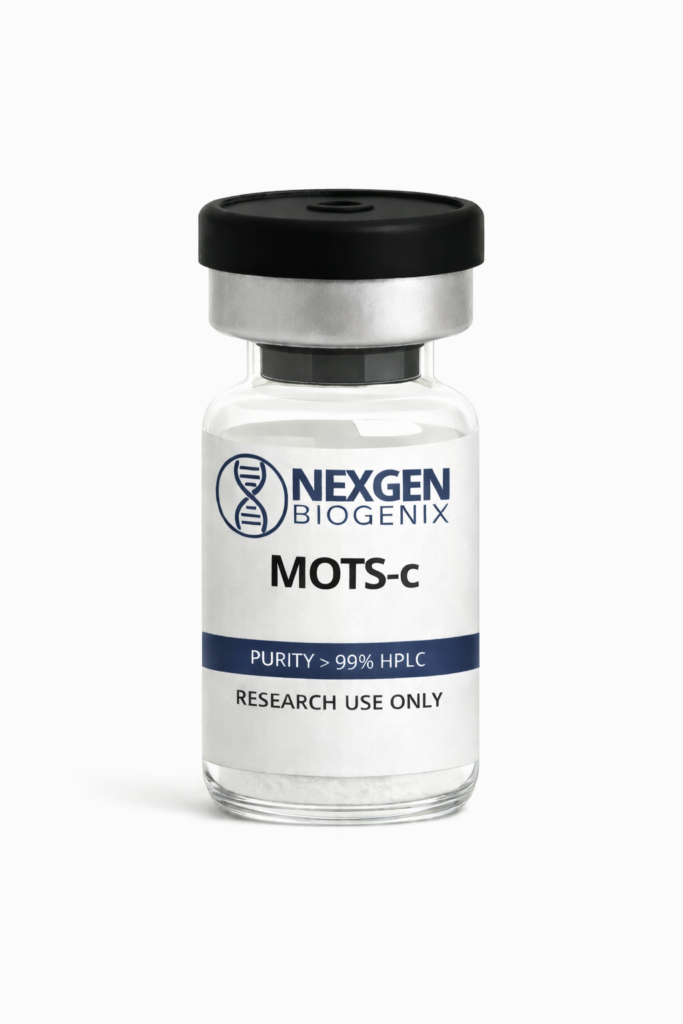
- Storage & Labeling: Research-grade MOTS-c should be clearly labeled as Research Use Only, stored lyophilized at −20°C or below in light-protected conditions, and accompanied by a defined retest or expiration date. Given tryptophan’s photosensitivity, amber vials or opaque packaging are recommended. Aliquoting prior to reconstitution is advisable to minimize freeze-thaw-related degradation, and reconstituted solutions should be used promptly or stored at −80°C.
📄 Questions about documentation or purity verification? Contact our support team or request a COA from our library.
US Regulatory Snapshot (Updated 2025)
- RUO context: MOTS-c is sold and distributed in the United States strictly as a Research Use Only compound intended for qualified laboratory use. It is not a drug, not a dietary supplement, and not approved for any therapeutic, cosmetic, or veterinary application. The FDA has made clear that RUO labeling cannot be used as a cover for products that are, in practice, intended for human use — purchasing or self-administering MOTS-c for personal health purposes would be outside its labeled and legal use and potentially subject to FDA enforcement action.
- Category 1 / 503A — what these designations mean (and do not mean): Under the FDA’s 503A compounding framework, bulk drug substances can be nominated for potential inclusion on a list allowing licensed compounding pharmacies to use them. Substances placed in “Category 1” were those deemed not to present significant safety risks during an interim review period, allowing compounders to use them under enforcement discretion. Category 1 status is not FDA approval. It is an interim administrative designation that carries no determination of safety, efficacy, or clinical appropriateness. As of January 7, 2025, the FDA no longer intends to categorize new nominations into interim categories; all new nominations will proceed directly to a formal evaluation process.
- FDA guidance, January 7, 2025: The FDA finalized its updated interim policy guidance for 503A compounding, stating that it does not intend to place bulk drug substances nominated on or after January 7, 2025, into interim Categories 1, 2, or 3 while evaluation continues. Substances currently in Category 1 may continue to be used by licensed compounding pharmacies under existing enforcement discretion, pending formal evaluation. This guidance represents a significant structural change to the compounding nomination framework.
- MOTS-c–specific regulatory status (as of 2025): Native MOTS-c has not been formally nominated for inclusion on the FDA’s 503A compounding bulks list, has not been placed in any interim category (Category 1, 2, or 3), and has not received FDA approval as a drug under any New Drug Application (NDA) or Abbreviated New Drug Application (ANDA). CB4211 — the MOTS-c analog that has entered Phase Ia/Ib clinical trials — is a separate investigational compound under development by CohBar Inc. and is not the same as the native MOTS-c peptide available for laboratory research. Researchers should treat MOTS-c as an RUO compound with no current pathway for compounded human use in the United States.
- Stay current: The regulatory landscape for mitochondrial-derived peptides and related research compounds is evolving rapidly. Researchers, institutions, and any professionals working in this space are strongly encouraged to monitor the FDA’s compounding pages at FDA.gov for the latest updates to the 503A bulks list and associated guidance, and to consult a qualified regulatory attorney or compliance professional for institution-specific guidance before ordering or using any research compound.
Frequently Asked Questions
Does the body naturally produce MOTS-c?
Yes — MOTS-c is an endogenous peptide, meaning it is produced naturally within the human body. It is encoded by a short open reading frame in the mitochondrial genome and has been detected in measurable concentrations in human plasma, skeletal muscle, and other tissues. More broadly, the human body naturally produces many peptides — small, protein-like molecules that act as biological messengers — including well-known examples such as insulin (regulating blood sugar), oxytocin (involved in social bonding), endorphins (modulating pain and mood), and now a recognized class of mitochondrially-encoded peptides including MOTS-c, humanin, and the SHLP family. What makes MOTS-c distinctive is its mitochondrial — rather than nuclear — genomic origin, a feature that was entirely unexpected when it was first described in 2015 and that has since opened a new field of research into mitochondria as active signaling hubs.
Is MOTS-c FDA-approved?
No. Native MOTS-c is not FDA-approved as a drug for any indication in the United States. It has not been evaluated under a New Drug Application (NDA) process and has not received any FDA determination of safety or efficacy for human use. A synthetic analog of MOTS-c, CB4211 (developed by CohBar Inc.), has entered Phase Ia/Ib clinical trials for NASH and obesity — but CB4211 is a structurally modified investigational compound, not native MOTS-c, and any clinical data from those trials does not constitute FDA approval of either compound. All MOTS-c sold on this platform is strictly Research Use Only (RUO) and is not intended or labeled for human use of any kind.
Is anything on this page medical advice?
No. Nothing on this page constitutes medical advice, clinical guidance, or a recommendation for human use of any kind. This page is an educational reference for qualified researchers and is intended solely to summarize what has been described in the scientific literature about MOTS-c as a research tool and area of active scientific investigation. If you have health, metabolic, or aging-related questions or concerns, please consult a licensed healthcare provider. If you have questions about the regulatory status of research compounds, please consult a qualified regulatory attorney or compliance professional.
References (Starting Points)
- Lee C, Zeng J, Drew BG, Sallam T, Martin-Montalvo A, Wan J, et al. “The mitochondrial-derived peptide MOTS-c promotes metabolic homeostasis and reduces obesity and insulin resistance.” Cell Metabolism. 2015;21(3):443–454. PMID: 25738459. PMC: PMC4350682. View on PubMed
- Kim KH, Son JM, Benayoun BA, Lee C. “The mitochondrial-encoded peptide MOTS-c translocates to the nucleus to regulate nuclear gene expression in response to metabolic stress.” Cell Metabolism. 2018;28(3):516–524.e7. PMID: 30017357. PMC: PMC6113098. View on PubMed
- Reynolds JC, Bhatt DL, Kim SJ, et al. “MOTS-c is an exercise-induced mitochondrial-encoded regulator of age-dependent physical decline and muscle homeostasis.” Nature Communications. 2021;12(1):470. PMID: 33469019. PMC: PMC7815732. View on PubMed
- Mohtashami Z, Singh MK, Salimiaghdam N, Ozgul M, Kenney MC. “MOTS-c, the Most Recent Mitochondrial Derived Peptide in Human Aging and Age-Related Diseases.” International Journal of Molecular Sciences. 2022;23(19):11991. PMID: 36233287. PMC: PMC9570330. View on PubMed
- Yin X, Jing Y, Chen Q, et al. “The mitochondrial-derived peptide MOTS-c relieves hyperglycemia and insulin resistance in gestational diabetes mellitus.” Pharmacological Research. 2022;175:105987. PMID: 34728341. View on PubMed
- Lu Z, Chen Y, Dunbar M, et al. “MOTS-c modulates skeletal muscle function by directly binding and regulating CK2α in a tissue-specific manner.” iScience. 2024;27(3):109231. PMID: 38405615. PMC: PMC10884701. View on PubMed
- Kim SJ, Mehta HH, Wan J, et al. “Mitochondrial-encoded peptide MOTS-c prevents pancreatic islet cell senescence to delay diabetes.” Experimental & Molecular Medicine. 2025;57:1–13. PMID: 40855115. PMC: PMC12411631. View on PubMed
- U.S. Food and Drug Administration. “Bulk Drug Substances Nominated for Use in Pharmacy Compounding Under Section 503A of the Federal Food, Drug, and Cosmetic Act.” Updated 2025. View on FDA.gov
RESEARCH USE ONLY — REGULATORY NOTICE
All products and information presented on this website are intended exclusively for in-vitro laboratory research and scientific investigation by qualified researchers. These products are not intended for human consumption, veterinary use, cosmetic application, or therapeutic purposes of any kind. Nothing on this page has been evaluated by the U.S. Food and Drug Administration (FDA). These products are not intended to diagnose, treat, cure, or prevent any disease or medical condition. Researchers are responsible for ensuring compliance with all applicable local, state, and federal regulations before ordering or using any research compound. For questions about regulatory status, consult a qualified regulatory attorney or compliance professional.