⚠️ Research Use Only (RUO). Not for human or veterinary use. All content on this page is provided for educational and scientific reference purposes only.
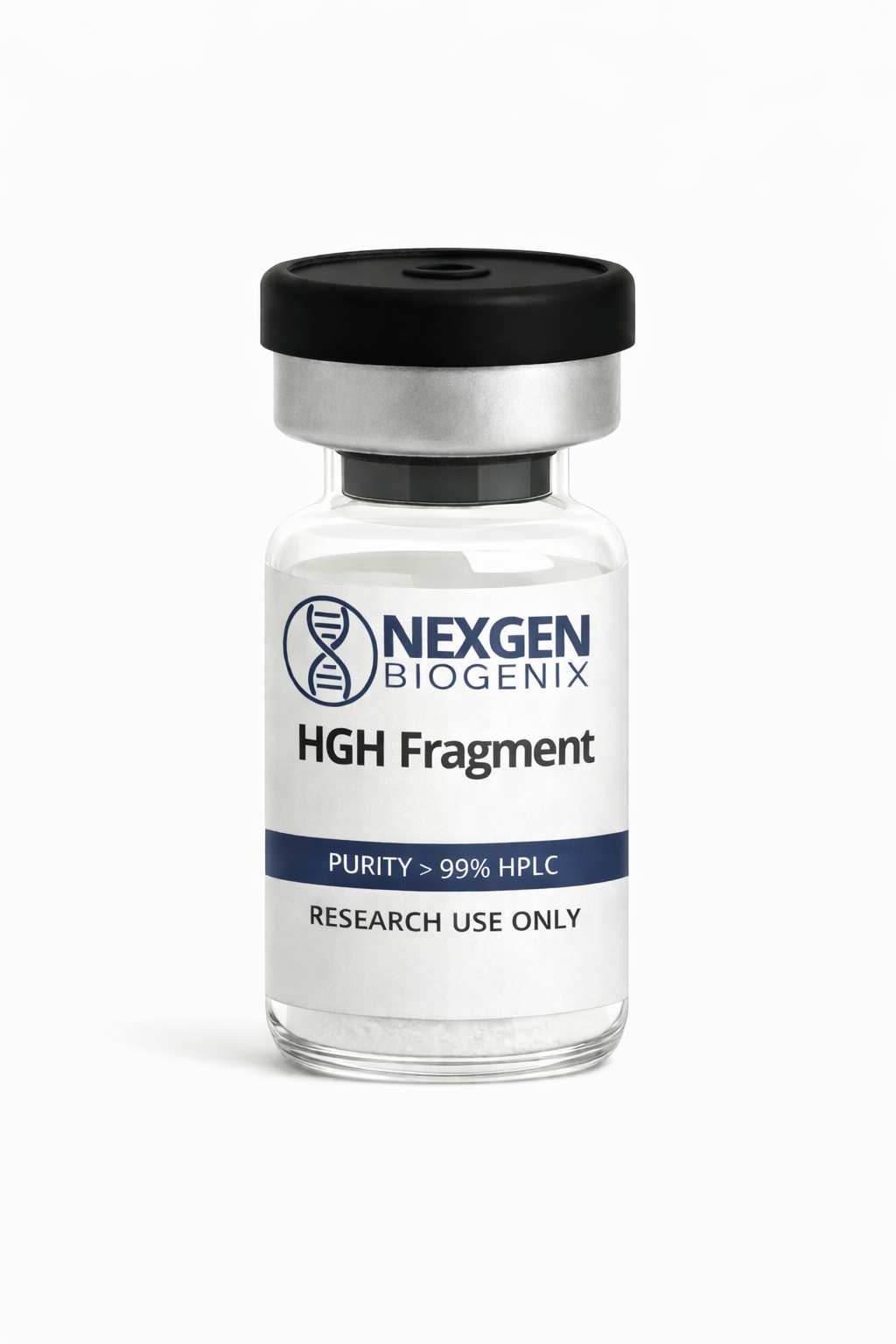
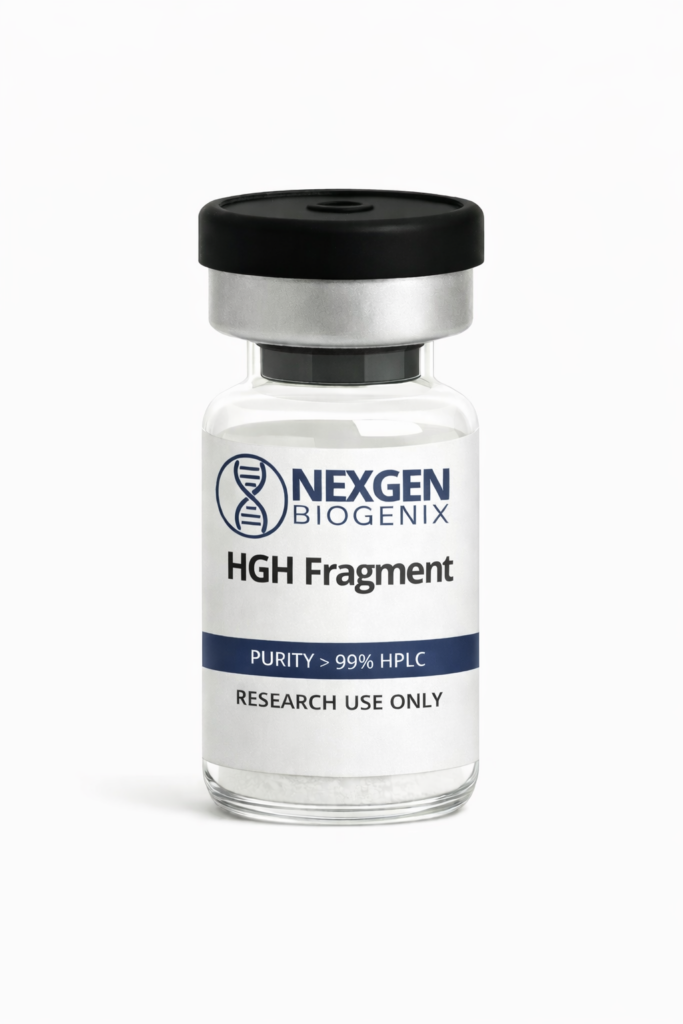
HGH Fragment 176-191 — Research Overview (RUO)
Quick Facts
- Full name: Human Growth Hormone Fragment 176-191
- Common name / abbreviation: HGH Frag 176-191; hGH(176-191); “the lipolytic fragment”
- Synonyms / related names: hGH 176-191; hGH(176-191); CAS 66004-57-7 (native fragment); related compound AOD9604 (Tyr-hGH fragment 177-191, a modified analog with an N-terminal tyrosine substitution, CAS 221231-10-3 — see important distinction note below)
- Peptide class: Synthetic C-terminal fragment of human growth hormone (hGH); 16-amino-acid linear peptide with an intramolecular disulfide bond
- Amino acid sequence: Tyr-Leu-Arg-Ile-Val-Gln-Cys-Arg-Ser-Val-Glu-Gly-Ser-Cys-Gly-Phe (single-letter: YLRIVQCRSVEGSСGF); disulfide bridge between Cys-7 and Cys-15
- Molecular formula: C₇₈H₁₂₃N₂₃O₂₂S₂
- Molecular weight: ~1,799.1 Da (native fragment 176-191, CAS 66004-57-7); AOD9604 analog: ~1,815.08 Da (CAS 221231-10-3)
- CAS number: 66004-57-7 (hGH fragment 176-191); 221231-10-3 (AOD9604, the Tyr-modified analog)
- PubChem CID: 16131230 (hGH fragment 176-191)
- Primary research themes: Adipose tissue metabolism and lipolysis; lipogenesis inhibition; beta-3 adrenergic receptor biology; glucose metabolism and insulin signaling; cartilage biology and joint repair models; growth hormone receptor-independent signaling pathways
- Evidence level: Preclinical (in vitro and animal models) for native fragment 176-191; AOD9604 (the closely related analog) has been studied in human Phase II clinical trials — with development terminated in 2007 due to insufficient clinical efficacy (see Evidence Snapshot)
- Regulatory status: Research Use Only (RUO) in the United States; native hGH Fragment 176-191 is not FDA-approved as a drug; not on the FDA’s approved 503A compounding bulks list; not in any active interim category under the January 7, 2025 FDA guidance (see Section 9)
What Is HGH Fragment 176-191?
HGH Fragment 176-191 is a synthetic peptide corresponding to amino acids 176 through 191 at the C-terminal end of human growth hormone (hGH) — a 191-amino-acid protein produced naturally by the pituitary gland. Researchers at Monash University in Australia, led by endocrinologist F.M. Ng, identified this specific C-terminal region in the 1970s and 1990s as the portion of the hGH molecule primarily responsible for its lipolytic (fat-mobilizing) and hypoglycemic activities — activities which, in the full-length hormone, are often overshadowed by its growth-promoting and insulin-antagonizing effects. By isolating and synthesizing this 16-amino-acid fragment, researchers created a tool for studying these metabolic properties in isolation, without the somatotropic effects of intact growth hormone.
An important distinction runs through the entire literature on this peptide: the native hGH fragment 176-191 (CAS 66004-57-7) and AOD9604 (CAS 221231-10-3) are closely related but structurally distinct compounds. AOD9604 is a modified analog of the C-terminal region in which a phenylalanine residue is replaced by tyrosine at the N-terminal position (making it technically Tyr-hGH fragment 177-191), and which contains a disulfide bridge engineered to improve stability. AOD9604 was the compound taken into clinical development by Metabolic Pharmaceuticals and is the subject of the majority of published clinical data. Native hGH Fragment 176-191, by contrast, has not been studied independently in humans. Researchers citing human data for this peptide are, in most cases, extrapolating from AOD9604 trials — a distinction that this article preserves throughout.
The human body naturally produces many peptides — small, protein-like molecules that act as biological messengers regulating metabolism, growth, immunity, and dozens of other physiological processes. Human growth hormone itself is one such endogenous protein, and the C-terminal region that forms hGH Fragment 176-191 exists as part of the intact, naturally produced hormone. The fragment itself, in isolated synthetic form, does not circulate naturally; it is a research construct derived from that endogenous sequence. Its study has contributed meaningfully to the understanding of how specific structural domains within multi-functional proteins govern distinct biological activities — a conceptually important contribution to peptide biology independently of its clinical trajectory.
Why Do Researchers Study It?
Researchers are interested in HGH Fragment 176-191 because it isolates the lipolytic and metabolic properties of growth hormone into a structurally minimal, GH-receptor-independent research tool. This selectivity makes it valuable for probing specific molecular mechanisms that would be confounded by the pleiotropic effects of intact hGH. Key areas of scientific investigation include:
- Lipolysis and adipose tissue metabolism: The fragment’s primary area of research interest is its ability to stimulate lipolysis (fat breakdown) and inhibit lipogenesis (fat storage) in adipocyte models, without the hyperglycemia and IGF-1 elevation associated with full-length hGH. Researchers use it to probe the molecular basis of selective lipid mobilization in fat cells.
- Beta-3 adrenergic receptor (β3-AR) signaling: Studies have linked the fragment’s lipolytic activity to upregulation of beta-3 adrenergic receptor expression in adipose tissue, providing a research tool for understanding how β3-AR density governs the magnitude of lipolytic responses in obese versus lean tissue states.
- GH receptor-independent signaling: Unlike intact hGH, the C-terminal fragment has been reported not to compete for the classical growth hormone receptor and not to stimulate JAK2/STAT5 signaling or IGF-1 production. This makes it a useful tool for dissecting which biological effects of hGH require receptor binding and which may occur through alternative, receptor-independent pathways.
- Glucose metabolism and hypoglycemic signaling: Among multiple synthetic C-terminal hGH fragments studied by Ng and colleagues, fragment 176-191 was reported to be the most potent at lowering blood glucose in animal models — an effect attributed to increased plasma insulin levels rather than to direct insulin sensitization. Researchers have used this finding to probe the relationship between GH fragments and insulin secretion in metabolic models.
- Cartilage biology and osteoarthritis models: Subsequent research has examined the fragment’s effects in joint biology, following observations that AOD9604 (the closely related analog) influences cartilage metabolism and may modulate growth factor signaling in chondrocyte models — a secondary research area distinct from its metabolic properties.
- Comparative GH fragment pharmacology: The fragment serves as a reference compound in studies comparing the biological activities of multiple synthetic hGH C-terminal fragments (e.g., 172-191, 176-191, 177-191, 178-191) to map which amino acid positions are essential for lipolytic, hypoglycemic, or receptor-binding activities — work that informs growth hormone structure-function research broadly.
Proposed Mechanism (Research Framing)
The following descriptions are drawn from published scientific literature and reflect hypotheses and observations from preclinical and in vitro research. The exact mechanisms of HGH Fragment 176-191 in humans have not been fully established, and no causal claims are made here.
The central mechanistic hypothesis for hGH Fragment 176-191’s lipolytic activity centers on beta-3 adrenergic receptor (β3-AR) upregulation and activation. Studies suggest that the fragment — like intact hGH — increases the expression of β3-AR messenger RNA in adipose tissue, thereby amplifying the sensitivity of fat cells to endogenous adrenergic lipolytic signals. β3-adrenergic receptors, when activated, stimulate adenylyl cyclase and increase intracellular cyclic AMP (cAMP), leading to activation of hormone-sensitive lipase (HSL) and subsequent triglyceride hydrolysis. Researchers have proposed that the fragment essentially primes fat cells to respond more robustly to their own hormonal cues for fat mobilization, rather than acting as a direct lipolytic agent. The critical importance of this pathway was demonstrated in β3-AR knockout mice, in which the chronic lipolytic effect of AOD9604 was largely abolished — providing strong mechanistic evidence for β3-AR dependence under long-term conditions.
However, a complicating mechanistic finding was reported in the same study: in an acute experiment, AOD9604 was observed to increase energy expenditure and fat oxidation even in β3-AR knockout mice, suggesting that at least one additional, β3-AR-independent mechanism contributes to its acute metabolic effects. Researchers have proposed that this secondary pathway may involve direct effects on adipocyte mitochondrial function — a hypothesis supported by subsequent in vitro work reporting that the fragment increases uncoupling protein expression and oxygen consumption in human adipocytes, potentially enhancing fat oxidation capacity beyond simple lipid mobilization. The identity and molecular details of this secondary mechanism have not been fully characterized.
A defining and scientifically important feature of hGH Fragment 176-191 is what it does not do: unlike intact hGH, studies have consistently reported that it does not compete for the classical hGH receptor (somatotropin receptor), does not activate JAK2/STAT5 intracellular signaling, does not stimulate IGF-1 production, does not induce long bone growth, and does not impair insulin secretion or glucose tolerance at the doses studied in animal models. Researchers have interpreted this receptor-independence as evidence that the hGH molecule functions as a pro-hormone — with its C-terminal domain mediating metabolic effects through pathways distinct from those mediating its growth-promoting effects — a conceptually significant contribution to growth hormone biology.
Key Targets Described in the Literature
- Beta-3 adrenergic receptor (β3-AR / ADRB3): The primary proposed lipolytic effector; studies have observed that the fragment upregulates β3-AR expression in adipose tissue, sensitizing fat cells to adrenergic lipolytic signals in a manner dependent on, but not limited to, this receptor.
- Hormone-sensitive lipase (HSL): Downstream effector of β3-AR/cAMP signaling; activated HSL catalyzes triglyceride hydrolysis in adipocytes. The fragment’s proposed lipolytic mechanism is thought to converge on HSL activation through the β3-AR/adenylyl cyclase/cAMP/PKA cascade.
- Mitochondrial uncoupling proteins (UCPs): In vitro work has described increased UCP expression and elevated oxygen consumption in adipocytes treated with hGH fragment 176-191, suggesting a possible thermogenic component to its metabolic effects that may operate independently of the β3-AR pathway.
- hGH receptor (negative finding — mechanistically significant): Binding and cell proliferation assays have confirmed that AOD9604 does not compete for the hGH receptor and does not activate receptor-mediated cell proliferation — a critical mechanistic distinction from full-length hGH that defines the fragment’s research utility as a receptor-independent metabolic probe.
- IGF-1 signaling (negative finding — mechanistically significant): Studies have consistently reported that hGH Fragment 176-191 and AOD9604 do not stimulate IGF-1 production — the primary mediator of hGH’s anabolic and cell-proliferative effects — distinguishing the fragment’s biological profile from full-length growth hormone.
Research Applications (RUO Context)
In qualified laboratory settings, HGH Fragment 176-191 is employed as a research tool in metabolic biology, adipose tissue research, and endocrinology. The following applications reflect how researchers have described using this compound and its close analog AOD9604 in published studies — not protocols or instructions for any use outside a controlled research environment.
- Adipocyte lipolysis assays: The fragment is used in primary adipocyte and pre-adipocyte cell culture systems (including human, rodent, porcine, and canine adipocytes) to measure lipolysis endpoints — glycerol release, fatty acid mobilization, HSL activation — and to compare its activity profile against intact hGH and β-adrenergic agonist controls.
- Rodent obesity and body composition models: In ob/ob obese mice and diet-induced obesity models, the fragment and AOD9604 have been used to characterize effects on body weight, fat mass, fat oxidation, and energy expenditure, providing a platform for studying selective lipolytic agents in the context of metabolic disease research.
- β3-AR expression and signaling studies: Researchers use the fragment to probe β3-adrenergic receptor gene expression in adipose tissue and to characterize how receptor density interacts with lipolytic sensitivity — a research question with relevance to obesity biology and pharmacology.
- GH receptor binding and proliferation assays: The fragment serves as a valuable negative control in hGH receptor binding studies, confirming receptor-independence and helping to map which structural domains of hGH are required for receptor engagement versus metabolic signaling.
- Cartilage and chondrocyte models: Following observations in the AOD9604 literature, researchers have examined the fragment’s effects on chondrocyte biology and collagen synthesis in rabbit and cell culture osteoarthritis models, extending its research relevance beyond adipose tissue.
- Structure-activity relationship (SAR) studies: hGH Fragment 176-191 is one of several overlapping C-terminal hGH fragments used in comparative SAR studies to systematically identify which amino acid positions and structural motifs are required for lipolytic, hypoglycemic, and receptor-binding activities in the GH C-terminal domain.
Evidence Snapshot
► Preclinical Evidence (In Vitro / Animal Models)
- Early work by Ng and Bornstein (1978) demonstrated that synthetic C-terminal fragments of hGH, including the 176-191 region, produced hypoglycemic effects in animal models, with fragment 176-191 reported as the most effective among several tested fragments at lowering blood glucose through a mechanism involving sustained plasma insulin elevation — laying the conceptual foundation for subsequent research.
- A landmark 2001 study (Heffernan et al., PMID: 11713213) demonstrated in obese (ob/ob) and β3-AR knockout mice that AOD9604 (the closely related analog) reduced body weight and body fat over 14 days of treatment, increased fat oxidation and plasma glycerol (an index of lipolysis), and upregulated β3-AR RNA expression in adipose tissue — while not inducing hyperglycemia, not competing for the hGH receptor, and not stimulating cell proliferation. This study remains the most-cited preclinical mechanistic reference for the fragment’s lipolytic activity.
- In vitro fat cell studies reported by Ng and colleagues (PMID: 11146367) confirmed that AOD9604 stimulates lipolysis and inhibits lipogenesis across adipocytes from multiple species including humans, dogs, pigs, and rodents — with the effect described as selectively targeting obese fat cells (showing greater activity in fat from obese animals than from lean ones) in ex vivo models.
- A 2023 in vitro study employing primary human adipocytes reported increased uncoupling protein expression and enhanced mitochondrial oxygen consumption following treatment with hGH fragment 176-191, suggesting a thermogenic mechanism potentially operating independently of β3-AR that may contribute to the fragment’s metabolic activity profile in human cell models.
► Human / Clinical Evidence
- Human clinical data for this peptide family comes exclusively from AOD9604 (the N-terminal tyrosine-substituted analog) — not from native hGH Fragment 176-191 itself. Wikipedia and peer-reviewed reviews have explicitly noted that, in contrast to AOD9604, native hGH Fragment 176-191 has not been studied independently in humans. Any extrapolation of AOD9604 clinical findings to native fragment 176-191 should be made with explicit acknowledgment of this structural distinction.
- AOD9604 completed Phase IIb clinical trials conducted by Metabolic Pharmaceuticals in Australia and internationally. A 12-week randomized, double-blind, placebo-controlled trial in obese subjects reported that subjects receiving AOD9604 lost, on average, 1.8 kg more than placebo — a statistically marginal result. A larger Phase IIb trial in approximately 536 subjects (2007) failed to demonstrate sufficient efficacy to support continued clinical development, and Metabolic Pharmaceuticals terminated AOD9604’s development as an anti-obesity drug that same year.
- A safety and tolerability study of AOD9604 in humans (Stier et al., Journal of Endocrinology and Metabolism, 2013) reported that the compound was generally well tolerated without significant changes in glucose, IGF-1, or other metabolic safety markers — consistent with preclinical findings. However, this safety profile was established in the context of a clinical program that was subsequently discontinued for lack of efficacy.
- As of 2025, no large-scale, independently registered randomized controlled trials evaluating native hGH Fragment 176-191 as an investigational drug in humans have been published. The clinical development history of its close analog AOD9604 — specifically, the Phase IIb failure — represents important context for interpreting the translational potential of this peptide class in human metabolic disease research.
Limitations & Open Questions
HGH Fragment 176-191 occupies an instructive position in peptide research history: a compound with compelling preclinical mechanistic data whose clinical analog failed to demonstrate sufficient efficacy in human trials. Researchers engaging with this peptide should be aware of the following substantive limitations:
- Clinical development termination of AOD9604: The most clinically advanced compound in this peptide family — AOD9604, the N-terminal tyrosine-modified analog — failed to demonstrate sufficient anti-obesity efficacy in a Phase IIb trial of approximately 536 subjects and its development was terminated in 2007. This outcome is a material data point that should inform how preclinical findings for this peptide class are interpreted and communicated.
- Native fragment vs. AOD9604 distinction: Native hGH Fragment 176-191 (CAS 66004-57-7) has not been independently studied in human clinical trials. The bulk of published pharmacological and clinical data applies to AOD9604 (CAS 221231-10-3), a structurally modified analog. These are related but distinct compounds, and clinical conclusions from one should not be automatically attributed to the other.
- Preclinical-to-human translation failure: The disconnect between robust rodent lipolysis data and the modest, ultimately insufficient human clinical efficacy of AOD9604 is a well-documented example of the preclinical-to-clinical translation gap in metabolic drug development. Human metabolic homeostasis involves compensatory mechanisms — appetite upregulation, hormonal feedback loops, individual variability — that are absent or attenuated in controlled rodent studies and likely contributed to the clinical failure.
- Limited independent replication: Much of the foundational research on this fragment originates from a small group of investigators at Monash University, primarily in the laboratory of F.M. Ng. Independent international replication of key mechanistic findings — particularly the β3-AR upregulation mechanism and the receptor-independence data — is limited.
- Peptide stability and oral bioavailability questions: While AOD9604 was explored in oral formulations, the bioavailability of the native fragment via various routes has not been characterized in published human studies. The disulfide bridge between Cys-7 and Cys-15 provides structural rigidity but the peptide remains susceptible to proteolytic degradation in biological fluids.
- Extrapolation from cartilage research: The secondary research interest in cartilage repair and osteoarthritis is based on small animal studies with AOD9604; this area is at an early preclinical stage with no published clinical validation, and the mechanistic basis for cartilage-related effects is not well characterized.
Quality & Sourcing
For researchers working with hGH Fragment 176-191 in preclinical or in vitro settings, compound quality and structural characterization are foundational experimental requirements. The peptide contains an intramolecular disulfide bond between Cys-7 and Cys-15 that is essential to its three-dimensional structure and proposed bioactivity — incomplete or incorrectly formed disulfide bonds will yield a structurally aberrant and biologically unreliable compound. Additionally, researchers should ensure they are working with clearly identified material (native fragment 176-191 vs. the AOD9604 analog) and that this is documented in their experimental records to enable accurate cross-study comparison. The following documentation standards are considered foundational for research-grade sourcing:
- Lot Traceability: Each batch should carry a unique lot number linked to a complete manufacturing record. Given the structural sensitivity of disulfide-containing peptides to oxidation conditions during synthesis, lot-level traceability is essential for correlating experimental results with specific production batches and identifying any quality-related variability between experiments.
- Certificate of Analysis (COA): A COA from a qualified analytical laboratory should confirm peptide identity via high-resolution mass spectrometry (confirming the expected molecular mass — ~1,799.1 Da for native fragment 176-191, or ~1,815.08 Da for AOD9604 — with explicit identification of which compound is being supplied), HPLC purity (≥98% is a commonly cited research-grade benchmark), correct disulfide bridge formation (confirmed by reduction/alkylation analysis or by molecular weight comparison under reducing vs. non-reducing conditions), and freedom from endotoxins, residual solvents, and heavy metal contaminants.
- Storage & Labeling: Research-grade hGH Fragment 176-191 should be clearly labeled as Research Use Only, stored lyophilized at −20°C or below in moisture-protected conditions, and accompanied by a defined retest or expiration date. Because the disulfide bridge is susceptible to reduction under humid or oxidizing conditions, proper storage and minimized freeze-thaw cycling are important for maintaining compound integrity across experiments.
📄 Questions about documentation or purity verification? Contact our support team or request a COA from our library.
US Regulatory Snapshot (Updated 2025)
- RUO context: HGH Fragment 176-191 is sold and distributed in the United States strictly as a Research Use Only compound intended for qualified laboratory use. It is not a drug, not a dietary supplement, and not approved for any therapeutic, cosmetic, or veterinary application. The FDA has made clear that RUO labeling cannot be used as a cover for products that are, in practice, intended for human use. Purchasing or self-administering this compound outside a licensed research context would be outside its labeled and legal use.
- Category 1 / 503A — what these designations mean (and do not mean): Under the FDA’s 503A compounding framework, certain nominated bulk drug substances have been placed in “Category 1” — an interim administrative designation indicating the substance was nominated for potential inclusion on the official 503A bulks list and was not identified as presenting significant safety risks during preliminary review. Category 1 status is not FDA approval. It is an interim administrative classification — not a determination of safety, efficacy, or clinical appropriateness — that permitted licensed compounding pharmacies to use those substances under FDA enforcement discretion while evaluation proceeded. As of January 7, 2025, FDA updated this framework: Category 1 substances already listed may continue to be used under enforcement discretion, but FDA no longer places newly nominated substances into interim categories.
- FDA guidance, January 7, 2025: The FDA published its final updated interim policy guidance for 503A compounding, replacing the 2017 version. Under this guidance: (a) bulk drug substances already in Category 1 may continue to be used by licensed compounding pharmacies under enforcement discretion pending formal evaluation; (b) FDA will no longer categorize newly nominated substances into interim Categories 1, 2, or 3 — all new nominations will proceed directly to formal evaluation under section 503A(c) before any compounding authorization is granted. This represents a significant structural shift that affects the entire landscape of peptide compounding in the United States.
- HGH Fragment 176-191 specific regulatory status (as of 2025): Native hGH Fragment 176-191 (CAS 66004-57-7) has not been nominated for, nor placed in, Category 1 of the FDA’s interim 503A bulks framework. It has not received FDA approval under any New Drug Application (NDA) or Abbreviated New Drug Application (ANDA). The closely related analog AOD9604 (CAS 221231-10-3) similarly has not received FDA drug approval; its clinical development as an anti-obesity drug was terminated in 2007 following Phase IIb trial results. Neither compound has a current authorized pathway for compounded human use in the United States. Both are appropriately classified as RUO compounds for laboratory research purposes only.
- Stay current: The regulatory landscape for peptide research compounds in the United States continues to evolve rapidly. Researchers and institutions are strongly encouraged to monitor the FDA’s compounding pages at FDA.gov for updates to the 503A bulks list, and to consult a qualified regulatory attorney or compliance professional for institution-specific guidance before ordering or using any research compound.
Frequently Asked Questions
Is hGH Fragment 176-191 a natural peptide produced by the body?
Not in isolated form. Human growth hormone (hGH) — the full 191-amino-acid protein from which this fragment is derived — is a naturally occurring hormone produced by the pituitary gland. The human body naturally produces many peptides — small, protein-like molecules that act as biological messengers — and hGH is among the most studied of these, with well-characterized roles in growth, body composition, metabolism, and cellular repair. The amino acid sequence of hGH Fragment 176-191 exists as the C-terminal end of intact hGH in the body, but the isolated 16-amino-acid synthetic fragment itself does not circulate naturally as a free peptide. It is a research construct synthesized to study the biological activities encoded within that region of the growth hormone sequence, in isolation from the rest of the protein.
Is HGH Fragment 176-191 FDA-approved?
No. Neither native hGH Fragment 176-191 nor its closely related analog AOD9604 is FDA-approved as a drug for any indication in the United States. AOD9604 was the subject of clinical development by Metabolic Pharmaceuticals, including Phase IIb trials, but development was terminated in 2007 after the compound failed to demonstrate sufficient clinical efficacy for anti-obesity treatment. Neither compound has been approved under a New Drug Application (NDA) by the FDA. Both are classified as Research Use Only (RUO) compounds and are not intended or labeled for human use of any kind.
Is anything on this page medical advice?
No. Nothing on this page constitutes medical advice, clinical guidance, or a recommendation for human use of any kind. This page is an educational reference for qualified researchers and is intended solely to summarize what has been described in the scientific literature about hGH Fragment 176-191 as a research tool. This includes transparently noting the clinical development history of the closely related analog AOD9604, including the Phase IIb trial results that led to termination of its drug development program — information that is essential scientific context for anyone working in this research area. If you have health or metabolic concerns, please consult a licensed healthcare provider. For regulatory questions, consult a qualified regulatory attorney or compliance professional.
References (Starting Points)
- Ng FM, Bornstein J. “Hyperglycemic action of synthetic C-terminal fragments of human growth hormone.” American Journal of Physiology. 1978;234(5):E521–E526. PMID: 645904. View on PubMed
- Ng FM, Sun J, Sharma L, Libinaka R, Jiang WJ, Gianello R. “Metabolic studies of a synthetic lipolytic domain (AOD9604) of human growth hormone.” Hormone Research. 2000;53(6):274–278. PMID: 11146367. View on PubMed
- Heffernan M, Summers RJ, Thorburn A, Ogru E, Gianello R, Jiang WJ, Ng FM. “The effects of human GH and its lipolytic fragment (AOD9604) on lipid metabolism following chronic treatment in obese mice and beta(3)-AR knock-out mice.” Endocrinology. 2001;142(12):5182–5189. PMID: 11713213. View on PubMed
- Heffernan MA, Jiang WJ, Thorburn AW, Ng FM. “Effects of oral administration of a synthetic fragment of human growth hormone on lipid metabolism.” American Journal of Physiology — Endocrinology and Metabolism. 2001;279(3):E501–E507. PMID: 11673763. View on PubMed
- Stier H, Vos E, Kenley D. “Safety and tolerability of the hexadecapeptide AOD9604 in humans.” Journal of Endocrinology and Metabolism. 2013;3(1–2):7–15. (Available via institutional journal access; referenced in review literature on AOD9604 clinical safety.)
- Kwon DR, Park GY. “Effect of intra-articular injection of AOD9604 with or without hyaluronic acid in rabbit osteoarthritis model.” Annals of Clinical and Laboratory Science. 2015;45(4):426–432. PMID: 26275694. View on PubMed
- U.S. Food and Drug Administration. “Bulk Drug Substances Nominated for Use in Pharmacy Compounding Under Section 503A of the Federal Food, Drug, and Cosmetic Act.” Updated 2025. View on FDA.gov
- U.S. Food and Drug Administration. “Interim Policy on Compounding Using Bulk Drug Substances Under Section 503A of the Federal Food, Drug, and Cosmetic Act.” Federal Register. January 7, 2025. FR Doc. 2024-31546. View on Federal Register
RESEARCH USE ONLY — REGULATORY NOTICE
All products and information presented on this website are intended exclusively for in-vitro laboratory research and scientific investigation by qualified researchers. These products are not intended for human consumption, veterinary use, cosmetic application, or therapeutic purposes of any kind. Nothing on this page has been evaluated by the U.S. Food and Drug Administration (FDA). These products are not intended to diagnose, treat, cure, or prevent any disease or medical condition. Researchers are responsible for ensuring compliance with all applicable local, state, and federal regulations before ordering or using any research compound. For questions about regulatory status, consult a qualified regulatory attorney or compliance professional.