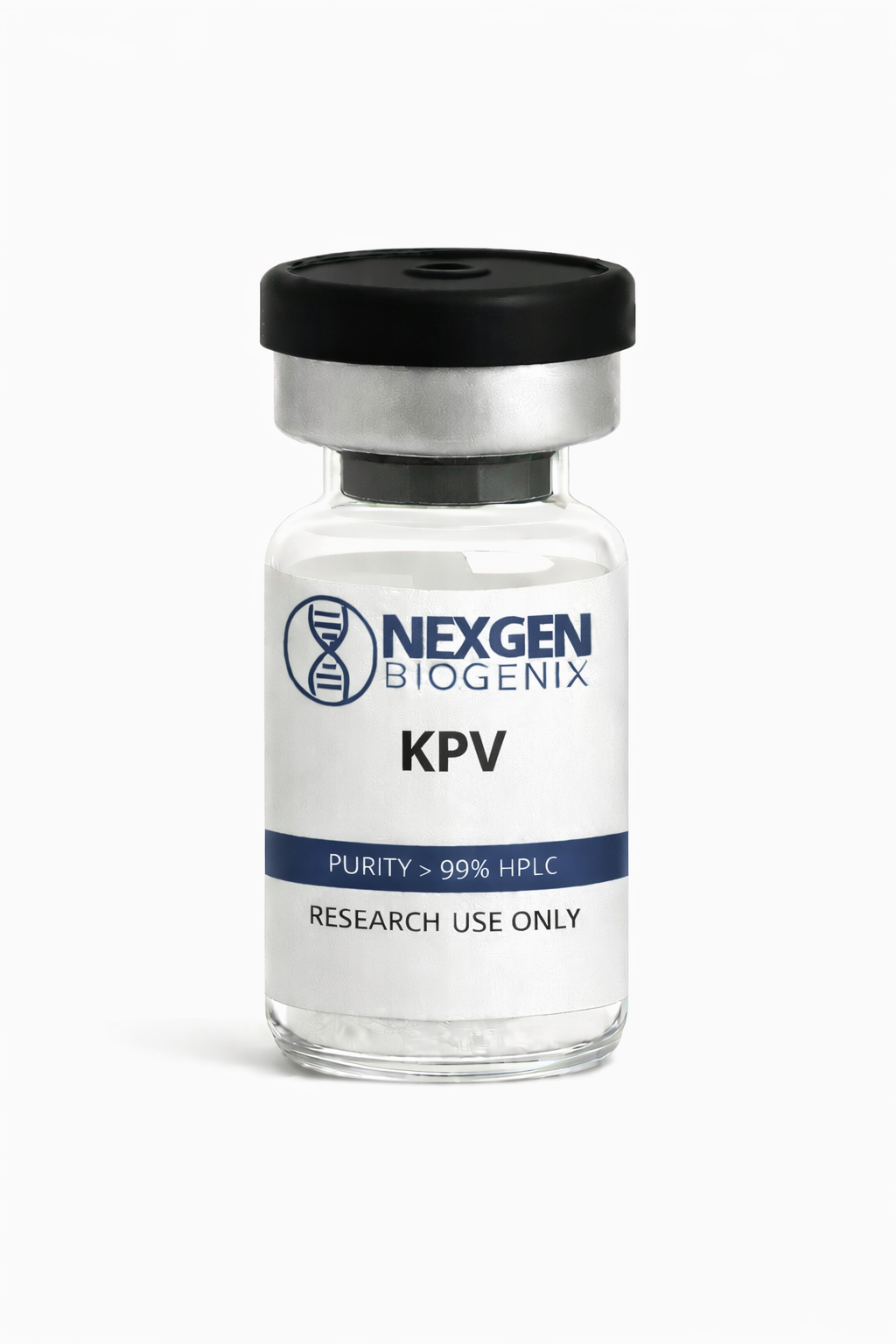
⚠️ Research Use Only (RUO). Not for human or veterinary use. All content on this page is provided for educational and scientific reference purposes only.
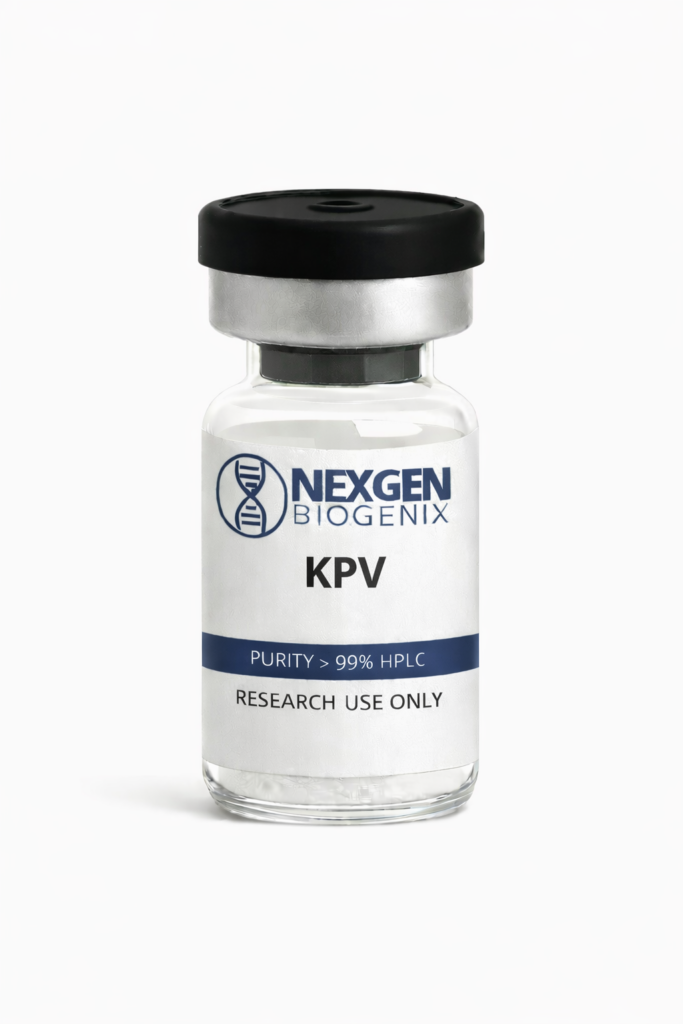
KPV — Research Overview (RUO)
Quick Facts
- Full name: L-Lysyl-L-prolyl-L-valine
- Common name / abbreviation: KPV; Lys-Pro-Val; α-MSH(11–13)
- Synonyms / related names: Alpha-MSH C-terminal tripeptide; α-MSH fragment 11–13; H-Lys-Pro-Val-OH; related compounds include Ac-KPV-NH₂ (N-acetylated, C-amidated form), K(D)PV (D-proline analog), and (CKPV)₂ (dimeric derivative)
- Peptide class: Endogenous tripeptide; C-terminal fragment of alpha-melanocyte-stimulating hormone (α-MSH); melanocortin-derived anti-inflammatory peptide
- Amino acid sequence: Lys-Pro-Val (single-letter: KPV); positions 11–13 of α-MSH (a 13-amino-acid peptide derived from POMC)
- Molecular formula: C₁₆H₃₀N₄O₄
- Molecular weight: ~383.49 Da (free acid form); isoelectric point (pI): 8.14
- CAS number: 67727-97-3 (free acid); related form Ac-KPV-NH₂ (N-acetyl, C-amide) also studied in literature
- PubChem CID: 123909
- Primary research themes: Intestinal inflammation and inflammatory bowel disease (IBD) models; NF-κB and MAPK pathway modulation; PepT1-mediated intracellular drug delivery; skin inflammation and wound repair models; neuroimmune and melanocortin biology; colitis-associated carcinogenesis prevention models
- Evidence level: Predominantly preclinical (in vitro and murine models); no large-scale human clinical trials published; a dimeric derivative (CKPV)₂ has been studied in small human cell culture contexts only
- Regulatory status: Research Use Only (RUO) in the United States; not FDA-approved as a drug; placed in Category 2 of the interim 503A Bulks List in September 2023, where it remains — KPV was not among the five peptides whose nominations were withdrawn in September 2024; it is currently listed by FDA under “Other Bulk Drug Substances That May Present Significant Safety Risks” (see Section 9 for complete regulatory history)
What Is KPV?
KPV is a naturally occurring tripeptide consisting of three amino acids — lysine (K), proline (P), and valine (V) — that corresponds to positions 11 through 13 at the C-terminal end of alpha-melanocyte-stimulating hormone (α-MSH), a 13-amino-acid peptide produced in the pituitary gland and other tissues from the precursor protein proopiomelanocortin (POMC). α-MSH is one of the melanocortin peptides and is well established as a regulator of pigmentation, energy balance, and inflammatory responses. While α-MSH exerts its effects largely through melanocortin receptors (MC1R through MC5R), research spanning several decades has demonstrated that its anti-inflammatory activity is disproportionately concentrated in its C-terminal tripeptide sequence — the KPV motif — which has been described in the literature as retaining nearly all of the parent hormone’s anti-inflammatory capacity while being entirely free of its melanotropic (pigmentation-inducing) effects.
The human body naturally produces many peptides — small, protein-like molecules that act as biological messengers coordinating immune regulation, metabolic homeostasis, and cellular communication — and α-MSH, the parent molecule of KPV, is one of these endogenous signaling peptides. KPV itself exists as part of the intact α-MSH sequence within the body, though it does not circulate independently in meaningful concentrations as a free tripeptide under normal physiological conditions. As a synthetic research compound, it is produced by solid-phase peptide synthesis and used to isolate and probe the anti-inflammatory properties encoded in those three specific amino acid positions.
What has made KPV particularly interesting to researchers — beyond its anti-inflammatory potency — is a mechanistic finding published in 2008: KPV was shown to enter intestinal epithelial cells and immune cells via PepT1, a high-affinity oligopeptide transporter whose expression in the colon is dramatically upregulated during inflammatory bowel disease (IBD). This disease-activated uptake mechanism means that KPV’s bioavailability at the target site increases precisely when and where inflammation is present — a pharmacological property that researchers have proposed as a model for inflammation-responsive drug delivery, and one that has attracted considerable interest in the IBD research community. Its small size (~383 Da), high chemical stability compared to larger peptides, and lack of melanotropic activity make it an unusually tractable and specific research tool.
Why Do Researchers Study It?
Researchers are interested in KPV because it represents the minimal functional anti-inflammatory unit of α-MSH — a molecularly minimal, chemically stable, and mechanistically distinctive probe for studying inflammatory signaling pathways in intestinal, dermatological, and neuroimmune research contexts. Key areas of scientific investigation include:
- Inflammatory bowel disease (IBD) models: KPV’s most extensively studied research application is in murine models of colitis — particularly DSS- (dextran sulfate sodium) and TNBS- (trinitrobenzene sulfonic acid) induced colitis — where oral administration has been observed to reduce histological inflammation scores, colonic myeloperoxidase activity, and pro-inflammatory cytokine mRNA expression.
- NF-κB pathway research: KPV is used as a pharmacological probe for studying NF-κB inhibition at nanomolar concentrations in intestinal epithelial cell lines, providing a research tool for dissecting the molecular steps of IκBα stabilization, p65RelA nuclear import blockade, and downstream cytokine gene expression suppression.
- PepT1-mediated drug delivery research: The discovery that KPV is transported into cells via the PepT1 oligopeptide transporter — with high affinity (Km ~160 μM in Caco2-BBE cells, among the lowest reported for any PepT1 substrate) — has established it as a model compound for exploring how PepT1 upregulation during intestinal inflammation can be exploited as a disease-activated drug delivery mechanism.
- Skin inflammation and dermatology models: Because KPV retains the anti-inflammatory properties of α-MSH without triggering pigmentation, researchers have studied it in models of atopic dermatitis, psoriasis, and contact dermatitis, as well as in transdermal delivery studies examining iontophoresis and microneedle-assisted permeation across human skin ex vivo.
- Colitis-associated carcinogenesis prevention: Studies have examined whether chronic KPV administration in murine colitis-cancer models — where inflammation drives carcinogenesis — reduces tumor burden, tumor number, and tumor-adjacent inflammatory signaling, providing a research framework for studying the relationship between chronic mucosal inflammation and colorectal cancer risk.
- Nanoparticle and advanced drug delivery platform development: KPV has been used as the active cargo in hyaluronic acid-functionalized nanoparticle formulations, albumin-based polysaccharide hydrogel systems, and iontophoretic transdermal delivery platforms — serving as both a model anti-inflammatory payload and a research tool for evaluating novel delivery technologies in intestinal and dermatological disease models.
Proposed Mechanism (Research Framing)
The following descriptions are drawn from published scientific literature and reflect hypotheses and observations from preclinical and in vitro research. The exact mechanisms of KPV in humans have not been fully established, and no causal claims are made here. Notably, some aspects of KPV’s mechanism — particularly the question of melanocortin receptor involvement — remain an active area of scientific debate, and this article presents the current state of the evidence, including areas of uncertainty.
The primary mechanistic finding underpinning KPV’s research profile is its ability to inhibit NF-κB (nuclear factor kappa-light-chain-enhancer of activated B cells) signaling at remarkably low concentrations. Studies in human intestinal epithelial cell lines (Caco2-BBE and HT29-Cl.19A) have demonstrated that KPV at concentrations as low as 10 nanomolar inhibits NF-κB reporter activity, stabilizes IκBα protein (preventing its cytokine-stimulated degradation), and blocks IκBα phosphorylation — effectively preventing the release and nuclear translocation of the p65RelA NF-κB subunit. Researchers have proposed that this intracellular NF-κB blockade is the primary mechanism through which KPV reduces the transcription of downstream pro-inflammatory genes, including IL-8, TNF-α, IL-1β, and IL-6. Parallel studies have confirmed that KPV also inhibits all three major MAPK subfamilies (ERK1/2, JNK, and p38) at these same nanomolar concentrations — a dual NF-κB and MAPK inhibitory profile that researchers describe as unusually broad for a molecule of only three amino acids.
A critical and scientifically important mechanistic feature is the route by which KPV reaches these intracellular targets. Studies have demonstrated that KPV’s anti-inflammatory effects in intestinal epithelial cells are strictly dependent on PepT1-mediated intracellular uptake: in HT29-Cl.19A cells, which do not express PepT1, KPV failed to inhibit NF-κB activation or reduce IL-8 expression despite the presence of functional IL-1β receptors — confirming that the peptide must enter the cell via PepT1 to exert its intracellular effects. Fluorescence microscopy tracking studies have observed that KPV accumulates within the cell nucleus within five hours of uptake, where researchers have proposed it directly disrupts the interaction between p65RelA and importin-α3, preventing nuclear import of the activated NF-κB complex. This intracellular, nucleus-targeted mechanism is mechanistically distinct from the cell-surface receptor-mediated signaling that characterizes most cytokine-based anti-inflammatory agents.
A second mechanistic layer concerns melanocortin receptor (MCR) involvement — a topic where the literature presents nuanced and sometimes conflicting data. The preclinical IBD research community, led by studies from Didier Merlin’s group, has consistently demonstrated that KPV’s anti-inflammatory effects in intestinal models are not blocked by melanocortin receptor antagonists, supporting a receptor-independent mechanism. However, other studies — particularly those examining skin keratinocytes and immune cells — have reported that KPV can signal through MC1R and MC3R in certain cell types, including through calcium mobilization in human keratinocytes (PMID: 15102092) and through MC3R in bronchial epithelial cells and macrophages. Researchers have proposed that this apparent contradiction reflects genuine tissue-specificity: KPV may use PepT1-dependent, MCR-independent intracellular pathways in gut epithelium, while using MCR-dependent surface signaling in cells expressing high levels of MC1R or MC3R. The exact mechanism in humans has not been fully established across tissue types.
Key Targets Described in the Literature
- PepT1 (SLC15A1) oligopeptide transporter: The primary uptake mechanism in intestinal epithelial and immune cells; KPV has been described as having unusually high affinity for PepT1 (Km ~160 μM in Caco2-BBE cells), and PepT1 upregulation in inflamed colonic mucosa during IBD is proposed to create a disease-activated enrichment of KPV at the target site.
- NF-κB pathway (IκBα / p65RelA / importin-α3): Described in the literature as the central intracellular target; studies propose that nuclear KPV disrupts the p65RelA–importin-α3 interaction, preventing NF-κB nuclear translocation and subsequent pro-inflammatory gene transcription at nanomolar concentrations.
- MAPK subfamilies (ERK1/2, JNK, p38): Studies have observed simultaneous inhibition of all three major MAPK signaling branches in KPV-treated intestinal epithelial cells, with downstream reductions in IL-8, TNF-α, and IFN-γ secretion — a broad inflammatory signaling suppression profile attributed to intracellular KPV accumulation.
- Melanocortin receptors MC1R and MC3R (context-dependent): Evidence for MCR involvement exists in skin keratinocyte and bronchial epithelial models, but has been specifically refuted in intestinal epithelial models using MCR-knockout and receptor antagonist approaches. Researchers have proposed tissue-specific duality: PepT1-dependent in gut; MCR-dependent in skin and airway.
- IL-1β signaling pathway: Early literature proposed that KPV acts as an endogenous antagonist of IL-1β-mediated signaling — potentially by competing for the IL-1 receptor type I (IL-1RI) — a mechanism related to the structurally similar tripeptide K(D)PT derived from IL-1β itself. The contribution of this pathway specifically to KPV’s activity in intact biological systems has not been fully characterized.
Research Applications (RUO Context)
In qualified laboratory settings, KPV is used as a research tool across gastroenterology, dermatology, immunology, and drug delivery research. The following applications reflect how researchers have described using this compound in published studies — not protocols or instructions for any use outside a controlled research environment.
- Murine colitis models (DSS and TNBS): KPV has been administered orally (added to drinking water) in DSS- and TNBS-induced murine colitis models to characterize its effects on body weight loss, colon length, histological inflammation scoring, myeloperoxidase (MPO) activity (a neutrophil infiltration marker), and cytokine mRNA levels — providing a standardized preclinical IBD research platform.
- Intestinal epithelial cell culture models: KPV has been used in Caco2-BBE, HT29-Cl.19A, IEC-18, and T84 cell lines to study NF-κB activation kinetics, IκBα degradation and phosphorylation, MAPK pathway activation, cytokine secretion (IL-8, TNF-α), and PepT1-mediated uptake kinetics using radiolabeled [³H]KPV tracers.
- Advanced drug delivery platform evaluation: KPV has been used as the anti-inflammatory cargo in hyaluronic acid (HA)-functionalized nanoparticle formulations, albumin-polysaccharide hydrogel encapsulation systems, and iontophoresis-microneedle transdermal delivery studies — serving as both a pharmacological endpoint and a model payload for evaluating novel mucosal and transdermal delivery technologies.
- Colitis-associated cancer (CAC) models: In azoxymethane/DSS-induced colitis-associated colorectal cancer mouse models, KPV has been used to examine whether anti-inflammatory intervention reduces tumor number, size, and epithelial proliferation markers — probing the inflammatory carcinogenesis axis in colorectal biology.
- Skin inflammation assays: KPV has been applied in human keratinocyte (HaCaT) and primary dermal fibroblast systems to study calcium signaling, cytokine suppression, and wound-healing endpoints relevant to psoriasis, atopic dermatitis, and surgical scar formation research.
- PepT1 transport kinetics studies: Using competitive inhibition assays (cold KPV vs. radiolabeled PepT1 substrate Gly-Sar) and [³H]KPV uptake kinetics, researchers have characterized KPV’s Km and Vmax for PepT1 across multiple cell lines and inflammation states — work contributing to the broader pharmacological characterization of the PepT1 transporter as a drug delivery target.
Evidence Snapshot
► Preclinical Evidence (In Vitro / Animal Models)
- The landmark 2008 study by Dalmasso et al. (Gastroenterology, PMID: 18061177) demonstrated that nanomolar KPV inhibited NF-κB and MAPK signaling in Caco2-BBE and Jurkat cells via PepT1-mediated uptake, and that oral KPV administration reduced disease severity, MPO activity, and pro-inflammatory cytokine expression in both DSS- and TNBS-induced murine colitis models. This remains the foundational mechanistic and in vivo reference for KPV IBD research.
- A 2008 study by Kannengiesser et al. (Inflammatory Bowel Diseases, PMID: 18050413) confirmed anti-inflammatory effects of KPV and its parent peptides in additional murine colitis models, providing independent replication across different IBD induction protocols and contributing to the broader characterization of the melanocortin-derived tripeptide family in intestinal inflammation research.
- A 2017 study by Xiao et al. (Molecular Therapy, PMID: 28129126) demonstrated that oral delivery of KPV via hyaluronic acid-functionalized nanoparticles significantly enhanced its efficacy in DSS-induced colitis compared to free KPV, reducing mucosal damage, TNF-α expression, and histological inflammation scores — providing proof-of-concept for targeted nanoparticle-mediated KPV delivery to inflamed colonic mucosa.
- Studies in colitis-associated cancer models have reported that oral KPV administration is associated with reductions in tumor number and size in inflammation-driven (azoxymethane/DSS) carcinogenesis models, but not in genetic cancer models lacking an inflammatory component — a finding researchers have interpreted as consistent with KPV’s mechanism of anti-inflammatory rather than direct anti-neoplastic activity.
- In skin research models, the 2003 study by Getting et al. (Journal of Pharmacological and Experimental Therapeutics, PMID: 12808006) examined KPV’s anti-inflammatory profile in comparison to full-length α-MSH, demonstrating that the KPV fragment retains significant anti-inflammatory activity in peripheral immune cells and confirming its lack of melanocortin receptor binding at classical α-MSH binding sites — while leaving open the question of partial MC1R interactions in specific cell types.
► Human / Clinical Evidence
- No clinical trials evaluating KPV as an investigational drug in human patients have been published in peer-reviewed literature. The entirety of KPV’s evidence base derives from in vitro cell culture and murine animal models.
- The (CKPV)₂ dimeric derivative of KPV was studied in small-scale human peripheral blood mononuclear cell (PBMC) culture experiments, where it was reported to inhibit TNF-α production following LPS stimulation — an ex vivo finding using human-derived cells, but not a clinical trial in human subjects.
- Observational data from human IBD biopsies has confirmed that PepT1 expression is substantially upregulated in inflamed colonic mucosa from patients with Crohn’s disease and ulcerative colitis — a finding that is mechanistically relevant to KPV’s proposed disease-activated uptake mechanism, but does not constitute clinical evidence of KPV efficacy or safety in humans.
- As of 2025, large-scale, double-blind, placebo-controlled, internationally registered randomized controlled trials evaluating KPV for any indication in humans have not been published. KPV’s translational potential remains entirely at the preclinical stage, and no human safety, pharmacokinetic, or efficacy data for KPV itself have been published in peer-reviewed literature.
Limitations & Open Questions
KPV occupies an intriguing position in the research peptide landscape: a molecularly minimal compound with unusually potent in vitro activity and promising murine in vivo data, but with no published human trial data whatsoever. Researchers engaging with this compound should be aware of the following substantive limitations:
- Complete absence of human clinical data: Unlike several other research peptides in this space where at least preliminary human pharmacology data exist, KPV has not been evaluated in any published Phase I or Phase II human trial. Safety, pharmacokinetics, oral bioavailability, and efficacy in humans are entirely uncharacterized in the peer-reviewed literature. The translation gap from murine colitis models to human IBD is therefore entirely uncrossed for this compound.
- Oral bioavailability and stability challenges: KPV is highly hydrophilic, which substantially limits its passive diffusion across biological membranes. Studies have confirmed that passive transdermal permeation is below the limit of detection without delivery enhancement (iontophoresis, microneedles). Oral bioavailability in humans — while mechanistically plausible through PepT1 — is dependent on the degree of PepT1 upregulation in the colon, which varies with disease state and individual factors. Enzymatic degradation in the GI tract represents an additional stability challenge that the nanoparticle delivery literature explicitly seeks to address.
- Mechanistic debate — MCR-dependent vs. MCR-independent activity: The literature presents genuinely inconsistent data on whether KPV requires melanocortin receptor engagement. The IBD literature strongly supports a PepT1-dependent, MCR-independent intracellular mechanism in gut epithelium; the dermatology and keratinocyte literature reports MC1R-mediated calcium signaling. This tissue-specific duality is mechanistically important but also means that findings from one tissue model should not be automatically extrapolated to others.
- Geographic and laboratory concentration of IBD research: A substantial portion of the key KPV preclinical literature — particularly the PepT1-mechanism and nanoparticle delivery work — originates from one research group (Merlin laboratory, initially at Emory University). While these studies are methodologically rigorous and published in high-impact journals, independent international replication of the core PepT1-mechanism findings across different laboratories remains limited.
- Regulatory status and safety concerns: KPV remains in FDA’s list of substances associated with significant safety concerns for compounding purposes (see Section 9). While no specific safety signal from human use has been published — in part because no human trials have been conducted — the FDA’s concern flags the absence of adequate human safety data as a material issue for translational research planning.
- Structure-activity relationship complexity: Multiple KPV analogs — Ac-KPV-NH₂, K(D)PV, KPdV, dKPV, glycoalkylated KPV, (CKPV)₂ — show varying activity profiles across different assay systems. Findings from studies using one form of KPV cannot be assumed to apply to other forms, making cross-study comparison dependent on careful attention to the exact chemical entity studied.
Quality & Sourcing
For researchers working with KPV in preclinical or in vitro settings, compound quality and precise chemical identity documentation are essential. KPV is among the smaller peptides used in research (only 383 Da), and its tripeptide structure makes it less prone to the oxidation and disulfide misfolding issues that affect larger peptides — however, the compound’s precise form matters significantly for interpreting results. Multiple forms of KPV are used in the literature (free acid H-Lys-Pro-Val-OH; N-acetylated, C-amidated Ac-KPV-NH₂; D-amino acid analogs; TFA salt), and these forms have different charges, solubilities, and potentially different biological activities. Unambiguous identification of the exact form in the COA is therefore essential for cross-study comparability. The following standards are foundational for research-grade sourcing:
- Lot Traceability: Each batch should carry a unique lot number linked to a complete synthesis and quality control record. Given the small molecular size of KPV and the existence of multiple closely related analogs and salt forms, lot-level documentation is the primary mechanism for ensuring researchers are working with a consistently characterized material across experiments and between laboratories.
- Certificate of Analysis (COA): A COA from a qualified analytical laboratory should confirm: peptide identity via mass spectrometry (confirming the expected mass of ~383.49 Da for the free acid, or the appropriate mass for the specific salt/analog form supplied); HPLC purity (≥98% is the standard research-grade benchmark); explicit identification of the exact chemical form (free acid, TFA salt, acetate salt, Ac-KPV-NH₂, or other); absence of residual synthesis reagents; and freedom from endotoxins and heavy metal contaminants. Counterion content (e.g., TFA) should be quantified, as residual TFA can confound cell culture assays at higher concentrations.
- Storage & Labeling: Research-grade KPV should be clearly labeled as Research Use Only, stored as a lyophilized powder at −20°C in moisture-protected conditions, and accompanied by a defined retest or expiration date. KPV’s small size and hydrophilicity mean it reconstitutes readily in aqueous buffers, but reconstituted solutions should be handled promptly — aliquoting prior to reconstitution is advisable to avoid freeze-thaw-mediated concentration changes and to maintain consistent dosing across multi-experiment research programs.
📄 Questions about documentation or purity verification? Contact our support team or request a COA from our library.
US Regulatory Snapshot (Updated 2025)
- RUO context: KPV is sold and distributed in the United States strictly as a Research Use Only compound for qualified laboratory use. It is not a drug, not a dietary supplement, and not approved for any therapeutic, cosmetic, or veterinary application. The FDA has made clear that RUO labeling cannot be used as a cover for products actually intended for human use — purchasing or self-administering KPV outside a licensed clinical research context would be outside its labeled and legal use and potentially subject to FDA enforcement action.
- Category 2 / 503A — what these designations mean (and do not mean): Under the FDA’s 503A compounding framework, bulk drug substances can be nominated for the official bulks list. During the interim review period, Category 1 indicated substances without identified safety concerns (permitting compounding under enforcement discretion), while Category 2 indicated substances with identified significant safety concerns — effectively prohibiting their compounding while evaluation continued. Neither category constitutes FDA approval. Category 2 specifically is a signal of FDA-identified safety concerns, not a final legal prohibition equivalent to a scheduled drug ban — but it does prevent licensed compounding pharmacies from using the substance under the 503A framework. As of January 7, 2025, FDA’s updated guidance eliminated Categories 2 and 3 as formal classifications; however, substances formerly in Category 2 remain prohibited from compounding, and KPV is now listed under FDA’s separate page “Other Bulk Drug Substances That May Present Significant Safety Risks.”
- FDA guidance, January 7, 2025: The FDA published updated final interim guidance under 503A, restructuring the interim categorization framework. Categories 2 and 3 were formally eliminated, but substances previously listed in those categories remain prohibited from compounding use. Category 1 substances may continue to be used under enforcement discretion pending formal evaluation. New nominations proceed directly to PCAC review and a formal evaluation process without interim categorization. This represents a significant structural change affecting the entire compounding landscape for peptide substances.
- KPV-specific regulatory history — complete status (as of 2025):
- September 2023: FDA placed KPV on Category 2 of the interim 503A Bulks List, citing significant safety concerns associated with the substance — including the absence of human safety data and concerns relevant to compounded peptide preparations generally. Compounding of KPV by 503A pharmacies was effectively suspended.
- September 2024: Five peptide nominations (AOD-9604, CJC-1295, Ipamorelin, Thymosin alpha-1, and Selank) were withdrawn by their nominators and removed from Category 2 for PCAC review. KPV was not among those five. KPV’s nomination was not withdrawn; it remained in Category 2 and was not submitted to the PCAC for formal review at the October or December 2024 meetings.
- January 7, 2025: FDA’s updated interim guidance eliminated Category 2 as a formal designation, but explicitly confirmed that substances previously in Category 2 remain prohibited from compounding. KPV transitioned to FDA’s listing of “Other Bulk Drug Substances That May Present Significant Safety Risks” — a designation that continues to prohibit its use in compounding under 503A.
- Current status (2025): KPV is not on the FDA’s approved 503A Bulks List, has not been reviewed by PCAC for potential inclusion, has not received FDA drug approval under any NDA or ANDA, and remains listed as a substance presenting significant safety risks for compounding purposes. It is classified exclusively as RUO for laboratory research. No PCAC review date for KPV has been announced as of 2025.
- Stay current: The regulatory landscape for peptide research compounds continues to evolve rapidly, with active legal and political discussions underway regarding the FDA’s categorization of multiple peptides. Researchers and institutions are strongly advised to monitor FDA.gov’s compounding pages and the agency’s “Certain Bulk Drug Substances That May Present Significant Safety Risks” page for updates, and to consult a qualified regulatory attorney or compliance professional for institution-specific guidance before ordering or using any research compound.
Frequently Asked Questions
Is KPV naturally produced by the body?
Yes — partially. KPV’s parent molecule, alpha-melanocyte-stimulating hormone (α-MSH), is an endogenous peptide produced in the pituitary gland, hypothalamus, skin, and other tissues from the precursor protein proopiomelanocortin (POMC). The human body naturally produces many peptides — small, protein-like molecules that act as biological messengers — and α-MSH is one of the most studied melanocortin peptides, with established roles in pigmentation, appetite regulation, and inflammatory modulation. The KPV tripeptide sequence exists as the C-terminal three amino acids of α-MSH within the intact hormone. However, KPV does not circulate as a free, independent tripeptide in physiologically significant concentrations under normal conditions — it is a research construct produced by synthesizing those three amino acid positions in isolation to study the anti-inflammatory activity encoded within that region of α-MSH.
Is KPV FDA-approved?
No. KPV is not FDA-approved as a drug for any indication in the United States. It has not been evaluated under a New Drug Application (NDA) process and no human clinical trials have been published. KPV was placed in Category 2 of the FDA’s interim 503A Bulks List in September 2023, where it remained — and following the January 2025 guidance update, it is now listed under FDA’s “Other Bulk Drug Substances That May Present Significant Safety Risks,” which continues to prohibit its use in compounded human preparations under 503A. No PCAC review of KPV for potential inclusion on the approved 503A Bulks List has been announced. All KPV sold on this platform is strictly Research Use Only (RUO) and is not intended or labeled for human use of any kind.
Is anything on this page medical advice?
No. Nothing on this page constitutes medical advice, clinical guidance, or a recommendation for human use of any kind. This page is an educational reference for qualified researchers and is intended solely to summarize what has been described in the scientific literature about KPV as a preclinical research tool — including transparent documentation of the complete regulatory history, the absence of human clinical trial data, and the open mechanistic questions that remain unresolved. If you have health or inflammatory condition-related questions, please consult a licensed healthcare provider. For regulatory questions regarding peptide compounds and their compounding status, please consult a qualified regulatory attorney or compliance professional.
References (Starting Points)
- Dalmasso G, Charrier-Hisamuddin L, Nguyen HTT, Yan Y, Sitaraman S, Merlin D. “PepT1-mediated tripeptide KPV uptake reduces intestinal inflammation.” Gastroenterology. 2008;134(1):166–178. PMID: 18061177. PMC: PMC2431115. View on PubMed
- Getting SJ, Schiöth HB, Perretti M. “Dissection of the anti-inflammatory effect of the core and C-terminal (KPV) alpha-melanocyte-stimulating hormone peptides.” Journal of Pharmacology and Experimental Therapeutics. 2003;306(2):631–637. PMID: 12808006. View on PubMed
- Kannengiesser K, Maaser C, Heidemann J, et al. “Melanocortin-derived tripeptide KPV has anti-inflammatory potential in murine models of inflammatory bowel disease.” Inflammatory Bowel Diseases. 2008;14(3):324–331. PMID: 18050413. View on PubMed
- Xiao B, Laroui H, Viennois E, et al. “Orally targeted delivery of tripeptide KPV via hyaluronic acid-functionalized nanoparticles efficiently alleviates ulcerative colitis.” Molecular Therapy. 2017;25(7):1628–1640. PMID: 28129126. PMC: PMC5498813. View on PubMed
- Pawar KR, Kolli CS, Rangari VK, Babu RJ. “Transdermal iontophoretic delivery of lysine-proline-valine (KPV) peptide across microporated human skin.” Journal of Pharmaceutical Sciences. 2017;106(7):1814–1820. PMID: 28343991. View on PubMed
- Bohm M, Luger TA. “Alpha-MSH related peptides: a new class of anti-inflammatory and immunomodulating drugs.” Annals of the New York Academy of Sciences. 2004;1017:238–248. PMC: PMC2095288. PMID: 15220428. View on PMC
- Viennois E, Ingersoll SA, Ayyadurai S, et al. “Critical role of PepT1 in promoting colitis-associated cancer and therapeutic benefits of dietary PepT1-mediated anti-inflammatory tripeptides.” Gut. 2016;65(6):944–958. PMID: 25986944. View on PubMed
- U.S. Food and Drug Administration. “Bulk Drug Substances Nominated for Use in Pharmacy Compounding Under Section 503A of the Federal Food, Drug, and Cosmetic Act.” Updated 2025. View on FDA.gov
RESEARCH USE ONLY — REGULATORY NOTICE
All products and information presented on this website are intended exclusively for in-vitro laboratory research and scientific investigation by qualified researchers. These products are not intended for human consumption, veterinary use, cosmetic application, or therapeutic purposes of any kind. Nothing on this page has been evaluated by the U.S. Food and Drug Administration (FDA). These products are not intended to diagnose, treat, cure, or prevent any disease or medical condition. Researchers are responsible for ensuring compliance with all applicable local, state, and federal regulations before ordering or using any research compound. For questions about regulatory status, consult a qualified regulatory attorney or compliance professional.