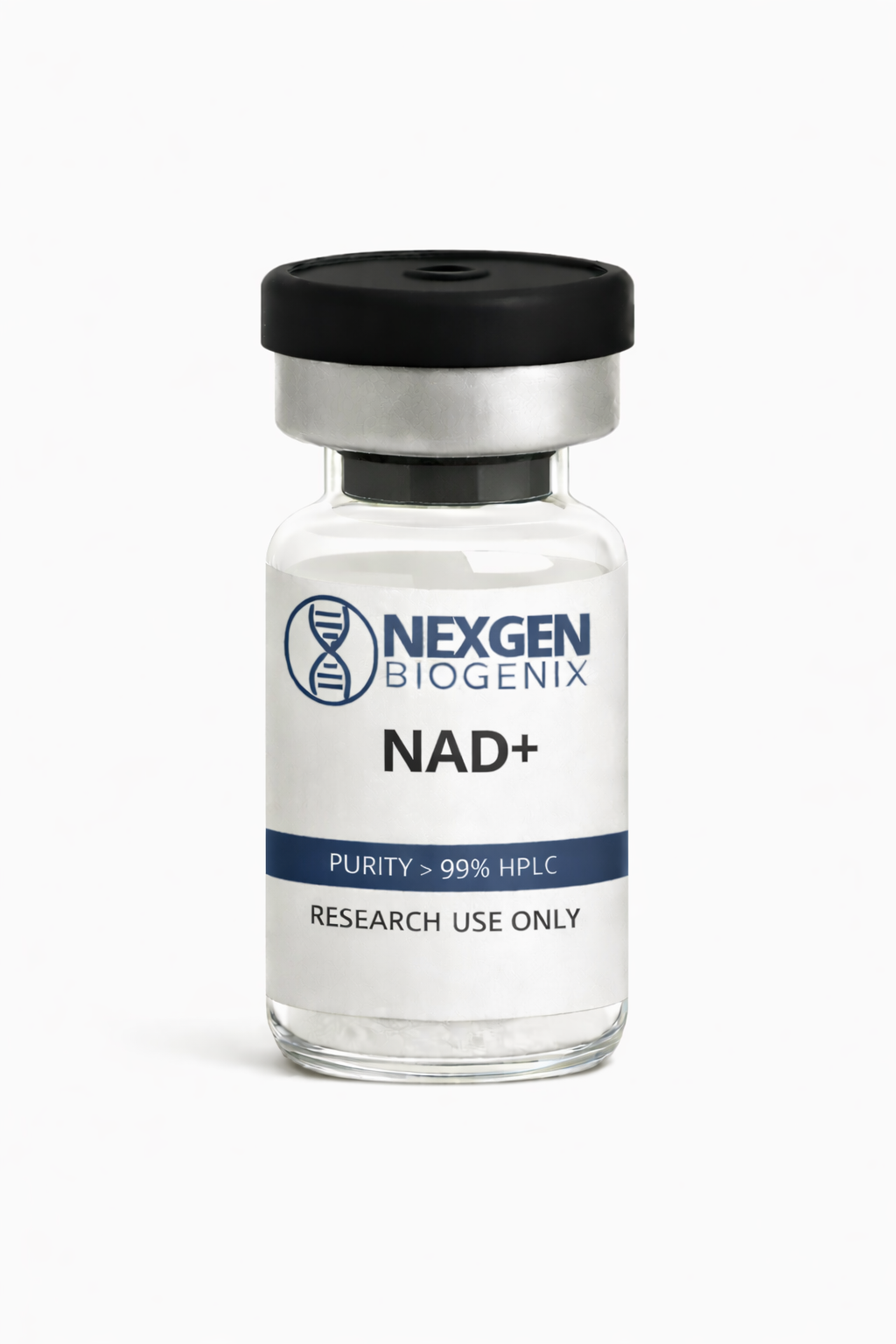
⚠️ Research Use Only (RUO). Not for human or veterinary use. All content on this page is provided for educational and scientific reference purposes only.
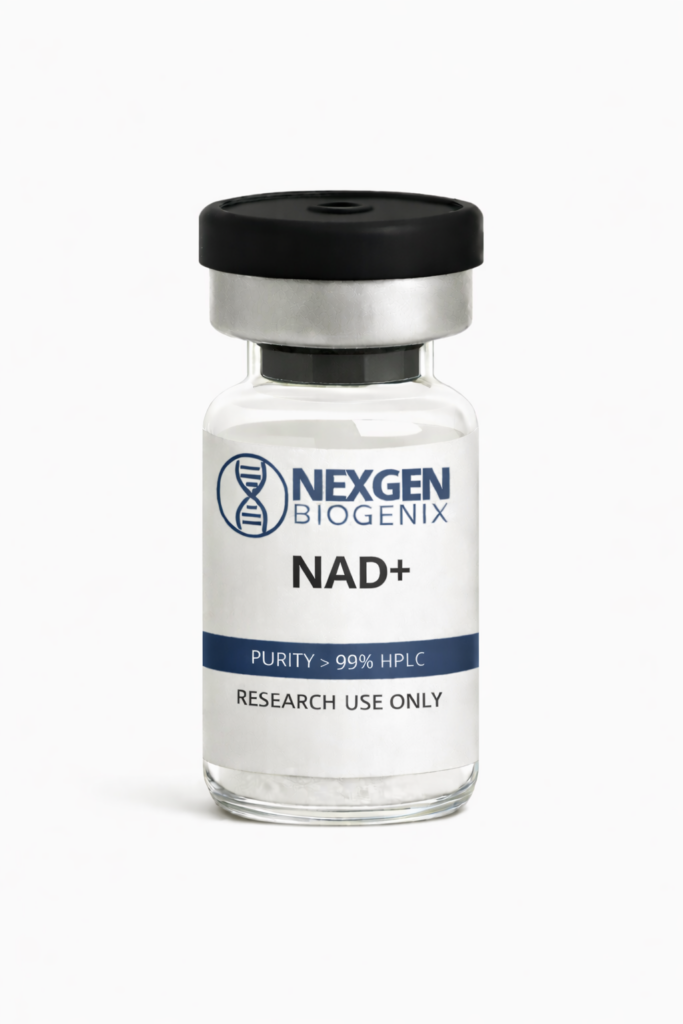
NAD+ (Nicotinamide Adenine Dinucleotide) — Research Overview (RUO)
Quick Facts
- Full name: Nicotinamide Adenine Dinucleotide (oxidized form)
- Common abbreviations: NAD+; NAD; β-NAD+
- Synonyms / related forms: NADH (reduced form); NADP+ / NADPH (phosphorylated analogs); related precursors include NMN (nicotinamide mononucleotide), NR (nicotinamide riboside), and niacin / niacinamide (vitamin B3 forms)
- Compound class: Pyridine dinucleotide coenzyme; endogenous metabolite; essential redox cofactor; cosubstrate for NAD+-dependent signaling enzymes
- Molecular formula: C21H27N7O14P2
- Molecular weight: 663.43 Da
- CAS number: 53-84-9; PubChem CID: 5892
- Primary research themes: Aging biology and longevity (hallmarks of aging); mitochondrial bioenergetics and energy metabolism; sirtuin and PARP enzyme biology; DNA repair and genome stability; cellular senescence; neurodegeneration models; skin biology and photoaging; metabolic disease models
- Evidence level: Preclinical (in vitro / animal models): extensive; Human clinical: growing but heterogeneous — predominantly small trials involving NAD+ precursors (NMN, NR), not direct NAD+ infusion at the research scale; no large-scale Phase 3 RCT demonstrating clinical efficacy for any aging-related indication has been published as of early 2026
- Regulatory status (as research compound): NAD+ as a pure molecule sold for laboratory research is classified RUO — not FDA-approved as a drug for any indication. NAD+ precursors (NMN, NR) have a separate and evolving dietary supplement regulatory history; see Section 9 for detail. Intravenous NAD+ as practiced in commercial wellness clinics exists in an unapproved, largely unregulated space.
What Is NAD+?
Nicotinamide adenine dinucleotide — universally abbreviated NAD+ — is one of the most ancient, abundant, and functionally indispensable molecules in all of life. It is a dinucleotide composed of two nucleotides joined by a phosphoanhydride bridge: one containing the purine base adenine and one containing nicotinamide, a form of vitamin B3. It exists in two interconvertible redox states — NAD+ (oxidized) and NADH (reduced) — and it is the cycling between these two states that underpins the transfer of electrons in glycolysis, the tricarboxylic acid (Krebs) cycle, and oxidative phosphorylation, processes by which every living cell extracts energy from nutrients. The human body naturally produces many molecules that act as biological messengers and metabolic regulators, and NAD+ is among the most fundamental of all — present in every nucleated cell in the human body, and so essential that severe deficiency of its dietary precursor (niacin / vitamin B3) causes pellagra, a systemic illness historically characterized by the “4 Ds”: dermatitis, diarrhea, dementia, and death.
What transformed NAD+ from a textbook redox coenzyme into one of the most intensively studied molecules in aging biology was the discovery that it also functions as a consumed cosubstrate — not merely a carrier — for a class of critical regulatory enzymes. Sirtuins (SIRT1–SIRT7), a family of NAD+-dependent deacylase enzymes, require NAD+ to execute their catalytic activity, cleaving NAD+ into nicotinamide and ADP-ribose as a byproduct of removing acyl groups from proteins. Poly(ADP-ribose) polymerases (PARPs), activated by DNA damage, also consume NAD+ to build poly-ADP-ribose chains as part of the DNA repair and genome maintenance response. The ectoenzyme CD38, expressed on immune cells and upregulated during aging and inflammation, hydrolyzes NAD+ into ADP-ribose and nicotinamide as part of calcium signaling. Because all of these enzymatic reactions consume NAD+ rather than simply cycling it, the cellular NAD+ pool is continuously depleted and must be continuously replenished through biosynthesis from dietary precursors — a balance that the published literature describes as becoming progressively unfavorable with age.
The observation that intracellular NAD+ levels decline measurably with age across multiple mammalian tissues — including muscle, liver, brain, adipose, and skin — has generated intense scientific interest in whether restoring those levels can reverse or slow aspects of biological aging. Importantly, researchers use NAD+ itself as a research tool compound to study these questions in biochemical and cellular assay systems, while the question of how to deliver biologically significant NAD+ to human tissues at scale remains an active area of scientific and regulatory debate. NAD+ as a pure molecule has a molecular weight of 663 Da, is highly polar, and does not readily cross cell membranes — a fundamental pharmacological challenge that drives much of the research interest in its smaller precursor molecules (NMN, NR) as delivery strategies for elevating intracellular NAD+.
Why Do Researchers Study It?
Researchers study NAD+ because it sits at the nexus of cellular energy metabolism, genome maintenance, epigenetic regulation, and the biology of aging — a combination that makes it simultaneously one of the most fundamental molecules in biochemistry and one of the most actively pursued targets in longevity science. Its decline with age, and the apparent reversibility of that decline in preclinical models, has made it a central subject of geroscience research.
- Aging and longevity biology: The geroscience hypothesis proposes that targeting the biology of aging itself — rather than individual diseases — could simultaneously prevent or delay multiple chronic conditions. NAD+ metabolism is one of the most direct interfaces with established hallmarks of aging, including mitochondrial dysfunction, cellular senescence, and epigenetic dysregulation, making it a key research target in this framework.
- Sirtuin biology: The seven mammalian sirtuins (SIRT1–SIRT7) require NAD+ as a cosubstrate for all of their enzymatic functions — regulating gene expression, DNA repair, mitochondrial biogenesis, fat oxidation, circadian rhythm, and stress responses. Researchers use NAD+ in cell and animal systems to modulate sirtuin activity and probe the downstream biological consequences.
- DNA repair and genome stability: PARPs, which consume large quantities of NAD+ during DNA damage responses, are among the most intensively studied DNA repair enzymes in biomedical research. NAD+ availability directly regulates PARP activity and, through it, the quality and completeness of DNA repair — a relationship researchers study extensively in models of aging, cancer, and metabolic disease.
- Mitochondrial function and energy metabolism: As the central electron carrier in oxidative phosphorylation, NAD+ availability directly impacts ATP production and mitochondrial membrane potential. Researchers use NAD+-manipulating systems to study how mitochondrial dysfunction contributes to aging, sarcopenia, neurodegeneration, and metabolic disease.
- Cellular senescence: Published research has described a reciprocal relationship between NAD+ metabolism and cellular senescence: DNA damage-induced PARP activation drives acute NAD+ depletion, which may trigger senescence; conversely, senescent cells express elevated CD38, which depletes NAD+ from neighboring tissue. Researchers study this feedback loop as a mechanism of tissue-level aging and SASP (senescence-associated secretory phenotype) propagation.
- Skin biology and photoaging: NAD+ and PARP activity are directly relevant to UV-induced DNA damage repair in keratinocytes and dermal fibroblasts. Published studies have examined how NAD+ availability influences the repair of UV photoproducts, the risk of photocarcinogenesis, and markers of dermal aging in cell models and small clinical studies.
- Neurodegeneration: In preclinical models of Alzheimer’s disease, Parkinson’s disease, and axonal degeneration (where SARM1 — an NAD+-consuming enzyme — plays a critical executioner role), NAD+ supplementation or precursor administration has been described as conferring neuroprotective effects. These findings motivate significant ongoing research investment.
Proposed Mechanism (Research Framing)
The following mechanistic descriptions are drawn from published biochemical literature, preclinical studies, and — where noted — early human data. They represent current scientific understanding in laboratory and research contexts. The exact mechanisms by which NAD+ manipulation influences human health outcomes, particularly in aging and age-related disease, have not been fully established in large-scale clinical trials. All claims should be understood within that context.
NAD+ operates through two fundamentally distinct but interrelated mechanisms that together account for its extraordinary biological importance. The first is its role as a redox coenzyme: NAD+ accepts a hydride ion (H⁻) from metabolic substrates — becoming NADH — and then donates those electrons to the mitochondrial electron transport chain (ETC), specifically to Complex I (NADH dehydrogenase), where their transfer drives ATP synthesis via oxidative phosphorylation. This cycle of NAD+/NADH interconversion is estimated to be used in more than 500 distinct enzymatic reactions in human metabolism. When NAD+ availability declines — as observed in aging tissue in multiple published studies — researchers have proposed that this impairs electron transport efficiency, reduces ATP output, and triggers a “pseudohypoxic” cellular state, in which nuclear and mitochondrial communication is disrupted even in the presence of normal oxygen levels. This pseudohypoxic state, described by Gomes et al. (2013) in Cell, is one of the most-cited mechanistic frameworks linking NAD+ decline to mitochondrial dysfunction in aging.
The second mechanism — NAD+ as a consumed cosubstrate — is what makes it uniquely relevant to aging signaling. When sirtuins deacylate their protein targets (including histones, transcription factors, and metabolic enzymes), they consume one NAD+ molecule per catalytic cycle, releasing nicotinamide and 2′-O-acetyl-ADP-ribose as byproducts. SIRT1 (nuclear; regulates gene expression, DNA repair, metabolism, circadian clock), SIRT3 (mitochondrial; regulates fatty acid oxidation and ROS detoxification), and SIRT6 (nuclear; regulates genomic stability and telomere maintenance) are described in the literature as particularly important to aging biology. Because sirtuin activity is directly coupled to NAD+ availability — not just presence, but concentration — a decline in the cellular NAD+ pool below a functional threshold is proposed to reduce sirtuin activity and, downstream, impair gene expression, accelerate epigenetic drift, and reduce stress resistance. Separately, PARPs (especially PARP1) consume large NAD+ quantities during DNA damage responses; in aging or metabolically stressed cells where DNA damage is more frequent and PARP activation more sustained, researchers have proposed that excessive PARP-mediated NAD+ depletion creates competition with sirtuins for the same finite NAD+ pool, contributing to both genome instability and reduced sirtuin activity simultaneously.
The age-associated rise of CD38 — a membrane-bound NAD+ glycohydrolase expressed on immune and endothelial cells — has been described in the literature as a third major driver of NAD+ decline in aging tissue. Studies in CD38 knockout mice have demonstrated substantially elevated NAD+ levels in multiple tissues and a blunted age-related decline, providing in vivo evidence researchers describe as supporting CD38 as a major NAD+ consumer in aging. The SASP released by senescent cells appears to promote CD38 upregulation in neighboring cells, creating a feedforward cycle in which cellular senescence drives NAD+ depletion, which in turn may promote further senescence and SASP propagation. This CD38-senescence-NAD+ axis is described in recent published reviews as one of the most important open mechanistic questions in aging biology.
Key Targets and Pathways Described in the Literature
- SIRT1–SIRT7 (sirtuins): NAD+-dependent deacylases; described as regulators of gene expression (SIRT1, SIRT6), mitochondrial function and ROS (SIRT3), DNA repair and telomere maintenance (SIRT6), and fatty acid metabolism (SIRT1, SIRT3). Directly dependent on NAD+ concentration for catalytic activity.
- PARP1 / PARP2: DNA damage-activated NAD+ consumers; described as essential for base excision repair and single-strand break repair. Excessive activation — as observed in aging and metabolic disease — may deplete NAD+ and compete with sirtuin activity.
- CD38 / CD157: NAD+ glycohydrolases upregulated in aging and inflammation; described as major drivers of tissue NAD+ decline in older animals; CD38 expression increases across multiple aging tissues in published mouse studies.
- NAMPT (nicotinamide phosphoribosyltransferase): The rate-limiting enzyme in the NAD+ salvage pathway — the predominant route of NAD+ biosynthesis in most mammalian tissues. Described as declining in expression with age in muscle, liver, and adipose; a target for NAD+ repletion strategy research.
- SARM1: An NAD+-consuming enzyme described in published neuroscience literature as an “executioner” of Wallerian axonal degeneration; its intrinsic NAD+ cleavage activity is proposed to drive rapid axonal NAD+ depletion following injury. An active research target in peripheral and traumatic neuropathy models.
- Complex I (NADH dehydrogenase) / ETC: The primary site of NADH re-oxidation to NAD+ in mitochondria; described as the downstream effector through which NAD+/NADH ratio influences ATP synthesis, ROS production, and the redox state of the cell.
Research Applications (RUO Context)
In laboratory research settings, NAD+ is used as an essential biochemical tool compound, both as a substrate to drive enzymatic reactions in cell-free systems and as a pharmacological agent to manipulate NAD+ levels in cell cultures and animal models. The following reflects how qualified researchers use NAD+ in controlled, non-clinical experimental contexts. No protocols, dosing guidance, reconstitution instructions, or information for human use is provided or implied.
- Biochemical enzyme activity assays: Used as the required cosubstrate in in vitro assays measuring sirtuin deacylase activity (SIRT1–SIRT7), PARP poly-ADP-ribosylation activity, CD38 glycohydrolase activity, and NAMPT enzymatic activity; essential for generating dose-response curves and Km determinations for NAD+-dependent enzymes
- NAD+/NADH ratio measurement in cell models: Applied to cell culture systems to manipulate intracellular redox state and study consequences for mitochondrial membrane potential, ROS production, and metabolic flux through glycolysis and oxidative phosphorylation using techniques including fluorescent biosensors (e.g., SoNar, Frex) and enzymatic cycling assays
- Aging and senescence cell models: Used in replicatively senescent and stress-induced senescent cell cultures to examine the relationship between NAD+ depletion, SASP factor secretion, PARP and CD38 activity, and sirtuin-mediated gene regulation; applied alongside senolytics and senomorphics to study combinatorial effects on senescent cell burden
- Animal models of aging and metabolic disease: Administered to aged mice and rats (typically via IP injection, oral gavage, or drinking water supplementation of precursors) to study effects on NAD+ tissue levels, mitochondrial function, physical performance, glucose metabolism, and longevity biomarkers; multiple published studies have described NAD+ repletion as restoring age-related deficits in these model systems
- Neurodegeneration and neuroprotection models: Used in models of Alzheimer’s disease (3xTg-AD mice), axonal degeneration (Wallerian degeneration models, SARM1 studies), and traumatic brain injury to study the role of NAD+ decline in neurotoxicity and the protective effects of restoring NAD+ availability via precursor administration
- Skin and dermatology research: Applied in keratinocyte and dermal fibroblast cultures exposed to UV irradiation to study PARP-mediated DNA repair kinetics, pyrimidine dimer resolution, and the relationship between cellular NAD+ depletion and photocarcinogenesis risk; used in in vitro aging models examining collagen synthesis, extracellular matrix gene expression, and oxidative stress markers
Evidence Snapshot
► Preclinical Evidence (In Vitro / Animal Models)
- A foundational study by Gomes et al. (2013, Cell) demonstrated in aged mice that declining NAD+ levels led to a “pseudohypoxic” state — a disruption of nuclear-mitochondrial communication mediated through HIF-1α stabilization and SIRT1 inactivation — that was reversed by NMN administration. This study is among the most-cited mechanistic demonstrations that NAD+ decline is a causative, not merely correlative, factor in mitochondrial aging phenotypes in mammals.
- Multiple published studies in aged rodents have described that supplementation with NAD+ precursors (NMN and NR) significantly elevated tissue NAD+ levels in muscle, liver, brain, and adipose; improved mitochondrial function (oxygen consumption rate, electron transport chain complex activity); restored physical endurance; improved glucose tolerance; and reduced markers of chronic inflammation. These effects have been reproduced across multiple independent laboratories.
- Studies in CD38 knockout mice have established that CD38 is a major driver of age-related NAD+ decline: CD38-null animals maintain substantially elevated NAD+ levels in multiple tissues with aging and show a blunted age-related decline, providing in vivo evidence for CD38 as a pharmacological target for NAD+ repletion research.
- In skin biology models, published studies have described that NAD+ and PARP activity are critical determinants of how efficiently keratinocytes repair UV-induced DNA damage, and that NAD+ depletion — induced by UV exposure itself via PARP activation — creates a transient vulnerability to mutagenesis; NR supplementation in mouse models has been described as reducing UV-induced skin cancer incidence in one published study.
► Human / Clinical Evidence
- Human trials have been conducted almost exclusively with NAD+ precursors (NMN and NR), not with exogenous NAD+ itself — a distinction that matters because oral NAD+ does not readily enter cells intact and is largely metabolized to NMN and nicotinamide before entering systemic circulation. A 2024 systematic review by Gindri et al. (American Journal of Physiology-Endocrinology and Metabolism) identified 10 randomized controlled trials evaluating NAD and NADH directly; the authors found promising signals but noted high heterogeneity, small sample sizes, and insufficient standardization to draw definitive efficacy conclusions.
- A pilot human study by Grant et al. (2019, Frontiers in Aging Neuroscience) characterizing the plasma and urine NAD+ metabolome during a 6-hour intravenous NAD+ infusion in 11 male participants found that IV-administered NAD+ was rapidly metabolized — primarily to NMN and nicotinamide — suggesting that the pharmacologically active form reaching most tissues after IV infusion may be NAD+ precursors rather than intact NAD+ itself. This challenges the mechanistic framing of “NAD+ IV therapy” as practiced in commercial wellness settings.
- A 2026 retrospective tolerability pilot study published in Frontiers in Aging (PMID: 41704678) compared four consecutive days of IV NAD+ (500 mg) vs. IV NR (500 mg) in commercial clinic clients and found both generally well tolerated, with NR IV associated with fewer side effects and a faster infusion rate. The authors noted that the field lacks large, well-controlled trials adequate to establish clinical efficacy, and that commercial administration is substantially outpacing the clinical evidence base.
- As of early 2026, no large-scale, Phase 3 randomized controlled trial evaluating intravenous NAD+ (the molecule itself, not precursors) as a therapeutic intervention for any aging-related indication has been completed and published. Human data for IV NAD+ specifically are limited to pilot studies and retrospective reviews, predominantly in small samples, without adequate power to establish efficacy for any clinical outcome.
Limitations & Open Questions
Despite being one of the most studied molecules in biology, NAD+ as a target for aging research carries substantial unresolved scientific and regulatory uncertainties that the published literature has explicitly acknowledged.
- Cell membrane permeability of NAD+: NAD+ at 663 Da is too large and too polar to passively diffuse across most cell membranes. The mechanism by which exogenously administered NAD+ (whether oral or intravenous) translates into meaningful intracellular NAD+ elevation is not fully characterized. Published evidence suggests that intravenously administered NAD+ is rapidly cleaved extracellularly — primarily by CD38 and CD73 — yielding NMN and NR as the primary cellular entry points, meaning that “NAD+ IV therapy” and “NMN supplementation” may be more mechanistically similar than their names suggest.
- Tissue specificity of NAD+ decline: Published data indicate that the age-related decline in NAD+ is not uniform across tissues — some compartments decline more steeply and earlier than others. The threshold at which NAD+ decline becomes biologically consequential in specific human tissues remains incompletely characterized, and preclinical findings in mouse muscle or liver may not apply uniformly to human brain, skin, or cardiovascular tissue.
- Controversy over sirtuin longevity effects: While the NAD+-sirtuin axis is widely studied, published reviews have noted that the interpretation of sirtuins as conserved longevity regulators has been challenged. Overexpression of SIRT1 did not extend lifespan in mice, and detrimental effects were observed for chronological lifespan in yeast. Researchers emphasize that sirtuin biology in the context of specific disease models does not straightforwardly translate to lifespan extension.
- Cancer risk considerations: NAD+ is consumed by PARPs during DNA repair — a process that suppresses mutagenesis and cancer. However, elevated NAD+ may also support the high energy demands of rapidly dividing tumor cells. Certain published studies have noted upregulation of NAMPT (the NAD+ biosynthesis rate-limiting enzyme) in cancer tissue, and researchers have proposed NAMPT inhibition — not NAD+ supplementation — as a potential cancer biology strategy. The net effect of chronic NAD+ elevation on cancer risk in aging humans is not established.
- Evidence gap between precursors and NAD+ itself: The vast majority of published human data involve NMN or NR supplementation, not exogenous NAD+. Extrapolating findings from NMN/NR trials to conclusions about intravenous NAD+ efficacy — or vice versa — involves significant mechanistic assumptions that the current evidence does not fully support.
- Absence of Phase 3 human efficacy data: As of early 2026, no completed Phase 3 randomized controlled trial with adequate power and predefined clinical endpoints has established that NAD+ supplementation (via any route) meaningfully improves lifespan, healthspan, or any specific age-related clinical outcome in humans. The evidence base is promising and rapidly growing but remains insufficient to establish clinical efficacy claims.
Quality & Sourcing
NAD+ for research applications is commercially available in multiple grades and formulations. Because NAD+ is chemically labile — susceptible to hydrolysis, oxidation, and enzymatic degradation — quality verification is particularly important for any experimental work where NAD+ concentration or redox state directly affects assay outcomes.
- Lot Traceability: Each batch must carry a unique lot number traceable to the manufacturer’s synthesis and quality control records. For NAD+, lot-specific testing is especially important because purity can degrade with improper storage or handling, and contaminants from synthesis (e.g., residual NMN, nicotinamide, or adenosine) can confound enzyme kinetics assays. Lot traceability enables cross-batch reproducibility assessment essential for publication-quality research.
- Certificate of Analysis (COA): A complete, lot-specific COA must include: identity confirmation by HPLC and mass spectrometry verifying both the NAD+ molecular structure and molecular weight (663.43 Da); purity ≥ 98% by HPLC; confirmation of the correct oxidation state (NAD+ vs. NADH); residual solvent and counterion testing; and moisture content where applicable, as NAD+ is hygroscopic. Researchers using NAD+ in enzymatic cycling assays should confirm the molar extinction coefficient used for quantification is consistent with the lot-specific purity.
- Storage & Labeling: Lyophilized NAD+ should be stored at or below −20°C under inert atmosphere, protected from light and moisture; aqueous solutions of NAD+ are substantially less stable and should be prepared fresh immediately before use or stored at neutral pH at −80°C for short periods. Products must be clearly labeled as Research Use Only, with no therapeutic claims, no dosing guidance, and no administration instructions of any kind on labeling or accompanying materials.
📄 Questions about documentation or purity verification? Contact our support team or request a COA from our library.
US Regulatory Snapshot (Updated 2025)
- RUO classification (NAD+ as research compound): NAD+ (nicotinamide adenine dinucleotide), when sold as a pure molecule for laboratory use, is classified as a Research Use Only (RUO) compound. It is not a drug product, not a dietary supplement, not a food additive, and not a medical device. RUO products are not subject to FDA drug approval requirements, but they may not legally be sold, labeled, or marketed for human therapeutic, clinical, or wellness purposes. The FDA has taken enforcement action against sellers of research compounds when evidence of intended human use — including clinical language, infusion protocols, dosing instructions, or therapeutic claims — is present in marketing, packaging, or accompanying materials.
- Category 1 / 503A — what it means (and does not mean): Under Section 503A of the FD&C Act, traditional compounding pharmacies may use certain bulk drug substances as starting materials for compounded preparations. “Category 1” in the FDA’s interim 503A Bulk Drug Substances policy refers to substances that have been nominated and are under active evaluation, and for which FDA has not identified significant safety risks — meaning it does not currently intend to take enforcement action against 503A pharmacies that compound those specific substances while evaluation is pending. Category 1 is not FDA approval. It is not a finding of safety or efficacy. It is an interim enforcement posture only. NAD+ and its precursors (NMN, NR) are not on the 503A Bulk Drug Substances list in any category as of early 2026; they fall under a different regulatory framework as dietary supplement ingredients or, in some cases, as food substances — not as bulk drug substances used in compounding.
- FDA January 7, 2025 guidance: In its final interim guidance published January 7, 2025 (Docket No. FDA-2015-D-3517, FR Doc. 2024-31546), FDA clarified that it does not intend to place newly nominated bulk drug substances into interim Categories 1, 2, or 3 prior to completing its full evaluation under Section 503A(c). This guidance signals the phasing out of the interim categorization system for newly nominated compounds. Researchers and compliance professionals should monitor FDA’s bulk drug substances page directly for current status and consult qualified regulatory counsel for guidance specific to their application.
- NAD+ and precursor-specific regulatory status (as of March 2026): NAD+ itself is not FDA-approved as a drug for any indication. Intravenous NAD+ infusions offered in commercial wellness clinics are not FDA-approved drug products; they exist in a regulatory gray zone and have not been evaluated for safety and efficacy under the IND/NDA process. Regarding precursors: NMN (nicotinamide mononucleotide) was the subject of an extended regulatory controversy — the FDA determined in 2022 that NMN was excluded from the dietary supplement definition due to its prior IND investigation, but reversed this position in September 2025 following citizen petitions and litigation, confirming that NMN may be lawfully marketed as a dietary supplement subject to New Dietary Ingredient (NDI) notification requirements. NR (nicotinamide riboside), marketed under the brand name Niagen by ChromaDex, has been sold as a dietary supplement under NDI notification since 2016. Importantly, dietary supplement status for NMN or NR does not imply FDA approval or drug-level evaluation of safety and efficacy. The supplement regulatory framework does not require premarket efficacy demonstration.
- Stay current — monitor authoritative sources: The regulatory landscape for NAD+ and its precursors is among the most rapidly evolving in the supplement and research compound space. Researchers, institutions, and commercial supply-chain professionals should monitor FDA.gov, the Federal Register, and the FDA Dietary Supplement page for the most current guidance, and consult a qualified regulatory attorney or compliance professional for institution-specific guidance.
Frequently Asked Questions
Does the body naturally produce NAD+?
Yes — and unlike most peptides discussed in research contexts, NAD+ is not merely naturally produced; it is continuously synthesized and recycled by every living cell as an absolute requirement for life. The human body naturally produces many molecules that act as biological messengers and metabolic regulators, and NAD+ is one of the most fundamental — alongside other critical endogenous compounds like ATP (the energy currency of the cell), acetyl-CoA (the entry metabolite for the Krebs cycle), glutathione (the cell’s primary antioxidant buffer), and the endogenous peptides insulin, glucagon, and growth hormone that regulate metabolic state. What makes NAD+ research remarkable is not that the body produces it — every organism on Earth does — but that its production and recycling efficiency appears to decline measurably during normal aging, and that this decline can be observed in human blood and muscle tissue. Whether this decline is a cause, a consequence, or both is one of the most actively debated questions in aging biology.
Is NAD+ IV therapy FDA-approved?
No. NAD+ administered intravenously as offered by commercial wellness and “drip” clinics is not FDA-approved for any indication. These infusions are not drugs approved through the Investigational New Drug (IND) and New Drug Application (NDA) process. They are not pharmaceutical-grade products evaluated for safety, purity, and potency under FDA oversight. The commercial wellness industry providing IV NAD+ operates outside the FDA drug approval framework, and published pilot studies suggest that the clinical evidence base is far from adequate to establish efficacy for any aging or health-promoting indication. NAD+ precursors (NMN, NR) are available as dietary supplements, but dietary supplement status does not involve FDA review of efficacy, and claims that these supplements “restore NAD+ levels” or “reverse aging” have been challenged by regulatory bodies including the National Advertising Division (NAD). Nothing on this page constitutes an endorsement of any clinical, wellness, or personal use of NAD+ or its precursors.
Is any information on this page medical advice?
No. Nothing on this page constitutes medical advice, clinical guidance, therapeutic recommendations, dosing instructions, infusion protocols, or administration guidance of any kind. This page is educational and scientific reference material provided for qualified researchers only. All products described on this website are intended exclusively for in vitro laboratory research by qualified scientists in appropriate research settings. If you have questions about aging, energy, metabolic health, or any medical condition, please consult a licensed healthcare provider. If you are interested in NAD+ research conducted in properly regulated human clinical trials, you may search for actively enrolling studies at ClinicalTrials.gov.
References (Starting Points)
- Imai S, Guarente L. “NAD+ and sirtuins in aging and disease.” Trends in Cell Biology. 2014;24(8):464–471. PMID: 24786309. View on PubMed
- Gomes AP, Price NL, Ling AJY, et al. “Declining NAD+ induces a pseudohypoxic state disrupting nuclear-mitochondrial communication during aging.” Cell. 2013;155(7):1624–1638. PMID: 24360282. View on PubMed
- Bhasin S, Seals D, Migaud M, Musi N, Baur JA. “Nicotinamide Adenine Dinucleotide in Aging Biology: Potential Applications and Many Unknowns.” Endocrine Reviews. 2023;44(6):1047–1073. PMID: 37364580. View on PubMed
- Chini CCS, Cordeiro HS, Tran NLK, Chini EN. “NAD metabolism: Role in senescence regulation and aging.” Aging Cell. 2024;23(1):e14022. PMID: 37989724. View on PMC
- Gindri IM, Ferrari G, Pinto LPS, et al. “Evaluation of safety and effectiveness of NAD in different clinical conditions: a systematic review.” American Journal of Physiology-Endocrinology and Metabolism. 2024;326(4):E417–E427. PMID: 37971292. View on PubMed
- Grant R, Berg J, Mestayer R, Braidy N, Bennett J, Broom S, Watson J. “A pilot study investigating changes in the human plasma and urine NAD+ metabolome during a 6 hour intravenous infusion of NAD+.” Frontiers in Aging Neuroscience. 2019;11:257. PMID: 31572171. View on PubMed
- Sinclair DA, Guarente L. “Slowing ageing by design: the rise of NAD+ and sirtuin-activating compounds.” Nature Reviews Molecular Cell Biology. 2014;15(10):649–661. PMID: 25088531. View on PMC
- U.S. Food and Drug Administration. “Interim Policy on Compounding Using Bulk Drug Substances Under Section 503A of the Federal Food, Drug, and Cosmetic Act — Guidance for Industry.” Published January 7, 2025. FR Doc. 2024-31546. Docket No. FDA-2015-D-3517. View on Federal Register
RESEARCH USE ONLY — REGULATORY NOTICE
All products and information presented on this website are intended exclusively for in-vitro laboratory research and scientific investigation by qualified researchers. These products are not intended for human consumption, veterinary use, cosmetic application, or therapeutic purposes of any kind. Nothing on this page has been evaluated by the U.S. Food and Drug Administration (FDA). These products are not intended to diagnose, treat, cure, or prevent any disease or medical condition. Researchers are responsible for ensuring compliance with all applicable local, state, and federal regulations before ordering or using any research compound. For questions about regulatory status, consult a qualified regulatory attorney or compliance professional.