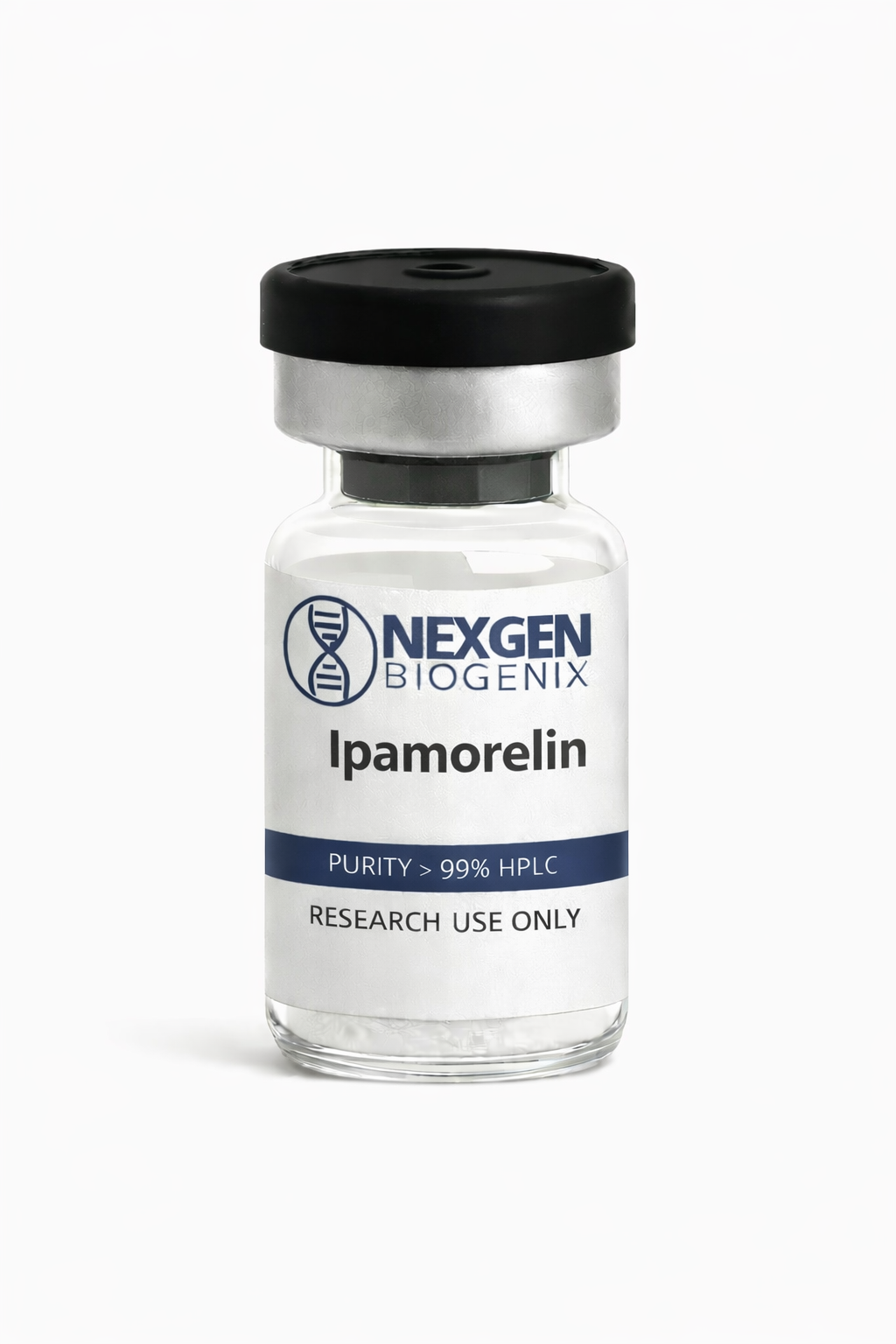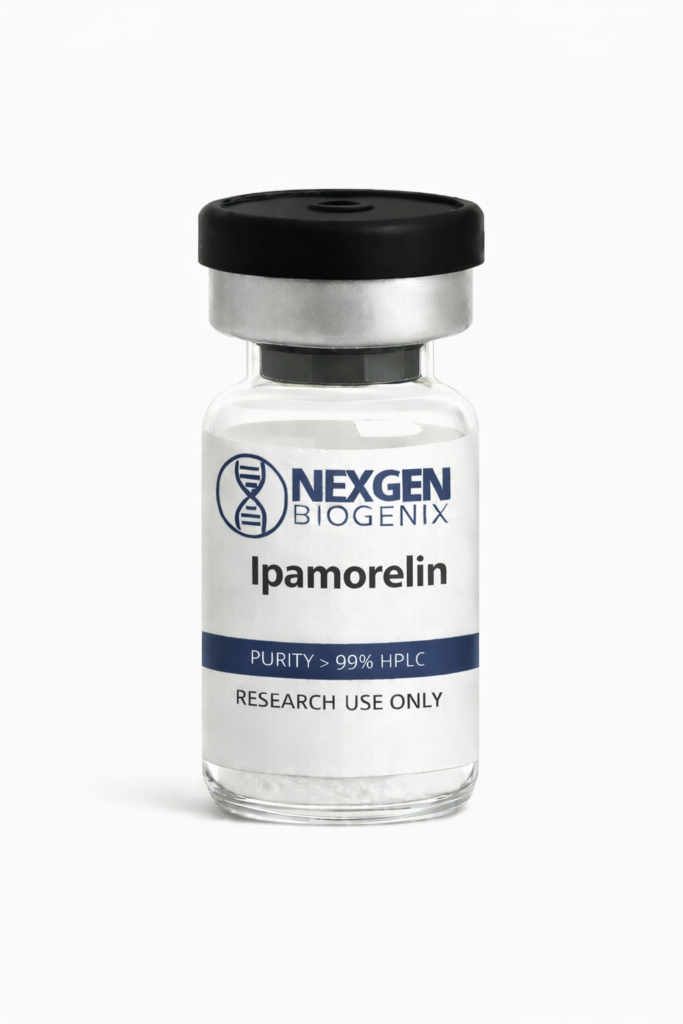
⚠️ Research Use Only (RUO). Not for human or veterinary use. All content on this page is provided for educational and scientific reference purposes only.
Ipamorelin — Research Overview (RUO)
Quick Facts
- Full name: Ipamorelin (free base); also available as Ipamorelin acetate salt
- Common abbreviations / alternate names: NNC 26-0161; NNC-26-0161
- Peptide class: Synthetic pentapeptide; Growth Hormone Secretagogue (GHS); Ghrelin receptor agonist (GHS-R1a agonist); Growth Hormone-Releasing Peptide (GHRP) family
- Amino acid sequence: Aib-His-D-2-Nal-D-Phe-Lys-NH₂ (5 residues; derived from GHRP-1 scaffold)
- Molecular formula: C₃₈H₄₉N₉O₅ (free base)
- Molecular weight: ~711.85 Da (free base); CAS: 170851-70-4; PubChem CID: 9831659
- Primary research themes: GHS-R1a receptor pharmacology; growth hormone secretion biology; postoperative ileus (POI) and gastrointestinal motility models; body composition and metabolic research; bone mineral density models; somatotropic axis research
- Developer: Originally developed at Novo Nordisk A/S (Denmark); first described in the published literature in 1998
- Evidence level: Preclinical (in vitro / animal models): well-characterized; Human clinical: one small published Phase 2 RCT (POI, n=60); no large-scale Phase 3 data published for any indication as of early 2026
- Regulatory status: Not FDA-approved for any indication; not currently eligible for compounding under 503A or 503B; PCAC voted against inclusion in the 503A Bulks Regulation at the October 29, 2024 meeting; currently listed by FDA under “Other Bulk Drug Substances That May Present Significant Safety Risks”; prohibited by WADA under S2 (Peptide Hormones and Growth Factors) at all times; classified RUO when sold for laboratory research
What Is Ipamorelin?
Ipamorelin is a synthetic pentapeptide — a chain of five amino acids — developed at Novo Nordisk A/S and first described in the peer-reviewed literature in 1998. Its sequence, Aib-His-D-2-Nal-D-Phe-Lys-NH₂, was engineered through a systematic medicinal chemistry program that began with growth hormone-releasing peptide-1 (GHRP-1) and eliminated the central Ala-Trp dipeptide, ultimately arriving at a compact, highly selective compound that stimulates growth hormone (GH) release from the anterior pituitary gland. The human body naturally produces many peptides — small protein-like molecules that act as biological messengers throughout the body — and ipamorelin is designed to mimic the actions of ghrelin, the 28-amino-acid endogenous hunger hormone produced predominantly in the stomach, which is itself the natural ligand for the GHS-R1a receptor (also called the ghrelin receptor or growth hormone secretagogue receptor type 1a) that ipamorelin targets. The existence of this receptor was suspected before ghrelin was discovered; synthetic peptides like GHRP-6 were found to stimulate GH release through an unknown receptor in the 1970s–1990s, and ghrelin itself was only isolated and identified as the endogenous ligand in 1999 — a year after ipamorelin was published.
What distinguished ipamorelin from the earlier GHS compounds in its class — GHRP-6 and GHRP-2 — and what drove considerable scientific interest in it, is its reported selectivity for GH release. Published pharmacological studies in swine described GHRP-6 and GHRP-2 as producing significant increases in plasma ACTH and cortisol alongside GH elevation, a characteristic that complicates their use as research tools in studies specifically targeting the somatotropic axis. Ipamorelin, by contrast, was described in the foundational 1998 paper by Raun et al. as failing to elevate ACTH or cortisol at doses more than 200-fold above the ED₅₀ for GH release — a level of selectivity the authors described as unprecedented among GHRP-receptor agonists at the time, comparable to the selectivity previously seen only with endogenous GHRH. This selectivity profile, together with its small size and straightforward synthesis, made ipamorelin a widely adopted research tool in the GHS pharmacology field.
Ipamorelin has never received FDA approval for any therapeutic indication. It was evaluated in at least one Phase 2 clinical trial for postoperative ileus, and its regulatory history has been complex and rapidly evolving — involving placement in FDA Category 2 (September 2023), removal from Category 2 after nomination withdrawal (September 2024), a Pharmacy Compounding Advisory Committee (PCAC) vote against its inclusion in the 503A Bulks Regulation (October 2024), and subsequent listing under FDA’s “Other Bulk Drug Substances That May Present Significant Safety Risks” category. A final FDA rule on the substance is anticipated no earlier than 2027, pending ongoing litigation and notice-and-comment rulemaking. Ipamorelin is prohibited by WADA for competitive athletes at all times under the S2 category.
Why Do Researchers Study It?
Researchers are interested in ipamorelin because it is one of the most pharmacologically well-characterized selective GHS-R1a agonists available, and its selectivity for GH release — without concurrent ACTH/cortisol stimulation — makes it a valuable tool compound for dissecting the somatotropic axis independently of the HPA (hypothalamic-pituitary-adrenal) axis stress response that complicates studies using less selective GHRP compounds.
- GHS-R1a receptor pharmacology: Ipamorelin is routinely used in preclinical receptor pharmacology studies to characterize GHS-R1a binding kinetics, receptor expression distribution, and downstream Gαq/PKC/IP₃ signaling. Its well-established EC₅₀ values in rat pituitary cells (~1.3 nM) and swine models (ED₅₀ ~2.3 nmol/kg) provide benchmark reference data for comparative studies of new GHS compounds.
- Somatotropic axis research: Because ipamorelin stimulates GH release without activating ACTH or cortisol pathways, researchers use it to study GH pulse physiology, IGF-1 axis regulation, and the consequences of GH elevation in metabolic and aging models without the confounding stress-hormone responses produced by GHRP-6 or GHRP-2.
- Gastrointestinal motility and postoperative ileus (POI) models: GHS-R1a is expressed throughout the gastrointestinal tract, and published rodent studies have described ipamorelin as accelerating gastric emptying and reversing POI-induced gastrointestinal transit delay in dose-dependent fashion. This finding motivated the only published human Phase 2 RCT of ipamorelin (Beck et al., 2004), conducted for the indication of POI.
- Body composition and metabolic models: Preclinical studies have described GHS compounds including ipamorelin as stimulating lean mass accretion, reducing fat mass, and improving metabolic markers in rodent models, leading to research interest in their use as tools to study the relationship between the GH/IGF-1 axis and body composition regulation.
- Bone mineral density research: Studies in adult female rats have described ipamorelin and GHRP-6 as increasing bone mineral content (BMC) as measured by DXA, generating interest in GHS compounds as research tools in models of osteopenia and bone biology.
- Aging and GH decline models: Because GH secretion declines with age (a phenomenon termed somatopause), and because GHS compounds stimulate endogenous GH release rather than administering exogenous GH directly, researchers use ipamorelin in aging rodent models to study whether restoration of more youthful GH pulse patterns influences aging-associated outcomes in muscle, bone, metabolism, and body composition.
Proposed Mechanism (Research Framing)
The following mechanistic descriptions are drawn from published pharmacological and preclinical studies. They represent the current state of scientific understanding in laboratory models. The exact mechanism of action of ipamorelin in humans has not been fully established in large-scale clinical trials, and all claims should be understood within that research context.
Ipamorelin’s primary and best-characterized mechanism is agonism at the growth hormone secretagogue receptor type 1a (GHS-R1a), a seven-transmembrane G-protein-coupled receptor whose natural ligand is ghrelin. GHS-R1a is expressed at highest density in the anterior pituitary somatotroph cells and in multiple hypothalamic nuclei (including the arcuate nucleus), but its expression has also been described in the gastrointestinal tract, pancreatic islets, thyroid, adrenal glands, adipose tissue, and myocardium — a broad distribution that accounts for the pleiotropic effects described for GHS compounds in preclinical literature. When ipamorelin binds GHS-R1a on anterior pituitary somatotrophs, the receptor is described as coupling to Gαq protein, activating phospholipase C, generating inositol trisphosphate (IP₃), and triggering intracellular calcium release from the endoplasmic reticulum. This calcium signal is proposed to drive fusion of GH-containing secretory granules with the plasma membrane and pulsatile GH release into the portal circulation.
A key mechanistic question in GHS pharmacology has been whether GHRPs act directly on the pituitary alone or also signal at the hypothalamus to modulate GHRH (growth hormone-releasing hormone) and somatostatin tone. Published studies have demonstrated that GHS-R1a agonists including ipamorelin synergize with exogenous GHRH to produce GH release that substantially exceeds the sum of either agent alone — a synergism the literature proposes is mediated by GHS-R1a signaling in hypothalamic neurons that suppress somatostatin release and/or amplify GHRH pulsatility. This dual pituitary-hypothalamic action is described as part of why GHS compounds stimulate physiological GH pulses rather than the supraphysiological, sustained GH elevation seen with exogenous recombinant GH administration. Additionally, researchers have proposed a third component: accumulation of ipamorelin and related GHRPs in glandular stomach tissue — the primary site of endogenous ghrelin synthesis — with some studies suggesting that ghrelin secretion stimulated by GHRPs may contribute to the overall GH response, though this remains an area of active investigation.
The mechanistic basis of ipamorelin’s superior selectivity compared to GHRP-6 and GHRP-2 — specifically its lack of ACTH and cortisol stimulation — has not been fully resolved at the molecular level. One proposed explanation is that GHRP-6 and GHRP-2 interact with a second receptor population, possibly CD36, present in the hypothalamic-pituitary-adrenal axis at a density or affinity not present for ipamorelin. Alternatively, subtle structural differences in how these compounds interact with GHS-R1a may produce different receptor conformations (biased agonism) that preferentially couple to GH-secretion-relevant versus ACTH-relevant downstream pathways. The exact structural basis of this selectivity remains an open question in published reviews of the GHS field.
Key Targets Described in the Literature
- GHS-R1a (ghrelin receptor): Primary target; described as mediating GH release from anterior pituitary somatotrophs via Gαq/PLC/IP₃/Ca²⁺ signaling; also expressed in hypothalamus, GI tract, myocardium, and adipose tissue
- Hypothalamic GHRH / somatostatin axis: Described as indirectly regulated by GHS-R1a signaling in hypothalamic arcuate nucleus neurons; proposed mechanism for ipamorelin’s synergism with exogenous GHRH in amplifying GH pulse amplitude
- Pituitary somatotroph granule exocytosis: Downstream of intracellular Ca²⁺ release; described as the effector mechanism producing pulsatile GH secretion following GHS-R1a activation
- IGF-1 (insulin-like growth factor 1): Downstream of hepatic GH receptor activation; plasma IGF-1 elevation is described as following GH elevation in preclinical ipamorelin studies and in the published human Phase 2 trial, providing a measurable biomarker for somatotropic axis activation
- ACTH / cortisol axis: NOT a primary target: Published swine studies demonstrated that ipamorelin does not significantly elevate plasma ACTH or cortisol at doses exceeding 200× the GH-releasing ED₅₀, distinguishing it from GHRP-6 and GHRP-2 in this critical safety-relevant selectivity characteristic
Research Applications (RUO Context)
In laboratory research settings, ipamorelin is used as a pharmacological tool compound to study GHS-R1a receptor biology, GH secretion physiology, gastrointestinal motility, and body composition regulation. The following reflects how qualified researchers apply ipamorelin in controlled, non-clinical experimental contexts. No dosing protocols, reconstitution instructions, administration routes, or guidance for human use is provided or implied.
- GHS-R1a radioligand binding and competitive displacement assays: Used as reference compound in competitive binding assays using [³⁵S]-labeled MK-677 or ¹²⁵I-labeled ghrelin to characterize binding affinity, kinetics, and selectivity of new GHS-R1a ligands in membrane preparations and whole-cell systems
- Primary pituitary cell GH secretion assays: Applied in primary rat or ovine anterior pituitary cell cultures to quantify GH secretion dose-response relationships, measure cAMP and IP₃ second messenger production, and study interactions between ipamorelin and GHRH or somatostatin analogs
- Rodent and swine in vivo GH pulse studies: Administered in anesthetized or conscious rat, swine, or primate models to characterize plasma GH pulse amplitude and duration, study synergism with GHRH, and assess the specificity of GH release relative to other pituitary hormones (FSH, LH, PRL, TSH, ACTH)
- Gastrointestinal motility models: Used in rodent models of postoperative ileus (induced by laparotomy under general anesthesia) to study effects on gastric emptying, intestinal transit time, and colonic motility; applied alongside GHS-R1a antagonists to confirm receptor-mediated effects on GI motility
- Body composition and metabolic animal models: Applied in chronic dosing studies in rodents to measure effects on lean body mass, fat mass, and bone mineral content via DXA; used in high-fat diet-induced obesity models to study body composition changes associated with GH axis stimulation
- Comparative GHS pharmacology: Used as a reference comparator alongside GHRP-2, GHRP-6, sermorelin, CJC-1295, and ibutamoren (MK-677) in head-to-head pharmacological profiling studies examining potency, efficacy, receptor selectivity, and hormonal specificity across GHS compound classes
Evidence Snapshot
► Preclinical Evidence (In Vitro / Animal Models)
- The foundational pharmacological characterization by Raun et al. (1998, European Journal of Endocrinology) established ipamorelin’s GH-releasing potency in primary rat pituitary cells (EC₅₀ ~1.3 nM) and in conscious swine (ED₅₀ ~2.3 nmol/kg), and — critically — demonstrated that, unlike GHRP-6 and GHRP-2, ipamorelin did not elevate plasma ACTH or cortisol at doses exceeding 200× the GH-releasing ED₅₀ in the swine model. The authors described this as making ipamorelin the first GHRP-receptor agonist with GH selectivity comparable to GHRH itself.
- Studies in adult female rats described GH secretagogues including ipamorelin and GHRP-6 as increasing bone mineral content (BMC) as measured by DXA over treatment periods of weeks to months, with proposed mechanisms involving GH- and IGF-1-mediated stimulation of osteoblast activity. These findings generated interest in GHS compounds as research tools in bone biology.
- Greenwood-Van Meerveld et al. described ipamorelin as producing dose-dependent reversal of POI-induced gastric emptying delay and colonic transit delay in a rodent postoperative ileus model, with effects blocked by GHS-R1a antagonists, confirming receptor-mediated GI motility restoration. This preclinical finding motivated the subsequent Phase 2 human POI trial.
- Published comparative GHS pharmacology studies have consistently demonstrated ipamorelin’s potency in stimulating GH secretion across multiple species without the off-target hormonal stimulation observed with earlier-generation GHRP compounds, establishing it as a benchmark compound for selectivity studies in the GHS field.
► Human / Clinical Evidence
- Beck et al. (2004, Regulatory Peptides) published what is described in the FDA’s 2024 PCAC briefing document as the only available clinical study of ipamorelin in humans — a Phase 2, double-blind, randomized, placebo-controlled trial in 60 patients with postoperative ileus following major abdominal surgery. The study described ipamorelin treatment as associated with a shorter time to first bowel movement and reduced time to tolerating solid food in the treatment group compared to placebo, though the FDA’s own PCAC briefing analysis characterized the evidence as limited and the study population as small.
- At the October 29, 2024 PCAC meeting, FDA presented its analysis of the available ipamorelin evidence. The agency’s briefing characterized the evidence of effectiveness as limited to the single Beck et al. study and raised safety concerns including potential effects on IGF-1 levels and theoretical risks associated with chronic GH/IGF-1 axis stimulation. The PCAC voted against recommending inclusion of ipamorelin (free base and acetate forms) in the 503A Bulks Regulation. Committee members who voted against inclusion specifically cited insufficient clinical efficacy and safety data as the basis for their votes.
- As of early 2026, no Phase 3 randomized controlled trial of ipamorelin for any indication has been completed and published. No human pharmacokinetic data from large controlled studies, no long-term human safety data, and no regulatory approval exist for ipamorelin. The human clinical evidence base is limited to the single small Phase 2 POI trial and unpublished or proprietary data referenced in regulatory submissions.
Limitations & Open Questions
Despite its long research history and well-characterized preclinical pharmacology, ipamorelin carries significant scientific, safety, and regulatory uncertainties that researchers and anyone reviewing this literature should carefully consider.
- Limited human clinical data: The entirety of the published human evidence for ipamorelin consists of one Phase 2 RCT (n=60, POI indication). No Phase 3 trials have been completed or published. Human pharmacokinetics, bioavailability, long-term safety, and immunogenicity profiles are not adequately characterized in the published literature.
- Chronic IGF-1 elevation and cancer risk: Sustained elevation of IGF-1 — the downstream mediator of many GH effects — has been associated in epidemiological studies with increased risk of several cancers including colorectal, prostate, and breast. The FDA’s PCAC briefing document for the October 2024 meeting cited IGF-1 elevation as a safety concern for ipamorelin. Researchers using ipamorelin in models involving cancer-relevant cell lines or tumor-bearing animals should account for this theoretical risk in experimental design.
- Fluid retention and cardiovascular concerns: The PCAC discussion at the October 2024 meeting referenced adverse effects including fluid retention and potential cardiovascular effects as concerns identified in the GHS compound class more broadly. While ipamorelin’s ACTH/cortisol selectivity is a distinguishing feature, the safety profile of chronic GH/IGF-1 axis stimulation in humans with pre-existing cardiovascular or metabolic conditions remains incompletely characterized.
- Species translation gap: The most extensive pharmacological characterization of ipamorelin is in rodent and swine models. GH secretion physiology — including the number, amplitude, and frequency of GH pulses — differs substantially between rodents, swine, and humans. Preclinical findings in rodent body composition or bone density models may not translate predictably to human outcomes.
- Regulatory uncertainty — an actively evolving landscape: Ipamorelin’s regulatory status has moved through multiple stages — initial Category 2 placement (September 2023), nomination withdrawal and Category 2 removal (September 2024), PCAC vote against 503A inclusion (October 2024), and current listing under “Other Bulk Drug Substances That May Present Significant Safety Risks.” A final FDA rule is not expected before 2027. Public statements by HHS Secretary Kennedy in early 2026 raised the possibility of a policy shift that might open pathways for certain peptides, but as of March 2026 no formal regulatory action has been taken. Researchers must monitor authoritative FDA sources rather than informal commentary for current status.
- WADA prohibition: Ipamorelin is prohibited by the World Anti-Doping Agency (WADA) under the S2 category (Peptide Hormones, Growth Factors, Related Substances and Mimetics), prohibited both in-competition and out-of-competition. This designation is independent of FDA regulatory status and applies globally to athletes competing under WADA-affiliated authorities.
Quality & Sourcing
Ipamorelin is a pentapeptide with two non-natural amino acid residues (Aib at position 1 and D-2-naphthylalanine at position 3) that require non-standard solid-phase peptide synthesis conditions. This structural complexity, combined with the C-terminal amidation, means that synthesis quality can vary meaningfully between suppliers. Rigorous quality documentation is essential for any research application where receptor pharmacology or in vivo GH response data are being generated.
- Lot Traceability: Each batch must carry a unique lot number traceable to the manufacturer’s synthesis records. For a compound containing non-natural amino acid residues, lot-specific traceability is especially critical — contamination with synthesis intermediates, diastereomers (e.g., L-2-Nal instead of D-2-Nal at position 3), or incomplete C-terminal amidation would produce a compound with substantially different receptor binding characteristics, invalidating pharmacological assay results without any obvious visual indication of quality failure.
- Certificate of Analysis (COA): A complete, lot-specific COA must include: sequence identity confirmed by amino acid analysis and/or high-resolution mass spectrometry (expected [M+H]⁺ ~712.86 Da for free base); HPLC purity ≥98%; stereochemical confirmation (D- vs. L-configuration at positions 3 and 4 cannot be inferred from mass alone and should be confirmed by chiral HPLC or NMR where possible); residual solvent and TFA (trifluoroacetic acid) content, as TFA from HPLC purification can be cytotoxic in cell-based assays at elevated concentrations; and endotoxin/LAL testing for any compound to be used in animal or cell-based studies.
- Storage & Labeling: Lyophilized ipamorelin should be stored at or below −20°C under dry, inert conditions, protected from light. The C-terminal amide and non-natural residues confer reasonable stability in lyophilized form but aqueous solutions should be prepared freshly or stored under inert gas at −80°C for short periods. Products must be clearly labeled as Research Use Only, with no therapeutic claims, no dosing instructions, and no language implying human or veterinary use on any labeling or accompanying documentation.
📄 Questions about documentation or purity verification? Contact our support team or request a COA from our library.
US Regulatory Snapshot (Updated 2025)
- RUO classification: Ipamorelin, when sold for laboratory use, is classified as a Research Use Only (RUO) compound. It is not a drug product, not a dietary supplement, not a cosmetic, and not a medical device. RUO products are not subject to FDA drug approval requirements, but they may not legally be sold, labeled, or marketed for human therapeutic, clinical, or wellness purposes. The FDA has taken enforcement action against sellers of research peptides where evidence of intended human use — including clinical language, dosing instructions, syringes, or therapeutic claims — appeared in marketing or packaging materials. Additionally, per Alliance for Pharmacy Compounding (A4PC) guidance, active pharmaceutical ingredients labeled “Research Use Only” or “Not for human use” are explicitly ineligible for use in 503A compounding, independent of any category designation.
- Category 1 / 503A — what it means (and does not mean): Under Section 503A of the FD&C Act, traditional compounding pharmacies may use bulk drug substances appearing on the 503A Bulks List as starting materials for compounded preparations. Under the FDA’s interim policy, “Category 1” refers to substances under evaluation for which FDA does not currently intend to take enforcement action against compounding pharmacies — it is not FDA approval, and it is not a finding of safety or efficacy. It is solely an interim enforcement posture. Ipamorelin is not in Category 1. It is also no longer in Category 2 (from which it was removed September 27, 2024, following nominator withdrawal). It is currently listed under “Other Bulk Drug Substances That May Present Significant Safety Risks” — a designation that applies following the PCAC vote against its inclusion in the 503A Bulks Regulation. Compounding of ipamorelin is not permitted under current FDA policy.
- FDA January 7, 2025 guidance: In its final interim guidance published January 7, 2025 (Docket No. FDA-2015-D-3517, FR Doc. 2024-31546), FDA clarified that it does not intend to place newly nominated bulk drug substances into interim Categories 1, 2, or 3 prior to completing its full evaluation. This guidance signals the end of the interim categorization mechanism for newly nominated substances, and that determinations for existing substances will proceed through formal rulemaking. For ipamorelin specifically, the PCAC voted against inclusion and a final rule — through the full notice-and-comment process — is anticipated no earlier than 2027 per court filings in related litigation.
- Ipamorelin-specific regulatory timeline (as of March 2026):
- September 2023: Ipamorelin acetate placed in Category 2 of the FDA’s interim 503A Bulks List, citing significant safety risks
- September 27, 2024: Removed from Category 2 after the nominator withdrew the nomination for ipamorelin acetate (free base nomination also withdrawn). Removal from Category 2 did not authorize compounding
- October 29, 2024: PCAC reviewed ipamorelin free base and ipamorelin acetate for potential inclusion in the 503A Bulks Regulation. FDA recommended against inclusion. The PCAC voted against including either form, citing insufficient evidence of clinical efficacy and safety concerns including IGF-1 elevation
- Post-October 2024: Ipamorelin listed by FDA under “Other Bulk Drug Substances That May Present Significant Safety Risks.” Compounding remains prohibited. A lawsuit challenging this status is ongoing; a final FDA rule is anticipated no later than March 14, 2027 per court representations
- Early 2026: HHS Secretary Kennedy made public statements expressing interest in opening pathways for peptide compounding, but as of March 2026, no formal FDA regulatory action implementing any change has been published. Researchers must verify current status through official FDA sources
- WADA prohibition: Ipamorelin is prohibited by the World Anti-Doping Agency under the S2 category (Peptide Hormones, Growth Factors, Related Substances and Mimetics), prohibited both in-competition and out-of-competition for all athletes competing under WADA-affiliated authorities. This prohibition is independent of FDA regulatory status.
- Stay current — monitor authoritative sources: Ipamorelin has one of the most actively evolving regulatory histories of any research peptide. Researchers, institutions, and supply-chain professionals should monitor the FDA 503A Bulk Drug Substances page, the FDA Significant Safety Risks page, the Federal Register, and the WADA Prohibited List for current status, and consult a qualified regulatory attorney or compliance professional for institution-specific guidance.
Frequently Asked Questions
Does the body naturally produce a molecule similar to what ipamorelin mimics?
Yes — ipamorelin is designed to mimic the actions of ghrelin, a naturally occurring 28-amino-acid peptide hormone produced primarily by enteroendocrine cells in the gastric fundus. The human body naturally produces many peptides — small protein-like molecules that act as biological messengers throughout the body — and ghrelin is among the most studied in metabolism and neuroendocrinology. Discovered in 1999 (one year after ipamorelin’s publication), ghrelin is the endogenous ligand for the GHS-R1a receptor that ipamorelin targets; it regulates GH release from the pituitary, stimulates appetite, influences energy homeostasis, and modulates gut motility. Other well-known endogenous peptides include insulin (blood glucose regulation), glucagon (blood glucose elevation), oxytocin (social bonding and parturition), and the endorphins (pain modulation). Ipamorelin is a synthetic peptide with non-natural amino acid residues — it is not ghrelin, and it does not share ghrelin’s full biological profile. The fact that it targets a receptor for an endogenous peptide makes it a valuable research tool, but synthetic peptides targeting endogenous receptors carry pharmacological characteristics distinct from the body’s own ligands, and findings from research systems cannot be extrapolated to assumptions about human safety or efficacy.
Is ipamorelin FDA-approved or approved for compounding?
No on both counts. Ipamorelin is not FDA-approved for any therapeutic indication. No New Drug Application (NDA) or Biologics License Application (BLA) for ipamorelin has ever been approved. The compound is also not currently permitted for compounding by 503A pharmacies or 503B outsourcing facilities. Following PCAC’s October 2024 vote against its inclusion in the 503A Bulks Regulation — and its current listing under “Other Bulk Drug Substances That May Present Significant Safety Risks” — licensed compounding pharmacies that produce ipamorelin-containing preparations risk FDA enforcement action. Additionally, products labeled “Research Use Only” are explicitly excluded from the 503A compounding pathway under FDA policy and A4PC guidance, regardless of category status. Any product marketed as “FDA-approved ipamorelin” or as a “legally compounded” ipamorelin prescription without the substance being on the 503A Bulks List is making a false or misleading regulatory claim. Athletes subject to WADA authority are prohibited from using ipamorelin at all times.
Is any information on this page medical advice?
No. Nothing on this page constitutes medical advice, clinical guidance, therapeutic recommendations, dosing instructions, reconstitution guidance, or administration instructions of any kind. This page is educational and scientific reference material provided for qualified researchers only. All products described on this website are intended exclusively for in vitro laboratory research by qualified scientists in appropriate research settings. If you have questions about growth hormone deficiency, gastrointestinal conditions, body composition, or any other medical condition, please consult a licensed healthcare provider. If you are interested in participating in human clinical research involving ipamorelin or related compounds, you may search for actively enrolling studies at ClinicalTrials.gov.
References (Starting Points)
- Raun K, Hansen BS, Johansen NL, Thøgersen H, Madsen K, Ankersen M, Andersen PH. “Ipamorelin, the first selective growth hormone secretagogue.” European Journal of Endocrinology. 1998;139(5):552–561. PMID: 9849822. View on PubMed
- Beck DE, Sweeney WB, McCarter MD; Ipamorelin 201 Study Group. “Prospective, randomized, controlled, proof-of-concept study of the Ghrelin mimetic ipamorelin for the management of postoperative ileus in bowel resection patients.” International Journal of Colorectal Disease. 2014;29(12):1527–1534. PMID: 25303973. View on PubMed
- Sinha DK, Balasubramanian A, Tatem AJ, et al. “Beyond the androgen receptor: the role of growth hormone secretagogues in the modern management of body composition in hypogonadal males.” Translational Andrology and Urology. 2020;9(Suppl 2):S149–S159. PMID: 32257855. View on PMC
- Ishida J, Saitoh M, Doehner W, von Haehling S, Anker SD, Springer J. “Growth hormone secretagogues: history, mechanism of action, and clinical development.” JCSM Rapid Communications. 2020;3(1):25–37. DOI: 10.1002/rco2.9. View on Wiley
- Hansen BS, Raun K, Nielsen KK, et al. “Pharmacological characterisation of a new oral GH secretagogue, NN703.” European Journal of Endocrinology. 1999;141(2):180–189. PMID: 10427162. View on PubMed
- U.S. Food and Drug Administration. “PCAC Meeting Summary Minutes — October 29, 2024.” Pharmacy Compounding Advisory Committee. Approved January 15, 2025. View FDA PCAC Minutes (PDF)
- U.S. Food and Drug Administration. “Certain Bulk Drug Substances for Use in Compounding That May Present Significant Safety Risks.” FDA.gov. View on FDA.gov
- U.S. Food and Drug Administration. “Interim Policy on Compounding Using Bulk Drug Substances Under Section 503A of the Federal Food, Drug, and Cosmetic Act — Guidance for Industry.” Published January 7, 2025. FR Doc. 2024-31546. Docket No. FDA-2015-D-3517. View on Federal Register
RESEARCH USE ONLY — REGULATORY NOTICE
All products and information presented on this website are intended exclusively for in-vitro laboratory research and scientific investigation by qualified researchers. These products are not intended for human consumption, veterinary use, cosmetic application, or therapeutic purposes of any kind. Nothing on this page has been evaluated by the U.S. Food and Drug Administration (FDA). These products are not intended to diagnose, treat, cure, or prevent any disease or medical condition. Researchers are responsible for ensuring compliance with all applicable local, state, and federal regulations before ordering or using any research compound. For questions about regulatory status, consult a qualified regulatory attorney or compliance professional.