⚠️ Research Use Only (RUO). Not for human or veterinary use. All content on this page is provided for educational and scientific reference purposes only.
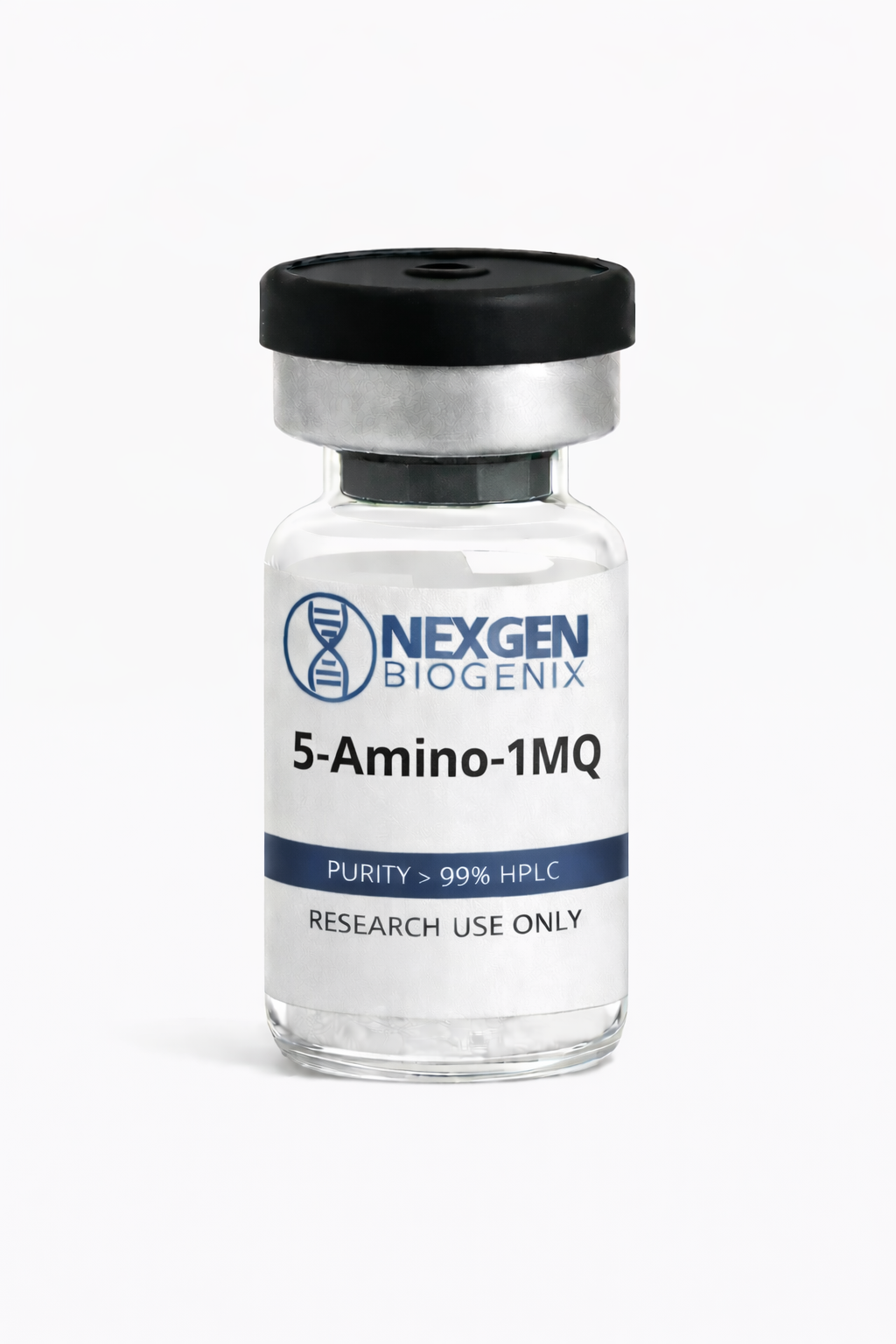
5-Amino-1MQ (5-Amino-1-Methylquinolinium) — Research Overview (RUO)
Quick Facts
- Full name: 5-Amino-1-methylquinolinium iodide (most common research form); also referred to as 5-amino-1MQ, 5A-1MQ, or NNMTi in the published literature
- Important classification note: 5-Amino-1MQ is not a peptide — it is a small-molecule quaternary ammonium compound derived from the quinoline scaffold. It is catalogued alongside research peptides by some suppliers, but its chemical class is distinct: it is a synthetic heterocyclic organic compound, not a chain of amino acids.
- Synonyms: 5-amino-1-methylquinolinium; 5A-1MQ; NNMTi; CAS 42464-96-0 (iodide salt); PubChem CID: 16213631
- Chemical class: Quaternary ammonium quinolinium salt; substrate-competitive NNMT inhibitor; small molecule metabolic enzyme inhibitor
- Molecular formula: C10H10N2+ · I− (iodide salt; C10H11IN2)
- Molecular weight: 286.11 g/mol (iodide salt); cation only: ~159.21 g/mol. Note: stoichiometric calculations in enzymatic assays must account for the salt form weight, as 1.89 mg of the iodide salt contains 1 mg equivalent of the active cation (5-amino-1MQ free cation).
- Target enzyme: Nicotinamide N-methyltransferase (NNMT; EC 2.1.1.1); IC50 = 1.2 ± 0.1 µM (standard assay: 50 µM SAM, 100 µM nicotinamide)
- Primary research themes: NNMT enzyme biology; NAD+ salvage pathway modulation; obesity and diet-induced metabolic dysfunction models; adipocyte lipogenesis research; aged skeletal muscle and muscle stem cell (muSC) biology; cellular senescence; cancer metabolism (NNMT overexpression in tumors); epigenetic methylation regulation
- Evidence level: Preclinical only (in vitro cell-based assays and rodent in vivo models); as of early 2026, no published human clinical trials of 5-amino-1MQ exist
- Regulatory status: Not FDA-approved for any indication; not on any 503A or 503B Bulk Drug Substances list; never nominated for FDA’s interim compounding categories; classified RUO when sold for laboratory research. As a small molecule (not a peptide), it falls outside the specific peptide compounding regulatory framework entirely, and is governed only by general FDA rules for research chemical supply and the FD&C Act’s prohibition on selling unapproved new drugs for human use.
What Is 5-Amino-1MQ?
5-Amino-1MQ (5-amino-1-methylquinolinium iodide) is a synthetic small-molecule compound developed as a selective, substrate-competitive inhibitor of nicotinamide N-methyltransferase (NNMT) — a cytosolic enzyme that catalyzes the methylation of nicotinamide (vitamin B3) using S-adenosylmethionine (SAM) as the methyl donor, producing 1-methylnicotinamide (1-MNA) and S-adenosylhomocysteine (SAH) as reaction products. Although 5-amino-1MQ is commonly listed alongside research peptides in supplier catalogues, it is not a peptide: it is a quaternary ammonium salt derived from the quinoline ring system, developed through medicinal chemistry optimization of the parent compound 1-methylquinolinium (1-MQ), with an amino group substitution at the C5 position that achieves a tenfold increase in NNMT inhibitory potency (IC50 dropping from ~12.1 µM for 1-MQ to ~1.2 µM for 5-amino-1MQ). The compound was developed and characterized at The University of Texas Medical Branch (UTMB) by Neelakantan, Watowich, McHardy and colleagues, and first described in the peer-reviewed literature in 2018.
NNMT, the enzyme that 5-amino-1MQ targets, sits at a biochemically influential intersection: by consuming nicotinamide and SAM, it simultaneously depletes the cellular pool of NAD+ precursors and the universal methyl donor SAM that fuels epigenetic methylation of DNA and histones. The human body naturally produces many molecules that act as biological regulators — and nicotinamide (vitamin B3) is among the most metabolically central, serving as the primary precursor for cellular NAD+ synthesis through the salvage pathway. When NNMT is overexpressed — as observed in white adipose tissue of obese individuals, in the liver of diabetic animals, and in multiple cancer types — this enzymatic “drain” on both nicotinamide and SAM is proposed by researchers to create a metabolic-epigenetic state that promotes lipid accumulation, energy inefficiency, and altered gene expression. By inhibiting NNMT, 5-amino-1MQ has been studied in preclinical systems as a means to investigate what happens when this drain is blocked: intracellular nicotinamide is preserved for NAD+ synthesis, SAM availability is increased, and the downstream effects on energy metabolism, fat storage, sirtuin activity, and muscle stem cell function can be systematically characterized.
A defining practical feature of 5-amino-1MQ highlighted in the discovery literature is its membrane permeability. Published PAMPA assay and Caco-2 bidirectional transport data describe 5-amino-1MQ as exhibiting high passive membrane permeability alongside high active transport membrane permeability — characteristics described as enabling effective intracellular NNMT inhibition in intact cells without the need for delivery vehicles or transfection systems. This membrane-permeable, cell-accessible profile makes it a more practical tool compound for cell biology and in vivo rodent model research than earlier, less permeable NNMT inhibitors. Its selectivity profile — documented as not inhibiting related SAM-dependent methyltransferases (including DNMT3A, PRMT1, EZH2, SETD7, and others tested) or enzymes in the NAD+ salvage pathway — is described in the literature as a key advantage for mechanistic studies aimed at isolating NNMT-specific effects.
Why Do Researchers Study It?
Researchers are interested in 5-amino-1MQ because it provides — for the first time in the NNMT inhibitor class — a membrane-permeable, highly selective small molecule tool with sufficient potency to interrogate NNMT function in living cells and intact animal systems. Before its development, mechanistic NNMT research relied primarily on RNAi-mediated knockdown, which is difficult to titrate, highly cell-type dependent, and inapplicable to in vivo models without viral delivery vectors. 5-amino-1MQ gives researchers a pharmacological equivalent of genetic NNMT loss-of-function that can be applied across diverse model systems.
- NNMT enzyme biology and drug discovery: Used as the primary reference NNMT inhibitor for structure-activity relationship (SAR) studies, enzyme kinetics characterization, and competitive binding assays; serves as benchmark for newer NNMT inhibitor scaffolds under development across multiple pharmaceutical research groups
- Obesity and adipose tissue metabolism: Applied in 3T3-L1 differentiated adipocyte cultures and diet-induced obesity (DIO) mouse models to study the causal role of NNMT in lipid accumulation, adipogenesis, energy expenditure, and insulin sensitivity; the foundational 2018 study used it to demonstrate that pharmacological NNMT inhibition can reverse DIO-induced obesity in mice without affecting food intake
- NAD+ salvage pathway research: Used to study the mechanistic link between NNMT activity and cellular NAD+ availability — specifically the degree to which NNMT-mediated nicotinamide methylation competes with NAMPT-driven NAD+ synthesis; provides a pharmacological tool for dissecting the NNMT-NAD+ axis independently of NMN or NR supplementation approaches
- Skeletal muscle aging, sarcopenia, and muscle stem cell (muSC) biology: Applied in aged rodent models and primary muSC cultures to study NNMT’s role in age-related muSC senescence, impaired regenerative capacity, and the downstream effects of NNMT inhibition on muSC proliferation, differentiation, and muscle contractile function; among the most active areas of 5-amino-1MQ research as of 2024–2025
- Cancer metabolism research: Used in cell lines and xenograft mouse models where NNMT is overexpressed (including ovarian cancer, glioblastoma, bladder cancer, hepatocellular carcinoma, and others) to study the functional consequences of NNMT inhibition on tumor cell proliferation, invasion, chemoresistance, and the cancer cell metabolic-epigenetic axis
- Epigenetics and methylation biology: Applied in studies examining how NNMT-mediated SAM depletion influences the cellular methylation potential (ratio of SAM to SAH), DNA methylation patterns at CpG islands, and histone methylation marks — relevant to understanding the interface between metabolic state and epigenetic programming in adipogenesis, aging, and cancer
Proposed Mechanism (Research Framing)
The following mechanistic descriptions are drawn entirely from published in vitro and preclinical animal literature. They represent the current state of scientific understanding in laboratory model systems, not established clinical mechanisms. The exact mechanism of action of 5-amino-1MQ in humans has not been established — no human clinical trials have been conducted — and all claims should be understood within that context.
At the enzymatic level, 5-amino-1MQ is described in the published literature as a substrate-competitive inhibitor of NNMT: it binds to the nicotinamide-binding pocket of the NNMT active site (the same site where the nicotinamide substrate binds), competitively preventing nicotinamide from accessing the catalytic residues and thereby blocking the N-methyltransferase reaction. Published X-ray crystallography studies of related NNMT inhibitor-enzyme complexes have established the structural basis for this mode of inhibition, showing that quinolinium-based compounds bind within the substrate-binding pocket and form stacking interactions with aromatic residues lining the NAM-binding cleft. The amino group at C5 of 5-amino-1MQ is proposed to form additional hydrogen bonding interactions with active site residues that explain its approximately tenfold greater potency compared to the unsubstituted parent compound 1-MQ. NNMT’s catalytic reaction requires both SAM (methyl donor) and nicotinamide (methyl acceptor); by occupying the nicotinamide site, 5-amino-1MQ effectively converts NNMT into a catalytically silent complex without displacing SAM, which researchers have proposed allows SAM to accumulate as a further downstream consequence of inhibition.
The downstream consequences of blocking NNMT-mediated nicotinamide methylation, as characterized in cell-based and in vivo studies, propagate through two parallel pathways that researchers have described as creating a coordinated metabolic-epigenetic shift. In the NAD+ pathway: when NNMT is inhibited, nicotinamide — instead of being methylated to 1-MNA for urinary excretion — is preferentially channeled into the NAD+ salvage pathway via NAMPT (nicotinamide phosphoribosyltransferase), the rate-limiting enzyme that converts nicotinamide to NMN, which is then converted to NAD+ by NMN adenylyltransferase (NMNAT). The net result described in 3T3-L1 adipocyte studies using 5-amino-1MQ is a measurable increase in intracellular NAD+ levels (EC50 for cellular 1-MNA reduction: 2.3 µM). Elevated NAD+ activates NAD+-dependent sirtuins — particularly SIRT1, which is described as a key transcriptional regulator of adipogenesis, lipid metabolism, insulin sensitivity, and mitochondrial biogenesis — and PARPs involved in genome maintenance. In the methylation pathway: by simultaneously preventing NNMT from consuming SAM, inhibition preserves the SAM:SAH ratio (the cellular methylation potential), maintaining the capacity of other SAM-dependent methyltransferases — including DNA methyltransferases and histone methyltransferases — to carry out their normal epigenetic functions. Published studies have proposed that this dual preservation of both NAD+ precursors and methyl donor capacity represents a unique and mechanistically distinct mode of metabolic-epigenetic reprogramming compared to simple NAD+ precursor supplementation (NMN or NR), which increases NAD+ but does not address the SAM depletion dimension.
In the context of skeletal muscle aging, where NNMT expression is described in published studies as elevated in aged (24-month-old) versus young (4-month-old) mouse tibialis anterior muscle tissue, the proposed mechanism extends to muscle stem cell (muSC) biology. Published work using 5-amino-1MQ in aged mouse models has described NNMT overexpression as contributing to muSC senescence through impairment of NAD+/SIRT1-dependent transcriptional programs that normally regulate muSC quiescence, activation, and differentiation. Inhibiting NNMT with 5-amino-1MQ in these aged animals was described as reversing aspects of muSC senescence — increasing proliferation, enhancing fusion capacity, and supporting myofiber cross-sectional area recovery following injury — with effects proposed to reflect rescue of the SIRT1 activity deficit caused by NNMT-driven NAD+ depletion in aged muscle.
Key Targets and Pathways Described in the Literature
- NNMT (nicotinamide N-methyltransferase): Primary and direct target; cytosolic enzyme; catalyzes NAM + SAM → 1-MNA + SAH; competitive inhibition at the NAM-binding pocket; IC50 = 1.2 µM; overexpressed in obese adipose tissue, liver in metabolic disease, and multiple cancers
- NAD+ salvage pathway (via NAMPT → NMN → NAD+): Indirect target; by preventing NNMT from consuming nicotinamide, 5-amino-1MQ increases substrate availability for NAMPT-driven NAD+ synthesis; described as producing measurable intracellular NAD+ elevation in adipocyte cell culture
- SIRT1 (sirtuin-1): Downstream beneficiary of elevated NAD+; described as activated following NNMT inhibition in multiple cell systems; proposed to mediate transcriptional effects on adipogenesis, lipid metabolism, insulin signaling, and muscle stem cell quiescence/activation
- SAM / cellular methylation potential: Preserved as a result of reduced NNMT-mediated SAM consumption; published studies propose this maintains DNA and histone methyltransferase activity as a complementary epigenetic effect independent of the NAD+ axis
- Lipogenesis gene expression (FASN, ACACA, SREBP1c): Downstream of SIRT1 and altered methylation; 5-amino-1MQ has been described as suppressing lipogenic gene expression in adipocytes (EC50 for 3T3-L1 lipogenesis: 30 µM), with proposed involvement of SIRT1-mediated SREBP deacetylation and reduced active transcription factor availability
Research Applications (RUO Context)
In laboratory research settings, 5-amino-1MQ is applied as a selective pharmacological tool to interrogate NNMT enzyme function and the downstream consequences of NNMT inhibition in cell-based assays and rodent models. The following reflects how qualified researchers have used this compound in controlled, non-clinical experimental systems. No dosing protocols, preparation instructions, or guidance for human use is provided or implied.
- In vitro NNMT inhibition assays (enzyme and cell-based): Applied in purified human NNMT enzyme preparations to characterize IC50, mode of inhibition (competitive), and selectivity across related methyltransferases; used in 3T3-L1 differentiated adipocytes and hepatoma cell lines to measure inhibition of 1-MNA production (LC/MS-MS quantification) and elevation of intracellular NAD+ and SAM levels
- Adipocyte lipogenesis and de-adipogenesis models: Applied at 10–30 µM concentrations in 3T3-L1 pre-adipocyte and differentiated adipocyte cultures to study effects on lipid droplet formation, triglyceride content (Oil Red O staining), expression of lipogenic genes (FASN, ACACA, SREBP1c), and oxygen consumption rate (Seahorse XF analyzer); applied in DIO mouse models (20 mg/kg SC dosing) to study in vivo body weight, white adipose mass, adipocyte size, glucose tolerance, and insulin sensitivity endpoints
- Aged skeletal muscle and muSC biology: Used in 24-month-old aged mouse models of acute tibialis anterior muscle injury (barium chloride injection) to study the effects of NNMT inhibition on muSC proliferation (EdU incorporation), muSC fusion, myofiber cross-sectional area recovery, and in vivo contractile function (peak torque); applied in C2C12 myoblast cultures to confirm receptor-independent intracellular mechanisms
- Exercise biology and sarcopenia research: Applied alongside progressive wheel running exercise protocols in aged female mice to study the additive vs. independent effects of NNMT inhibition and physical training on grip strength, running capacity, muscle mass, fiber type composition, and intramyocellular lipid content; used alongside proteome and metabolome analyses to characterize molecular mechanisms
- Cancer metabolism models: Applied in NNMT-overexpressing cell lines and xenograft mouse models to study effects on cell proliferation, migration, invasion, drug resistance, and tumor burden; used in HeyA8 ovarian cancer IP metastasis mouse models (20 mg/kg IP) to evaluate NNMT inhibition as an anti-cancer metabolic strategy
- Gut microbiome and metabolic interaction research: Applied alongside caloric restriction in DIO mouse models to study NNMT inhibition-induced changes in gut microbiome composition, bile acid metabolism, and metabolic phenotype; used as a tool to dissect the mechanistic contribution of the gut-NNMT axis to systemic metabolic outcomes in obese animal models
Evidence Snapshot
► Preclinical Evidence (In Vitro / Animal Models)
- The foundational pharmacological characterization by Neelakantan et al. (2018, Biochemical Pharmacology, PMID 29155147) established 5-amino-1MQ’s NNMT inhibitory potency (IC50 1.2 µM), membrane permeability (PAMPA and Caco-2), selectivity across related methyltransferases, and in vivo anti-obesity activity in DIO mice (20 mg/kg/day SC, 11 days): treated mice showed significantly reduced body weight, white adipose mass, adipocyte size, and improved plasma lipid profiles compared to vehicle controls, without significant effects on food intake or observable adverse effects. This study remains the primary reference for 5-amino-1MQ’s in vivo preclinical activity profile.
- Neelakantan et al. (2019, Biochemical Pharmacology, PMID 30753815) described 5-amino-1MQ treatment in 24-month-old aged mice following acute tibialis anterior muscle injury: NNMT inhibitor treatment at 5 and 10 mg/kg significantly elevated muSC proliferation and fusion, produced nearly twofold greater myofiber cross-sectional area recovery, and increased peak contractile torque by approximately 70% compared to saline controls. The authors described this as the first clear evidence that NNMT inhibition constitutes a viable pharmacological approach to enhance aged muscle regeneration by rescuing muSC function.
- Dimet-Wiley et al. (2024, Scientific Reports) applied 5-amino-1MQ alongside progressive weighted wheel running (PoWeR) exercise training in 22-month-old aged female mice: sedentary animals treated with 5-amino-1MQ showed approximately 40% greater grip strength than untreated sedentary controls, while exercise-only animals showed approximately 20% greater grip strength. The combination of 5-amino-1MQ and exercise produced approximately 60% greater grip strength and more sustained running distances than exercise alone, with proteome and metabolome analyses identifying distinct and additive molecular pathways underlying the combined benefit.
- Babula et al. (2024, Diabetes, Obesity and Metabolism) described 5-amino-1MQ as mitigating obesity-related metabolic dysfunction in DIO mice, with additional characterization of hepatic steatosis endpoints: treated animals showed attenuated liver triglyceride accumulation, reduced liver weight, and decreased macrophage infiltration and inflammatory markers in hepatic tissue compared to controls.
► Human / Clinical Evidence
- As of early 2026, no published human clinical trials of 5-amino-1MQ exist — not Phase 1, Phase 2, or Phase 3. No human pharmacokinetic data, no human safety data, no human tolerability data, and no human bioavailability data have been published for this compound. The entire evidence base is preclinical, drawn from in vitro cell-based assays and rodent in vivo models.
- The absence of any human data means that basic questions about 5-amino-1MQ in the human context — including oral bioavailability, plasma half-life, distribution volume, metabolite profile, off-target effects at human tissue concentrations, and immunogenicity — are entirely unanswered in the scientific literature. Extrapolation from rodent pharmacology to human physiology for a small-molecule metabolic enzyme inhibitor of this class carries substantial uncertainty.
- Notably, a 2024 article summarizing the Dimet-Wiley et al. Scientific Reports study explicitly acknowledged that some commercial clinics had already begun administering 5-amino-1MQ to humans despite the complete absence of human clinical trial data — and described this as making human safety and efficacy trials “paramount.” This underscores the critical importance of the RUO classification and the regulatory risk for any entity distributing 5-amino-1MQ with implied or explicit intent for human use.
Limitations & Open Questions
Despite a compelling and rapidly growing preclinical literature, 5-amino-1MQ carries fundamental uncertainties that anyone interpreting this research must acknowledge.
- No human data whatsoever: The complete absence of published human clinical data — including Phase 1 safety studies — means that human pharmacokinetics, safety, effective dose ranges, and potential off-target effects in human tissue are entirely unknown. Preclinical mouse data cannot substitute for this information. The compound has not been through any element of the human regulatory review process.
- Iodide salt vs. free cation — stoichiometry matters: 5-amino-1MQ is almost universally supplied as the iodide salt (MW 286.11 g/mol), but the active species is the cation alone (MW ~159.21 g/mol). The iodide salt contains approximately 1 mg of active cation per 1.89 mg of the salt. Researchers who fail to account for this salt correction will systematically underdose their assays, producing unreproducible results across laboratories using different material forms. Published protocols should explicitly state which form was used and the correction factor applied.
- Cancer biology dual role of NNMT: NNMT is overexpressed in many tumor types and has been implicated in tumor progression and metastasis — making NNMT inhibition an active anti-cancer research strategy. However, the same enzyme is expressed in normal tissues including the liver and kidney, where it plays roles in xenobiotic detoxification and drug metabolism. The consequences of pharmacologically inhibiting NNMT in normal tissue alongside tumors, or in individuals without cancer who use it for metabolic purposes, have not been characterized. Researchers using 5-amino-1MQ in cancer models should be aware that NNMT overexpression versus basal expression creates different mechanistic contexts.
- SAM depletion vs. preservation — context dependency: 5-amino-1MQ preserves SAM by blocking NNMT-mediated SAM consumption. However, the cellular effects of elevated SAM availability are highly context-dependent: excess SAM can itself influence methylation of DNA and histones in ways that may not always be beneficial depending on the cell type, developmental state, and disease context being studied. The net epigenetic consequences of sustained NNMT inhibition in non-adipose, non-muscle tissue types are not adequately characterized.
- Small molecule vs. peptide — different stability and handling requirements: Unlike the peptides elsewhere on this site, 5-amino-1MQ is a stable organic salt that does not require the same cold-chain storage or reconstitution care as peptides. However, its quaternary ammonium cation makes it water-soluble, with hygroscopic characteristics at high humidity. Researchers should verify solubility in their specific vehicle (water, DMSO, saline) before use, as crystalline quinolinium salts can have variable dissolution kinetics depending on lot and storage history.
- Regulatory ambiguity around commercial human use: Because 5-amino-1MQ is a small molecule rather than a peptide, it falls outside the 503A peptide compounding regulatory framework that has received enforcement attention. However, it remains an unapproved new drug under the FD&C Act if sold or distributed for human use, and FDA’s general enforcement authority applies fully. The commercial marketing of 5-amino-1MQ with claims about weight loss, muscle building, anti-aging, or any other human health benefit in the absence of approved drug status exposes sellers to FDA enforcement under the FD&C Act’s new drug and misbranding provisions.
Quality & Sourcing
5-Amino-1MQ is a relatively straightforward small-molecule organic synthesis product compared to the larger peptides described elsewhere on this site. However, its quaternary ammonium salt structure introduces specific quality considerations that affect experimental reproducibility, particularly in enzymatic inhibition and cell viability assays.
- Lot Traceability: Each batch must carry a unique lot number traceable to the manufacturer’s synthesis and purification records. For a small molecule of this type, lot-to-lot variation in purity, crystal form (polymorphism), counterion content, and residual synthesis solvents can affect both dissolution behavior and apparent inhibitory activity in NNMT enzyme assays. Lot-specific traceability is essential for comparing results across experiments conducted at different times or in different laboratories.
- Certificate of Analysis (COA): A complete, lot-specific COA must include: identity confirmation by ¹H NMR (should confirm quinolinium ring proton pattern and C5-amino group) and/or high-resolution mass spectrometry (expected [M+] for the cation: ~159.09 Da; full iodide salt [M+H]+: ~286.99 Da); HPLC purity ≥ 98%; explicit statement of salt form (iodide salt vs. free base or other salt form) with corresponding molecular weight used in the purity calculation; residual solvent testing; and moisture content. Researchers should confirm whether the supplied material is the iodide salt, the chloride salt, or another form — as different salt forms will have different molecular weights, different dissolution rates, and different behavior in cell culture (due to differential counterion effects). Sigma-Aldrich’s reference material is the iodide salt at ≥98% HPLC purity, and published protocols from the UTMB group reference the iodide salt.
- Storage & Labeling: The crystalline iodide salt form of 5-amino-1MQ is stable at room temperature when protected from moisture and light; however, long-term storage at 2–8°C in a desiccated environment is recommended to prevent hygroscopic uptake and potential degradation of the iodide salt. Stock solutions in DMSO or water should be prepared fresh or stored as aliquots at −20°C to avoid freeze-thaw degradation. Products must be clearly labeled as Research Use Only, with no therapeutic claims, no dosing instructions, and no language implying human or veterinary use on any labeling or accompanying documentation.
📄 Questions about documentation or purity verification? Contact our support team or request a COA from our library.
US Regulatory Snapshot (Updated 2025)
- RUO classification and compound class distinction: 5-Amino-1MQ, when sold for laboratory use, is classified as a Research Use Only (RUO) compound. Importantly, because it is a small molecule rather than a peptide, it falls outside the specific regulatory framework that has governed peptide compounding under Sections 503A and 503B of the FD&C Act. It has never been nominated for the FDA’s 503A Bulk Drug Substances List, has never received a Category 1 or Category 2 designation, and has no compounding history under the 503A or 503B frameworks. Notwithstanding this distinction, 5-amino-1MQ remains subject to the FD&C Act’s general prohibition on selling, distributing, or marketing unapproved new drugs for human use. FDA enforcement authority applies fully to any seller who distributes 5-amino-1MQ with evidence of intended human therapeutic use — regardless of its “small molecule” classification.
- Category 1 / 503A — what it means (and does not mean): “Category 1” in the FDA’s interim 503A bulk drug substances policy refers to substances nominated for potential inclusion on the 503A compounding Bulks List that are under active evaluation and for which FDA does not currently intend to take enforcement action against compounding pharmacies. Category 1 is not FDA approval. It is an interim enforcement posture only. 5-Amino-1MQ is not in Category 1, Category 2, or any other 503A category. It has never entered the 503A evaluation pathway. Furthermore, as confirmed in the Frier Levitt regulatory analysis and FDA’s own guidance, RUO-labeled products cannot be used in human drug compounding regardless of any category designation — the RUO label itself is an explicit disqualifier from the compounding pathway.
- FDA January 7, 2025 guidance: In its final interim guidance published January 7, 2025 (Docket No. FDA-2015-D-3517, FR Doc. 2024-31546), FDA clarified that it will no longer place newly nominated bulk drug substances into interim Categories 1, 2, or 3 prior to completing full evaluation under Section 503A(c). This guidance does not directly affect 5-amino-1MQ — which was never in the 503A nomination pipeline — but reinforces the regulatory principle that compounds without formal FDA review and approval cannot be distributed for human therapeutic use regardless of their origin or marketing framing.
- 5-Amino-1MQ-specific regulatory status (as of March 2026): 5-Amino-1MQ is not FDA-approved for any human indication. No New Drug Application (NDA), Investigational New Drug (IND) application, or other regulatory submission for 5-amino-1MQ as a drug product has been published or reported. It is not on any FDA list of approved, investigational, or compoundable substances. It has no USP or NF monograph. It is not a dietary supplement ingredient with GRAS status or NDI notification. Commercial clinics administering 5-amino-1MQ to patients — which published accounts suggest have been occurring — are doing so outside any regulatory approval or oversight framework, and are exposing themselves to FDA enforcement under new drug and misbranding provisions of the FD&C Act. Researchers and institutions must ensure that any use of 5-amino-1MQ is restricted to properly supervised in vitro laboratory or IACUC-approved in vivo research contexts.
- Stay current — monitor authoritative sources: Researchers, institutions, and commercial supply-chain professionals should monitor FDA.gov, the Federal Register, and qualified regulatory legal counsel for current developments. Informal commentary from wellness bloggers, anti-aging clinics, or advocacy websites does not constitute regulatory guidance and should not be relied upon for compliance decisions.
Frequently Asked Questions
Does the body naturally produce nicotinamide or related molecules that 5-amino-1MQ affects?
Yes — and this is an important part of the scientific context. The human body naturally produces many molecules that act as biological regulators, and nicotinamide (vitamin B3) is among the most metabolically critical, functioning as the primary dietary precursor for cellular NAD+ synthesis through the salvage pathway. The enzyme that 5-amino-1MQ inhibits — NNMT — is itself an endogenous enzyme that uses nicotinamide as a substrate. Familiar endogenous molecules in these interrelated pathways include NAD+ itself (the universal redox and signaling coenzyme described elsewhere in this library), S-adenosylmethionine (SAM, the body’s primary methyl donor for DNA, RNA, protein, and lipid methylation), insulin and glucagon (which regulate glucose metabolism in coordination with NAD+-dependent sirtuin signaling), and the sirtuins themselves (SIRT1–SIRT7, NAD+-dependent enzymes that regulate gene expression, DNA repair, and metabolic homeostasis). Unlike a peptide that mimics an endogenous hormonal signal, 5-amino-1MQ acts by inhibiting an endogenous enzyme — NNMT — that itself operates on endogenous substrates in the vitamin B3/NAD+ metabolic network. This means its effects are several steps removed from direct hormonal signaling and operate through a metabolic-epigenetic remodeling mechanism that is both more subtle and more systemically interconnected than receptor-targeted compounds.
Is 5-amino-1MQ FDA-approved or approved for clinical use?
No. 5-Amino-1MQ is not FDA-approved for any therapeutic indication and has never been submitted for FDA review through any drug approval pathway. No Phase 1 human safety trial has been conducted or published. It is not a dietary supplement, not a GRAS substance, and not a compoundable bulk drug substance under 503A or 503B. Despite this, published accounts indicate that some commercial wellness clinics have begun administering it to patients — a practice that occurs entirely outside any regulatory oversight framework and exposes both provider and patient to unknown risks. For researchers: this compound is for laboratory use only. For anyone who has encountered it in a commercial clinical context: its administration outside of a properly regulated IND-approved human research study is not supported by any regulatory authorization, and any health claims made about it are not evaluated or endorsed by the FDA.
Is any information on this page medical advice?
No. Nothing on this page constitutes medical advice, clinical guidance, therapeutic recommendations, dosing instructions, preparation guidance, or administration instructions of any kind. This page is educational and scientific reference material provided for qualified researchers only. All products described on this website are intended exclusively for in vitro laboratory research by qualified scientists in appropriate research settings. If you have questions about obesity, metabolic health, muscle function, aging, or any other medical condition, please consult a licensed healthcare provider.
References (Starting Points)
- Neelakantan H, Vance V, Wetzel MD, Wang HL, McHardy SF, Finnerty CC, Hommel JD, Watowich SJ. “Selective and membrane-permeable small molecule inhibitors of nicotinamide N-methyltransferase reverse high fat diet-induced obesity in mice.” Biochemical Pharmacology. 2018;147:141–152. PMID: 29155147. View on PMC
- Neelakantan H, Brightwell CR, Graber TG, Maroto R, Wang HL, McHardy SF, Papaconstantinou J, Fry CS, Watowich SJ. “Small molecule nicotinamide N-methyltransferase inhibitor activates senescent muscle stem cells and improves regenerative capacity of aged skeletal muscle.” Biochemical Pharmacology. 2019;163:481–492. PMID: 30753815. View on PubMed
- Dimet-Wiley AL, Latham CM, Brightwell CR, Neelakantan H, Keeble AR, Thomas NT, Noehren H, Fry CS, Watowich SJ. “Nicotinamide N-methyltransferase inhibition mimics and boosts exercise-mediated improvements in muscle function in aged mice.” Scientific Reports. 2024;14(1):15554. DOI: 10.1038/s41598-024-66034-9. View on Scientific Reports
- Babula JJ, Bui D, Stevenson HL, Watowich SJ, Neelakantan H. “Nicotinamide N-methyltransferase inhibition mitigates obesity-related metabolic dysfunction.” Diabetes, Obesity and Metabolism. 2024;26(11):5272–5282. DOI: 10.1111/dom.15861. View on PubMed
- Roberti A, Fernández AF, Fraga MF. “Nicotinamide N-methyltransferase: At the crossroads between cellular metabolism and epigenetic regulation.” Molecular Metabolism. 2021;45:101165. PMID: 33453420. View on PMC
- Sun WD, Zhu XJ, Li JJ, Mei YZ, Li WS, Li JH. “Nicotinamide N-methyltransferase (NNMT): a novel therapeutic target for metabolic syndrome.” Frontiers in Pharmacology. 2024;15:1410479. DOI: 10.3389/fphar.2024.1410479. View on PMC
- Parsons RB, Facey PD. “Nicotinamide N-Methyltransferase: An Emerging Protagonist in Cancer Macro(r)evolution.” Biomolecules. 2021;11(10):1418. PMID: 34680055. View on PMC
- U.S. Food and Drug Administration. “Interim Policy on Compounding Using Bulk Drug Substances Under Section 503A of the Federal Food, Drug, and Cosmetic Act — Guidance for Industry.” Published January 7, 2025. FR Doc. 2024-31546. Docket No. FDA-2015-D-3517. View on Federal Register
RESEARCH USE ONLY — REGULATORY NOTICE
All products and information presented on this website are intended exclusively for in-vitro laboratory research and scientific investigation by qualified researchers. These products are not intended for human consumption, veterinary use, cosmetic application, or therapeutic purposes of any kind. Nothing on this page has been evaluated by the U.S. Food and Drug Administration (FDA). These products are not intended to diagnose, treat, cure, or prevent any disease or medical condition. Researchers are responsible for ensuring compliance with all applicable local, state, and federal regulations before ordering or using any research compound. For questions about regulatory status, consult a qualified regulatory attorney or compliance professional.