⚠️ Research Use Only (RUO). Not for human or veterinary use. All content on this page is provided for educational and scientific reference purposes only.
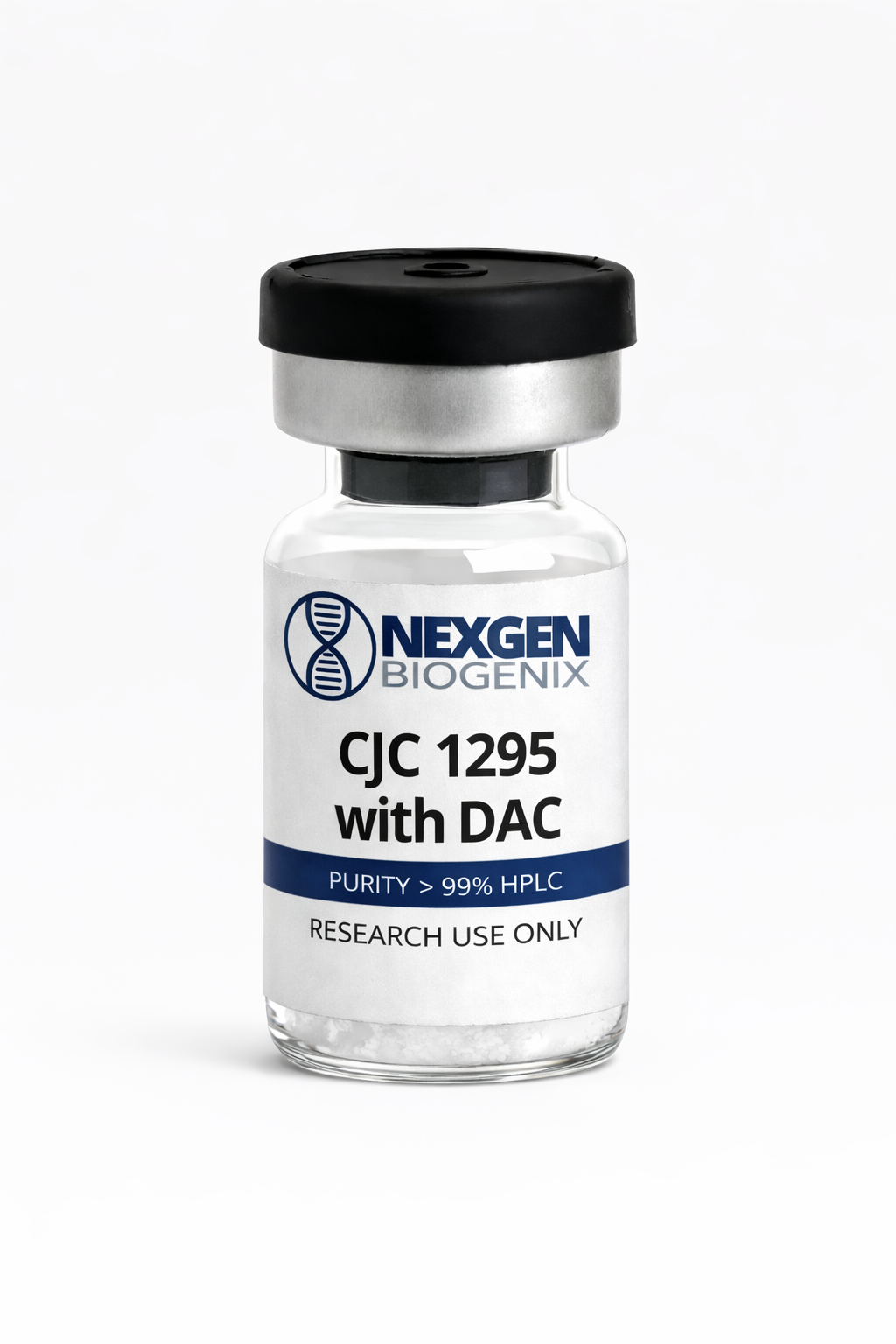
CJC-1295 with DAC — Research Overview (RUO)
Quick Facts
- Full name: [D-Ala², Gln⁸, Ala¹⁵, Leu²⁷]-Growth Hormone-Releasing Hormone (1–29)-Lys³⁰(Nε-3-maleimidopropionamide) amide
- IUPAC modification nomenclature: Nε30-maleimidopropionyl-[D-Ala², Gln⁸, Ala¹⁵, Leu²⁷]-Sermorelin-Lys³⁰
- Common name / abbreviation: CJC-1295 DAC; CJC-1295 with DAC; DAC:GRF (Drug Affinity Complex: Growth Hormone-Releasing Factor)
- Synonyms / related names: Long-acting GHRH analog; tetrasubstituted GRF(1–29) with DAC; also confused in literature with CJC-1295 without DAC (Modified GRF 1–29) — these are structurally and pharmacokinetically distinct compounds (see important distinction note below)
- Developer: ConjuChem Biotechnologies (Montreal, Canada)
- Peptide class: Synthetic GHRH analog; 30-amino-acid growth hormone secretagogue (GHS); albumin-binding peptide via DAC (Drug Affinity Complex) technology
- Amino acid sequence: Tyr-D-Ala-Asp-Ala-Ile-Phe-Thr-Gln-Ser-Tyr-Arg-Lys-Val-Leu-Ala-Gln-Leu-Ser-Ala-Arg-Lys-Leu-Leu-Gln-Asp-Ile-Leu-Ser-Arg-Lys(Maleimido-β-Ala)-NH₂ (30 amino acids + DAC moiety at C-terminal Lys³⁰)
- Key structural modifications vs. native GHRH(1–29): D-Ala at position 2 (DPP-4 resistance); Gln at position 8 (reduced asparagine rearrangement); Ala at position 15 (protease stability); Leu at position 27 (Met oxidation prevention); Lys³⁰-DAC (maleimidopropionyl group enabling covalent albumin binding)
- Molecular formula (without DAC): C₁₅₂H₂₅₂N₄₄O₄₂ (CJC-1295 without DAC base sequence)
- Molecular weight: ~3,367.95 Da (CJC-1295 without DAC backbone, CAS 446036-97-1); ~3,647.95 Da (CJC-1295 with DAC, CAS 446262-90-4)
- CAS number: 446262-90-4 (CJC-1295 DAC); 446036-97-1 (CJC-1295 without DAC — a distinct compound)
- PubChem CID: 91976842 (CJC-1295 DAC)
- Estimated half-life: ~5.8–8.1 days in humans (via covalent albumin binding); native GHRH half-life ~7 minutes by comparison
- Primary research themes: GH/IGF-1 axis pharmacology; pituitary somatotroph biology; growth hormone deficiency models; body composition and metabolic research; pharmacokinetic modeling of albumin-binding peptide conjugates
- Evidence level: Preclinical (in vitro / animal models) and limited human Phase II data — clinical program was discontinued following a subject death during a Phase II trial (see Evidence Snapshot for full context)
- Regulatory status: Research Use Only (RUO) in the United States; not FDA-approved as a drug; reviewed by the PCAC on December 4, 2024 for potential inclusion on the 503A Bulks List — FDA proposed exclusion; not on the 503A approved compounding bulks list (see Section 9 for complete regulatory history)
- WADA status: Prohibited at all times under the WADA Prohibited List (S2 — Peptide Hormones, Growth Factors, Related Substances and Mimetics); relevant for researchers working with athletic populations
What Is CJC-1295 with DAC?
CJC-1295 with DAC is a synthetic analog of growth hormone-releasing hormone (GHRH) — the hypothalamic neuropeptide responsible for stimulating the pituitary gland to produce and release growth hormone (GH). It was developed by ConjuChem Biotechnologies of Montreal, Canada, using the company’s proprietary Drug Affinity Complex (DAC) technology, which was designed to dramatically extend the half-life of short peptides by enabling them to bind covalently to endogenous serum albumin in the bloodstream. The result is a GHRH analog whose estimated half-life in humans is approximately 5.8 to 8.1 days — compared to native GHRH, whose half-life is roughly 7 minutes. This pharmacokinetic transformation is the defining characteristic of CJC-1295 DAC and the primary reason it became a subject of academic and pharmaceutical interest as a potential long-acting GH secretagogue.
An important nomenclature distinction runs through the scientific and commercial literature on this compound and is a source of significant confusion: CJC-1295 with DAC (CAS 446262-90-4) and CJC-1295 without DAC (CAS 446036-97-1) are different compounds with different molecular weights, different pharmacokinetic profiles, and different mechanisms of action. CJC-1295 without DAC — also known as Modified GRF(1–29) or Mod GRF 1–29 — lacks the maleimidopropionyl-lysine C-terminal extension and therefore cannot bind albumin; it has a half-life of approximately 30 minutes. The two compounds are often conflated in popular literature and on commercial research supplier websites. This article addresses CJC-1295 with DAC specifically, except where distinctions are explicitly noted.
The human body naturally produces many peptides — small, protein-like molecules that act as biological messengers coordinating physiology throughout the nervous, endocrine, and immune systems — and GHRH itself is one of these endogenous peptides, produced in the hypothalamus and released in pulses to regulate pituitary GH secretion. CJC-1295 DAC is a synthetic, engineered molecule built on the GHRH(1–29) backbone, with four amino acid substitutions to improve enzymatic stability and a covalent DAC moiety appended at the C-terminus — making it a research tool that mimics and greatly extends the action of endogenous GHRH, rather than an endogenous peptide itself.
Why Do Researchers Study It?
Researchers are interested in CJC-1295 DAC primarily because its extended half-life — achieved through a novel albumin-binding mechanism — makes it an unusually tractable tool for studying sustained GH/IGF-1 axis activation in preclinical models. Its pharmacological profile also raises fundamental questions about the consequences of long-duration vs. pulsatile GHRH stimulation, which have implications for both basic endocrinology and translational medicine. Key areas of scientific investigation include:
- GH/IGF-1 axis pharmacology: CJC-1295 DAC provides a unique model for studying what happens to the GH axis when GHRH receptor stimulation is sustained over days rather than minutes. Studies have examined how trough GH levels, GH pulse architecture, and IGF-1 production respond to continuous vs. pulsatile GHRH analog exposure — questions with relevance to both physiology and hormone replacement biology.
- Pituitary somatotroph biology: Preclinical studies in GHRH-knockout mice have used CJC-1295 to examine whether prolonged GHRH receptor stimulation drives somatotroph cell proliferation and increases pituitary GH mRNA production — findings that have implications for understanding how pituitary GH secretory capacity is regulated.
- Growth hormone deficiency models: In animal models of GH deficiency (particularly GHRHKO mice), CJC-1295 has been used to normalize growth parameters at reduced injection frequencies compared to native GHRH analogs, providing a preclinical platform for studying long-acting GHRH replacement strategies.
- Albumin-binding DAC technology research: CJC-1295 DAC is studied as a model compound for ConjuChem’s albumin-binding technology — a platform with broad potential applications for extending the half-life of other short-lived peptide drugs. Understanding the chemistry, stability, and biological consequences of irreversible albumin binding is an active area of pharmaceutical science research.
- Biomarker discovery for GH axis activation: A proteomic study used CJC-1295 to identify serum protein changes following GH/IGF-1 axis activation in healthy men — a research approach aimed at discovering novel biomarkers of GH activity that could improve the detection of GH abuse in sport or monitoring of GH therapy in clinical settings.
- Comparative GHRH pharmacology: CJC-1295 DAC serves as a reference compound in studies comparing long-acting vs. short-acting GHRH analogs (including Sermorelin and CJC-1295 without DAC), helping researchers characterize how pharmacokinetic profile influences downstream GH pulsatility, IGF-1 levels, and downstream biological effects.
Proposed Mechanism (Research Framing)
The following descriptions are drawn from published scientific literature and reflect hypotheses and observations from preclinical and in vitro research. The mechanisms of CJC-1295 DAC have been studied in human subjects in limited Phase I/II contexts; however, the clinical development program was discontinued, and no FDA-approved indication exists. All claims are presented in a research framing only.
CJC-1295 DAC’s primary mechanism of action operates through direct agonism of the GHRH receptor (GHRHR), a class II G protein-coupled receptor (GPCR) expressed on somatotroph cells in the anterior pituitary gland. Studies describe CJC-1295 DAC as binding to and activating the GHRHR with affinity comparable to native GHRH, initiating a downstream intracellular signaling cascade: receptor activation couples to Gαs protein, stimulating adenylyl cyclase and elevating intracellular cyclic AMP (cAMP). Elevated cAMP activates protein kinase A (PKA), which phosphorylates transcription factors including CREB, driving both acute GH secretion from pre-formed granules and longer-term transcriptional upregulation of GH gene expression and GH protein synthesis in somatotrophs. Researchers have proposed that the long-duration GHRHR stimulation provided by albumin-bound CJC-1295 DAC produces a sustained elevation of both basal (trough) GH levels and GH pulse amplitude, resulting in a corresponding sustained increase in IGF-1 production primarily in the liver.
The DAC technology component extends this mechanism’s duration dramatically. After subcutaneous injection, the maleimide group on the Lys³⁰-DAC moiety reacts covalently and irreversibly with free thiol groups (primarily Cys³⁴) on endogenous serum albumin — the most abundant plasma protein — forming a stable peptide-albumin conjugate. Because albumin has a half-life of approximately 19 days in humans and is recycled by the neonatal Fc receptor (FcRn), the CJC-1295 DAC-albumin conjugate inherits much of albumin’s extended circulatory persistence. Researchers have noted that this covalent binding is permanent — once formed, the peptide remains bound to albumin for the duration of the albumin molecule’s lifespan — a pharmacokinetic profile with no precedent in natural GHRH biology and one that raises distinct research questions about the consequences of non-pulsatile, continuous GHRHR stimulation.
An important pharmacodynamic finding, reported by Ionescu and Frohman (2006), is that despite the continuous GHRHR stimulation provided by CJC-1295 DAC, GH secretion retains its pulsatile character in human subjects. Researchers have proposed that this preserved pulsatility occurs because the hypothalamic somatostatin system — which antagonizes GHRH signaling and is responsible for the rhythmic troughs between GH pulses — remains functionally intact even during sustained GHRHR agonism. The net effect, observed in the clinical studies, was a marked increase in trough (basal) GH levels — which researchers propose is the primary driver of the observed sustained IGF-1 elevation — while GH pulse frequency and amplitude were relatively preserved.
Key Targets Described in the Literature
- GHRH receptor (GHRHR): The primary molecular target; a class II G protein-coupled receptor on anterior pituitary somatotrophs whose activation initiates the cAMP/PKA/CREB cascade driving GH synthesis and secretion. CJC-1295 DAC is described in the literature as binding GHRHR with affinity similar to native GHRH.
- Serum albumin (Cys³⁴): The pharmacokinetic target of the DAC technology; the maleimide group on Lys³⁰ forms a covalent thioether bond with albumin’s free cysteine residue at position 34, converting the short-lived peptide into a long-circulating peptide-protein conjugate and extending half-life from minutes to approximately 6–8 days.
- Adenylyl cyclase / cAMP / PKA pathway: The intracellular signaling cascade downstream of GHRHR activation; elevated cAMP activates PKA, which phosphorylates transcription factors driving GH gene expression and stimulates GH granule exocytosis from somatotroph cells.
- Somatotroph cell GH mRNA: Preclinical studies in GHRHKO mice reported that CJC-1295 administration increased total pituitary RNA and GH mRNA, suggesting that prolonged GHRHR stimulation may drive somatotroph proliferation or transcriptional upregulation of GH expression beyond simple acute secretion.
- IGF-1 axis (liver): As the primary downstream mediator of GH’s anabolic and growth-promoting effects, hepatic IGF-1 production — stimulated by pituitary GH binding to GH receptors in the liver — is the key pharmacodynamic readout of CJC-1295 DAC’s activity in both preclinical and clinical studies.
Research Applications (RUO Context)
In qualified laboratory and preclinical research settings, CJC-1295 DAC is employed as a tool for studying the GH/IGF-1 axis, pituitary somatotroph biology, and the pharmacology of albumin-binding peptide conjugates. The following applications reflect how researchers have described using this compound in published studies — not protocols or instructions for any use outside a controlled research environment.
- GH/IGF-1 axis activation studies in rodent models: CJC-1295 DAC has been used in rat and mouse models to characterize the dose-response relationship between GHRHR stimulation duration and GH/IGF-1 levels, body weight, lean mass, and fat mass — endpoints relevant to metabolic and growth biology research.
- GHRH-knockout mouse studies: The GHRHKO mouse model has been used extensively with CJC-1295 to study minimum effective injection frequency for normalizing growth parameters, somatotroph cell proliferation, and GH mRNA regulation — providing a clean genetic background for separating endogenous and exogenous GHRH contributions.
- Pituitary cell culture systems: CJC-1295 has been used in primary rat anterior pituitary cell cultures to characterize concentration-dependent GH secretion across picomolar-to-micromolar concentration ranges, providing in vitro pharmacological characterization data for the GHRHR-agonist interaction.
- DAC technology platform research: As the best-characterized compound bearing ConjuChem’s albumin-binding maleimide chemistry, CJC-1295 DAC serves as a reference compound for researchers studying covalent albumin binding strategies for extending the pharmacokinetic profiles of short peptides — a technology platform with broad implications for peptide drug design.
- Biomarker research for GH axis activity: CJC-1295 has been used as a pharmacological probe in proteomic studies to identify novel serum protein biomarkers of GH/IGF-1 axis activation, with potential applications in monitoring GH therapy and detecting GH-related performance enhancement in anti-doping research.
- Comparative GHRH analog pharmacokinetic studies: CJC-1295 DAC is used as a comparator in head-to-head studies evaluating multiple GHRH analogs (Sermorelin, Tesamorelin, Mod GRF 1-29, CJC-1293) across half-life, GH pulsatility preservation, IGF-1 response magnitude, and safety profiles.
Evidence Snapshot
► Preclinical Evidence (In Vitro / Animal Models)
- A 2006 study by Alba et al. (American Journal of Physiology, PMID: 16926380) demonstrated that daily CJC-1295 administration in GHRH-knockout mice fully normalized body weight and length — findings that also reported increased total pituitary RNA and GH mRNA, suggesting possible somatotroph proliferation under sustained GHRHR stimulation. This was a key early study establishing the compound’s preclinical efficacy in a growth deficiency model.
- Preclinical studies in rats, pigs, and dogs have reported that a single administration of CJC-1295 produces sustained elevations in serum IGF-1 levels for several days, confirming the pharmacokinetic mechanism of albumin binding in multiple species and supporting the translational pharmacokinetic model used in human studies.
- Primary rat anterior pituitary cell culture experiments have reported CJC-1295-stimulated GH release across a concentration range from picomolar to micromolar, providing in vitro receptor pharmacology data consistent with GHRHR agonism and supporting the proposed mechanism of action.
- A proteomic analysis (Sackmann-Sala et al., 2009, PMID: 19386527) using 2D gel electrophoresis on serum from 11 healthy adult men before and after CJC-1295 injection identified changes in apolipoprotein A1 and transthyretin isoforms, as well as upregulation of beta-hemoglobin and albumin fragments, proposing these as candidate biomarkers of GH/IGF-1 axis activation — findings that remain preliminary and require independent validation.
► Human / Clinical Evidence
- The primary published human pharmacology study is Teichman et al. (2006, Journal of Clinical Endocrinology & Metabolism, PMID: 16352683), a randomized, placebo-controlled, double-blind, ascending dose trial involving healthy adult subjects. After a single injection, subjects showed dose-dependent increases in mean plasma GH concentrations of 2- to 10-fold sustained for 6 or more days, and plasma IGF-1 increases of 1.5- to 3-fold for 9–11 days. After multiple doses, mean IGF-1 levels remained elevated for up to 28 days. Estimated half-life was 5.8–8.1 days. No serious adverse reactions were reported in this study.
- A follow-up human study by Ionescu and Frohman (2006, Journal of Clinical Endocrinology & Metabolism, PMID: 17018654) specifically examined GH pulsatility following a single CJC-1295 injection in healthy subjects. Results showed that GH pulsatility was preserved despite sustained GHRHR stimulation — with pulse frequency and amplitude relatively unchanged, but basal (trough) GH levels increased markedly (~7.5-fold). Mean overall GH secretion increased ~46% and IGF-1 levels increased ~45%.
- Important adverse event context: CJC-1295 entered Phase II clinical trials for the treatment of lipodystrophy and growth hormone deficiency. These trials were discontinued following the death of one participant. The attending physician assessed the death as most likely attributable to asymptomatic coronary artery disease with plaque rupture and occlusion, and considered the event probably unrelated to study drug — however, the clinical development program was discontinued, and no Phase III trials were conducted. This history is material context for any evaluation of CJC-1295 DAC’s translational research status.
- As of 2025, no large-scale, Phase III or post-market randomized controlled trials evaluating CJC-1295 DAC for any indication have been published. The human pharmacology data — while robust for pharmacokinetics and GH/IGF-1 axis effects — was generated in small, short-duration studies and does not constitute an efficacy or safety evidence base for any therapeutic use.
Limitations & Open Questions
CJC-1295 DAC sits at the intersection of genuinely interesting GHRH pharmacology and a cautionary story about translational discontinuation. Researchers engaging with this compound should be fully aware of the following substantive limitations and open scientific questions:
- Discontinued clinical program and adverse event history: The Phase II clinical development of CJC-1295 DAC was discontinued following a participant death. While the attending physician considered the event likely unrelated to study drug, the development program was not resumed and no further clinical trials have been published. This history is significant context that should inform how researchers interpret and communicate the compound’s research status.
- CJC-1295 with DAC vs. without DAC — persistent nomenclature confusion: Considerable confusion exists in both the scientific and commercial literature between CJC-1295 with DAC (the albumin-binding compound discussed here) and CJC-1295 without DAC (Modified GRF 1–29), which lacks the DAC moiety entirely and has a half-life of ~30 minutes. These are distinct compounds with different molecular weights, CAS numbers, pharmacokinetic profiles, and mechanisms of half-life extension. Research findings from one should not be attributed to the other.
- Consequences of irreversible, sustained GHRHR stimulation: Native GHRH acts pulsatily — brief bursts followed by somatostatin-mediated inhibition. CJC-1295 DAC provides continuous, irreversible GHRHR stimulation for up to 8 days per dose. The long-term consequences of this non-physiological stimulation pattern — including potential effects on somatotroph cell function, receptor desensitization, pituitary morphology (somatotroph proliferation was suggested in GHRHKO mouse data), and downstream IGF-1-dependent growth pathway activation — are not fully characterized in humans.
- IGF-1 elevation safety considerations: Sustained elevation of IGF-1 — particularly the prolonged 9–28 day elevations observed with CJC-1295 DAC — raises open questions about potential effects on cell proliferation pathways and insulin resistance, especially under conditions of chronic or repeated administration. These considerations are relevant to the design and interpretation of research using this compound.
- FDA safety concerns cited in regulatory review: In its preparation for the December 4, 2024 PCAC meeting, the FDA cited concerns about immunogenicity (potential for the peptide or the peptide-albumin conjugate to provoke immune responses), peptide-related manufacturing impurities, and the adverse event history from clinical trials as factors in its assessment of CJC-1295 DAC’s risk profile. These concerns are relevant research considerations, not merely regulatory obstacles.
- Limited long-term pharmacovigilance data: The existing human studies are short-duration (28–49 days) and involve small numbers of healthy adults. Effects of repeated, long-term CJC-1295 DAC administration in humans — including on pituitary histology, insulin sensitivity, cancer-relevant growth pathways, and immune function — have not been characterized in published clinical studies.
Quality & Sourcing
For researchers working with CJC-1295 DAC in preclinical or in vitro settings, compound quality and chemical characterization require particular attention. The DAC moiety — the maleimidopropionyl group appended to Lys³⁰ — is chemically reactive toward free thiol groups and must be protected appropriately during synthesis, purification, and storage to prevent premature conjugation with solvent or excipient contaminants. Incomplete or incorrect maleimide chemistry, amino acid substitution errors at any of the four modified positions, or degradation of the DAC moiety will produce a compound that does not replicate the pharmacokinetic or pharmacodynamic profile reported in published studies. The following documentation standards are foundational for research-grade sourcing:
- Lot Traceability: Each batch should carry a unique lot number linked to a complete manufacturing and quality control record. Given the chemical complexity of CJC-1295 DAC — including four amino acid substitutions and a reactive DAC moiety — lot-level traceability is essential for correlating experimental outcomes with specific synthesis batches and flagging any batch-to-batch variability in potency or chemical integrity.
- Certificate of Analysis (COA): A COA from a qualified analytical laboratory should confirm: peptide identity and sequence accuracy via high-resolution mass spectrometry (confirming the expected mass of ~3,647.95 Da for CJC-1295 DAC, distinguishing it from CJC-1295 without DAC at ~3,367.95 Da); HPLC purity (≥98% is a commonly cited research-grade standard); integrity of the maleimide DAC moiety (confirmed via UV absorption and/or chemical reactivity assay); absence of endotoxins; and freedom from residual solvents and heavy metals. Explicit confirmation of which form is being supplied — with DAC or without — should be stated unambiguously on the COA.
- Storage & Labeling: Research-grade CJC-1295 DAC should be clearly labeled as Research Use Only, stored as a lyophilized powder at −20°C or below in moisture-protected conditions. The reactive maleimide group is susceptible to hydrolysis under aqueous conditions and to thiol-exchange reactions — particularly with glutathione or free cysteines in biological media — meaning the compound should be handled carefully in solution, aliquoted promptly, and used without unnecessary delay after reconstitution. Containers should be clearly labeled with lot number, molecular weight specification, and DAC/no-DAC designation to prevent experimental confusion.
📄 Questions about documentation or purity verification? Contact our support team or request a COA from our library.
US Regulatory Snapshot (Updated 2025)
- RUO context: CJC-1295 DAC is sold and distributed in the United States strictly as a Research Use Only compound for qualified laboratory use. It is not a drug, not a dietary supplement, and not approved for any therapeutic, anti-aging, cosmetic, or veterinary application. The FDA has made clear that RUO labeling cannot be used as cover for products actually intended for human use — purchasing or self-administering this compound outside a licensed clinical trial or research setting would be outside its labeled and legal use.
- Category 2 and the 503A framework — what it means (and what it does not mean): Under the FDA’s 503A compounding framework, bulk drug substances nominated for the official bulks list are placed in interim categories during review: Category 1 allows compounding under enforcement discretion; Category 2 identifies substances with significant safety concerns where compounding is not permitted while evaluation continues. Neither category constitutes FDA approval — they are interim administrative designations. Category 2 placement is a signal of safety concerns, not a legal prohibition analogous to a scheduled drug ban, but it does prevent licensed compounding pharmacies from using the substance. In September 2023, CJC-1295 (all forms, including CJC-1295 DAC) was placed in Category 2 — effectively halting compounding of the substance.
- FDA guidance, January 7, 2025: The FDA published updated interim policy guidance under 503A, stating it does not intend to place new bulk drug substance nominations into interim Categories 1, 2, or 3 for substances nominated on or after January 7, 2025. All new nominations proceed directly to formal evaluation. This restructuring of the nomination framework affects the broader landscape of peptide compounding in the United States.
- CJC-1295 DAC regulatory history — complete timeline (as of 2025):
- September 2023: FDA placed CJC-1295 (all salt and free base forms, including CJC-1295 DAC) in Category 2 of the interim 503A bulks list, citing concerns about immunogenicity, peptide-related impurities, and an adverse event from Phase II clinical trials. Compounding of CJC-1295 DAC by 503A pharmacies was effectively suspended.
- September 20–27, 2024: The nominator withdrew the nomination for CJC-1295, resulting in FDA removing CJC-1295 from Category 2. This removal was a procedural step — not a safety clearance. The substance was not authorized for compounding; instead, removal from Category 2 triggered a formal PCAC evaluation.
- December 4, 2024 — PCAC Meeting: CJC-1295 (free base), CJC-1295 acetate, CJC-1295 DAC (free base), CJC-1295 DAC acetate, and CJC-1295 DAC trifluoroacetate were all reviewed at the public PCAC meeting. The FDA’s briefing document proposed that none of these forms be included on the 503A Bulks List. After committee deliberation, CJC-1295 DAC was not approved for inclusion on the 503A Bulks List.
- Current status (2025): CJC-1295 DAC is not on the FDA’s approved 503A Bulks List, has not received FDA drug approval under any NDA or ANDA, is not in any interim category, and has no current authorized pathway for compounded human use in the United States. It is classified exclusively as RUO for laboratory research.
- Stay current: The regulatory landscape for peptide research compounds continues to evolve. Researchers, compounders, and institutions are strongly advised to monitor FDA.gov’s compounding pages for updates to the 503A Bulks List, track Federal Register notices, and consult a qualified regulatory attorney or compliance professional for institution-specific guidance before ordering or using any research compound.
Frequently Asked Questions
Is GHRH — the peptide CJC-1295 DAC is based on — naturally produced by the body?
Yes. Growth hormone-releasing hormone (GHRH) is an endogenous neuropeptide produced by neurons in the arcuate nucleus of the hypothalamus. The human body naturally produces many peptides — small, protein-like molecules that act as biological messengers — and GHRH is one of the most important hormonal regulators of the pituitary-growth axis. It is released in rhythmic pulses into the hypothalamo-hypophyseal portal circulation, where it binds to GHRH receptors on anterior pituitary somatotrophs to drive GH synthesis and secretion. CJC-1295 DAC is a synthetic analog engineered on the GHRH(1–29) backbone, with four amino acid substitutions to improve protease resistance and a covalent albumin-binding Drug Affinity Complex (DAC) moiety appended at the C-terminus. It is not itself an endogenous molecule — it is a laboratory-designed research compound built to mimic and dramatically extend the pharmacological activity of natural GHRH.
Is CJC-1295 DAC FDA-approved?
No. CJC-1295 DAC is not FDA-approved as a drug for any indication in the United States. Clinical development was discontinued after a participant death during Phase II trials; no Phase III trials were conducted; and no New Drug Application (NDA) was filed or approved. In December 2024, the FDA’s Pharmacy Compounding Advisory Committee (PCAC) reviewed all forms of CJC-1295 — including CJC-1295 DAC in its free base, acetate, and trifluoroacetate salt forms — for potential inclusion on the 503A Compounding Bulks List, and the FDA proposed that none be included. CJC-1295 DAC was not approved for inclusion. It is also prohibited at all times under the WADA Prohibited List (S2 category) for athletes in WADA-compliant sports. All CJC-1295 DAC sold on this platform is strictly Research Use Only (RUO) and is not intended or labeled for human use of any kind.
Is anything on this page medical advice?
No. Nothing on this page constitutes medical advice, clinical guidance, or a recommendation for human use of any kind. This page is an educational reference for qualified researchers and is intended solely to summarize what has been described in the scientific literature about CJC-1295 DAC as a pharmacological research tool — including its pharmacokinetic profile, proposed mechanisms, human pharmacology data, and complete regulatory history. Transparency about the discontinued clinical program and the PCAC outcome is part of the scientific record, not a treatment recommendation. If you have health-related questions, please consult a licensed healthcare provider. For regulatory questions, consult a qualified regulatory attorney or compliance professional.
References (Starting Points)
- Teichman SL, Neale A, Lawrence B, Gagnon C, Castaigne JP, Frohman LA. “Prolonged stimulation of growth hormone (GH) and insulin-like growth factor I secretion by CJC-1295, a long-acting analog of GH-releasing hormone, in healthy adults.” Journal of Clinical Endocrinology & Metabolism. 2006;91(3):799–805. PMID: 16352683. DOI: 10.1210/jc.2005-1536. View on PubMed
- Ionescu M, Frohman LA. “Pulsatile secretion of growth hormone (GH) persists during continuous stimulation by CJC-1295, a long-acting GH-releasing hormone analog.” Journal of Clinical Endocrinology & Metabolism. 2006;91(12):4792–4797. PMID: 17018654. DOI: 10.1210/jc.2006-1702. View on PubMed
- Alba M, Fintini D, Salvatori R. “Once-daily administration of CJC-1295, a long-acting growth hormone-releasing hormone (GHRH) analog, normalizes growth in the GHRH knockout mouse.” American Journal of Physiology — Endocrinology and Metabolism. 2006;291(6):E1290–E1294. PMID: 16926380. DOI: 10.1152/ajpendo.00201.2006. View on PubMed
- Sackmann-Sala L, Ding J, Frohman LA, Kopchick JJ. “Activation of the GH/IGF-1 axis by CJC-1295, a long-acting GHRH analog, results in serum protein profile changes in normal adult subjects.” Growth Hormone & IGF Research. 2009;19(6):471–477. PMID: 19386527. PMC: PMC2787983. View on PubMed
- Bridon DP, Boudjellab N, Leger R, et al. “Long lasting growth hormone releasing factor derivatives.” US Patent 7,256,258 B2. Issued 2007. (ConjuChem Biotechnologies — foundational DAC technology patent.)
- U.S. Food and Drug Administration. “Pharmacy Compounding Advisory Committee (PCAC) Meeting — December 4, 2024: Briefing Document — CJC-1295-related bulk drug substances.” FDA-2024-N-4777. View FDA Briefing Document
- U.S. Food and Drug Administration. Federal Register Notice: “Pharmacy Compounding Advisory Committee; Notice of Meeting — Bulk Drug Substances Nominated for Inclusion on the Section 503A Bulk Drug Substances List.” October 25, 2024. FR Doc. 2024-24828. Docket No. FDA-2024-N-4777. View on Federal Register
- U.S. Food and Drug Administration. “Interim Policy on Compounding Using Bulk Drug Substances Under Section 503A of the Federal Food, Drug, and Cosmetic Act.” Final Guidance. January 7, 2025. FR Doc. 2024-31546. View on Federal Register
RESEARCH USE ONLY — REGULATORY NOTICE
All products and information presented on this website are intended exclusively for in-vitro laboratory research and scientific investigation by qualified researchers. These products are not intended for human consumption, veterinary use, cosmetic application, or therapeutic purposes of any kind. Nothing on this page has been evaluated by the U.S. Food and Drug Administration (FDA). These products are not intended to diagnose, treat, cure, or prevent any disease or medical condition. Researchers are responsible for ensuring compliance with all applicable local, state, and federal regulations before ordering or using any research compound. For questions about regulatory status, consult a qualified regulatory attorney or compliance professional.